Sunday, July 17, 2016

Seattle

When I was little and we lived in Alaska, all of our mail went through Seattle before it came to us. It was even in our address: APO Seattle Washington, 98733. (APO stands for Army Post Office. Since Alaska is part of the United States but also sort of overseas, all of our mail had to be addressed that way.) As of last week, I have now also been to Seattle, because I went to a conference there.

I arrived a day early, landing on Friday, which gave me most of Saturday to explore before the opening session on Saturday night. Before I could do any exploring, though, I had to make a purchase:

Seattle

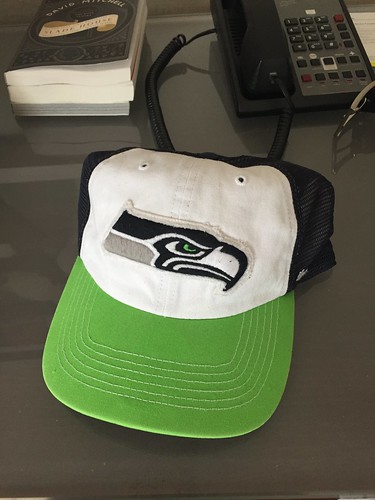
I realized after I got there that I forgot to pack a hat. As a bald person (a person who has baldness?) I can't walk around without a hat unless I want a sunburned scalp, so I selected the least offensive reasonably priced hat at the drugstore by the hotel.

Apparently, I selected poorly.

Look, I don't know a lot about the Seahawks. I know that they are a football team, that they play in Seattle, and that when we lived in Alaska and all of our mail went to Seattle there was a player on the team named Brian Bosworth, who later starred in a terrible movie where he had a mullet and rode a motorcycle, and who dated the blonde lady who played Dolph Lundgren's wife in the "Rocky" movie where they went to Russia, and that's all I know about the Seahawks. Several of my friends, though, have greeted that hat with outrage, horror, and repeated suggestions that I both burn it and that I use it as toilet paper. Whoever the Seahawks are, they are apparently terrible.

They did a bang up job of covering my head, though.

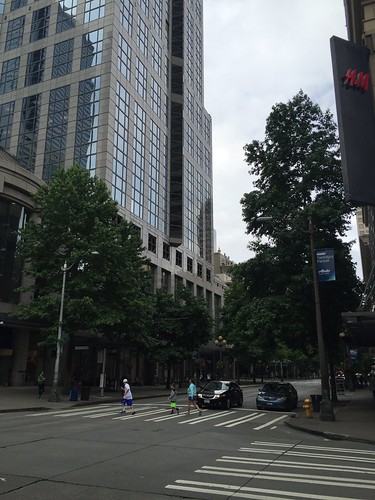
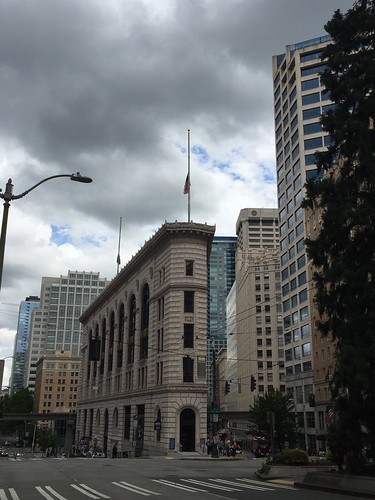
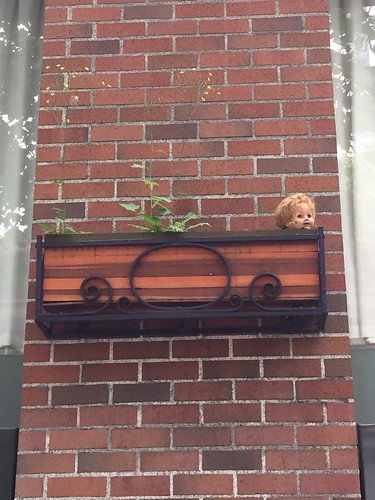
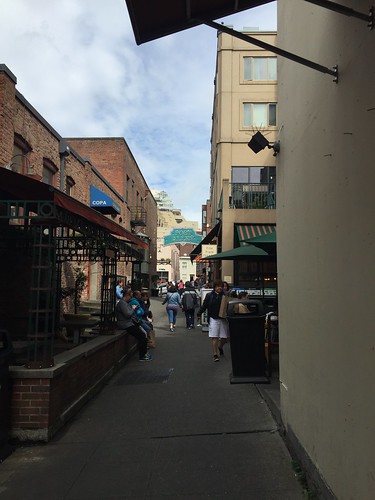
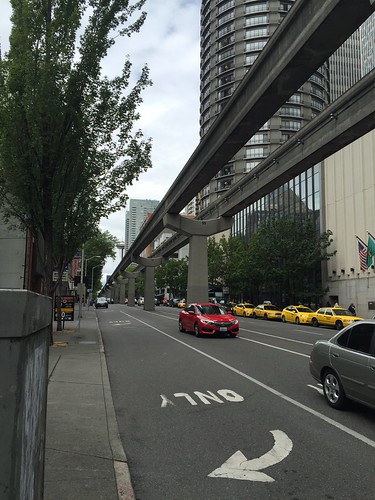
I realize I only saw a few blocks of Seattle, but my overall impressions were that it was very clean, very walkable, and full of trees. So many trees, in the middle of downtown even!

Seattle

Seattle

Seattle

Seattle

More Seattle

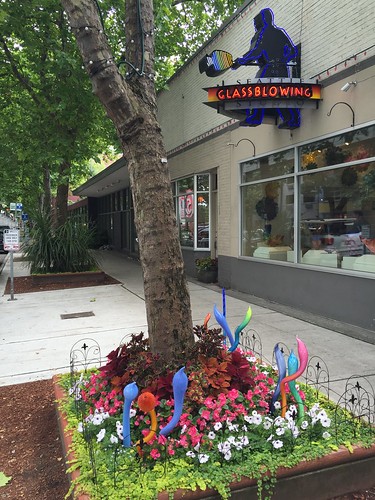
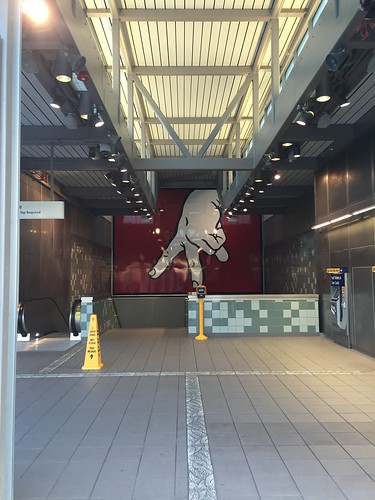
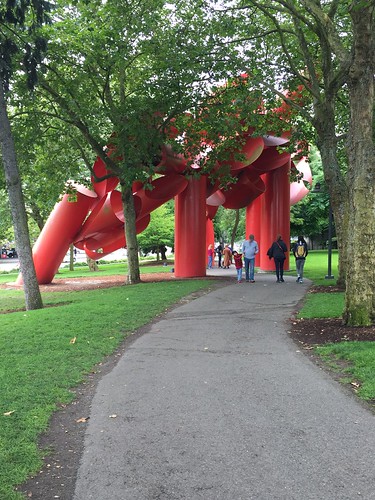
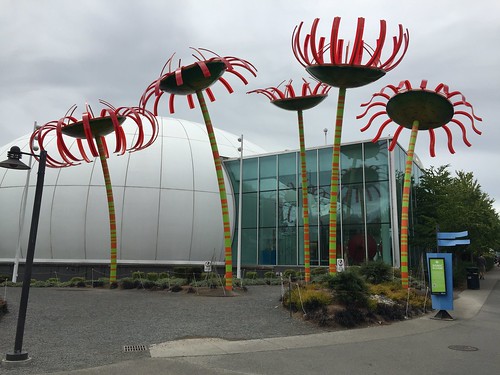
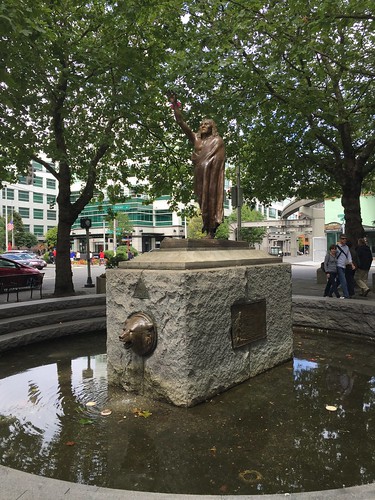
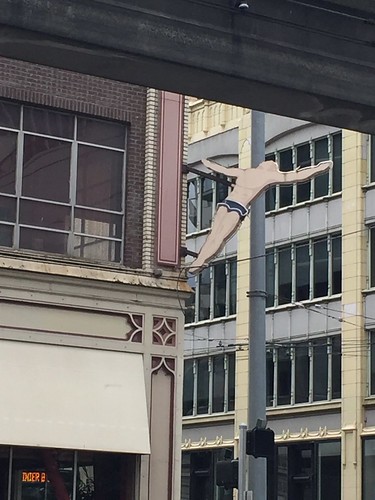
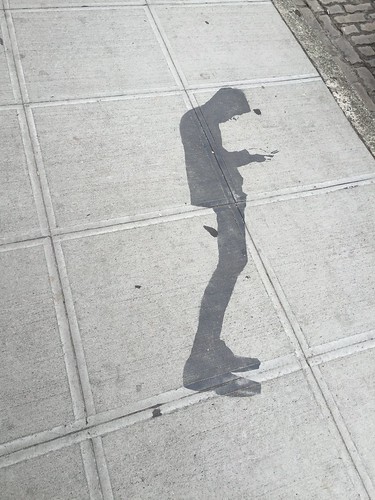
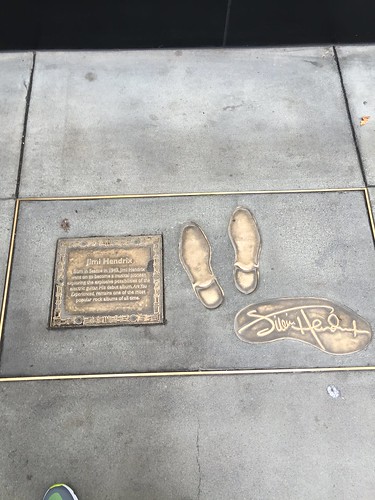
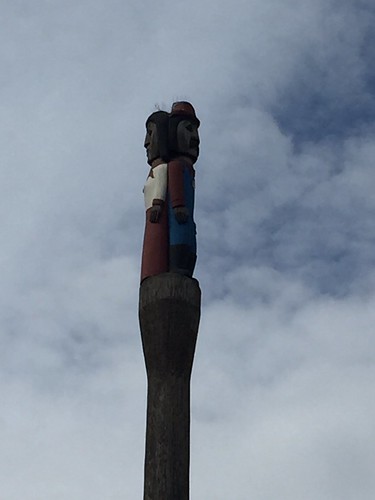
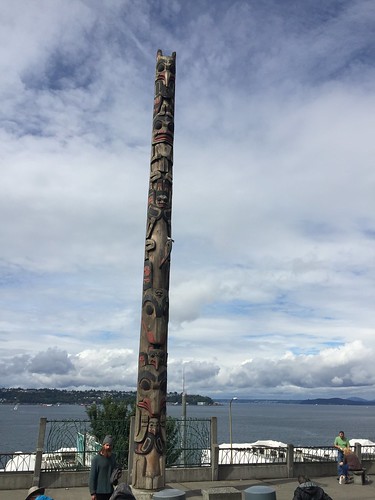
There was also a lot of art, much of which I was directed toward by PokemonGO, which had many of the locations labeled as Pokestops.

Seattle

More Seattle

Seattle

Seattle

Seattle

Seattle

Seattle

Seattle

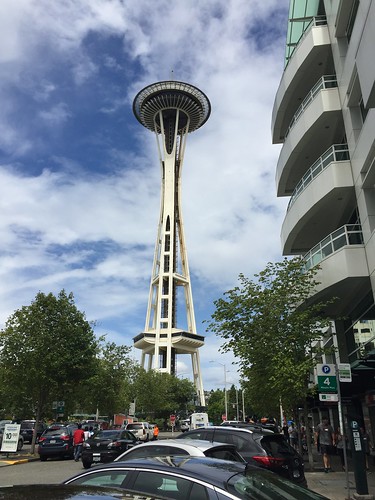
I went to a couple of standard tourist places, like the Space Needle:

Seattle

which I went to but did not go up, because I got there at 1 PM and the next available ticket was for 4 PM. I also accidentally called it the CN Tower when I was asking how to walk to it at the hotel desk, and no one corrected me.

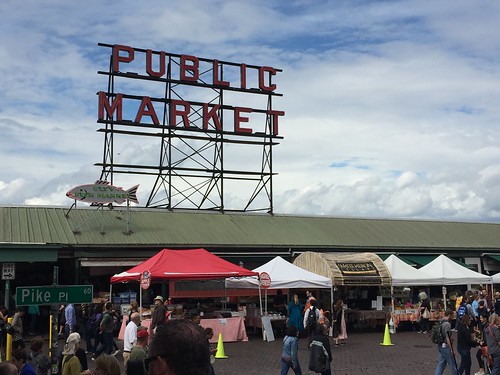
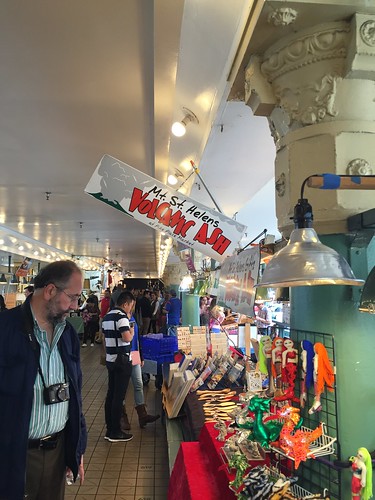
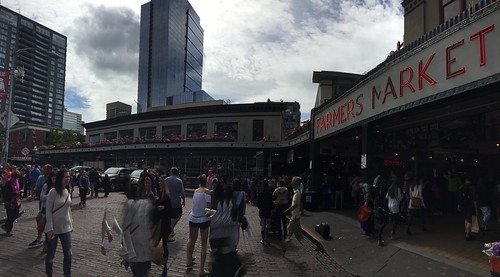
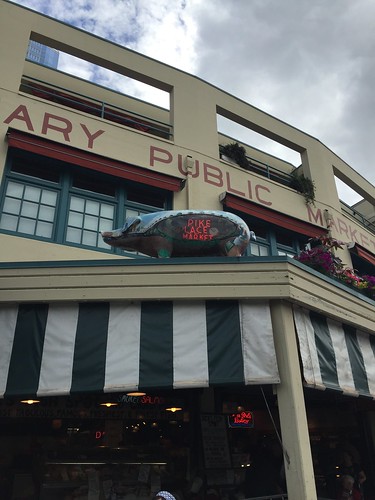
I also went to the Pike Place Market:

Seattle

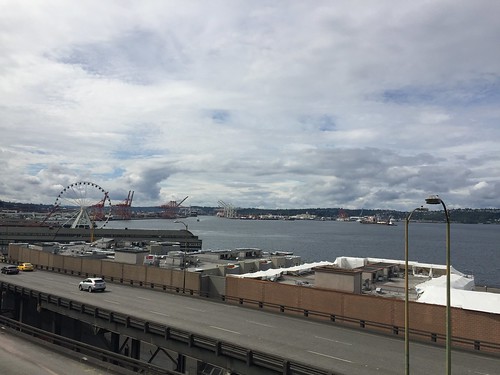
down by the water:

Seattle

and I stayed there for hours! I looked at art:

Seattle

Seattle

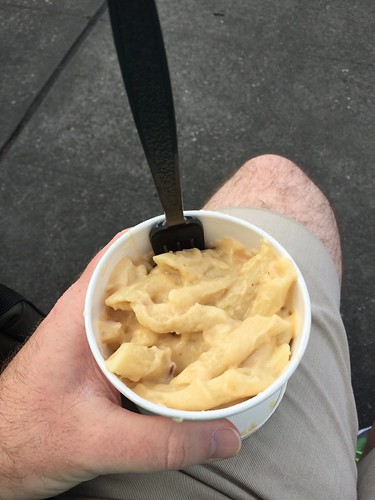
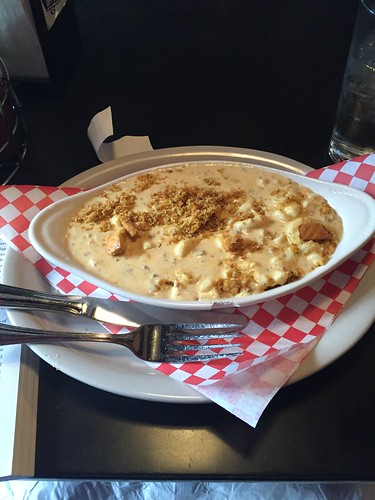
and had some mac and cheese from Beecher's:

Seattle

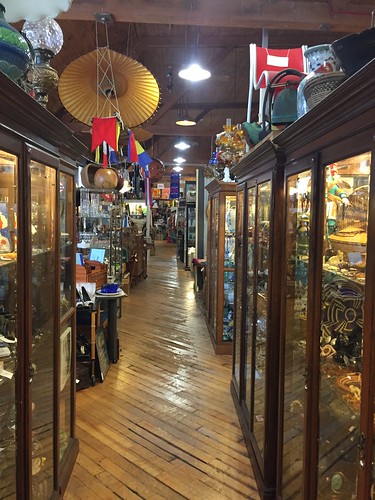
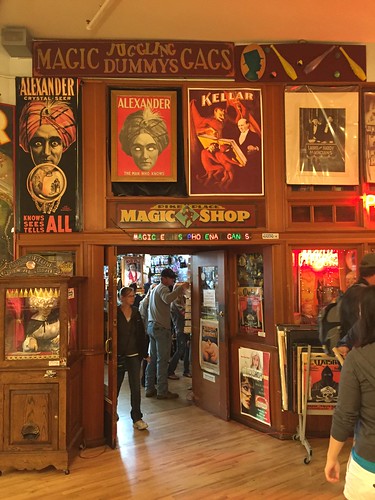
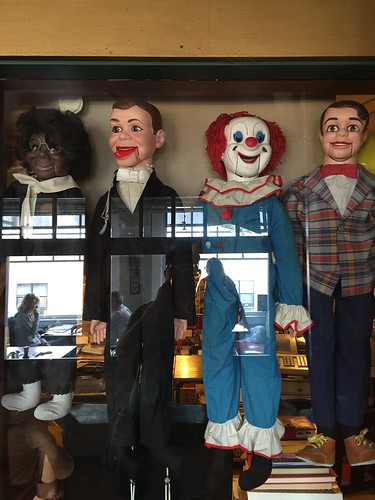
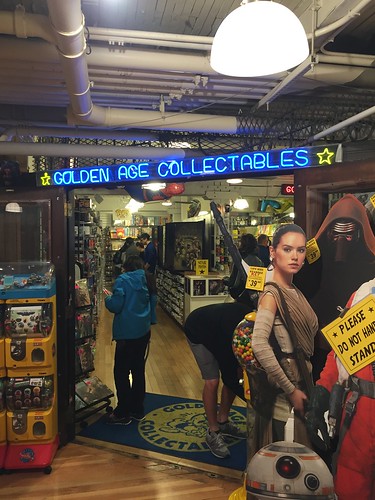
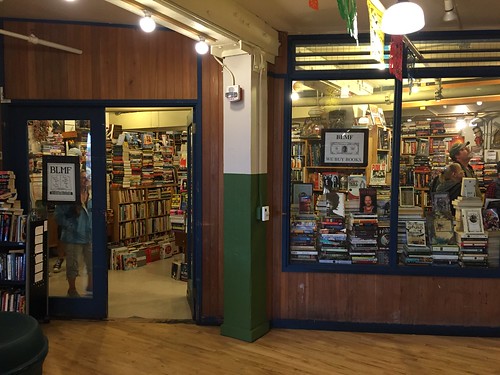
but mostly I just went into stores and looked at things and stared at people:

Seattle

Seattle

Seattle

Seattle

Seattle

Seattle

Seattle

Seattle

Seattle

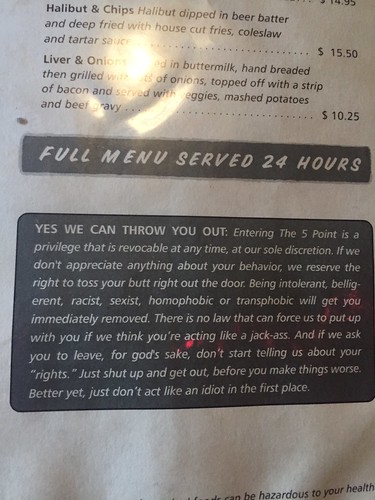
I also took myself out one night for an entertaining dinner:

More Seattle

More Seattle

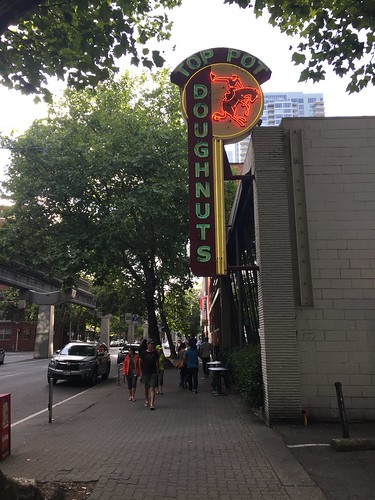
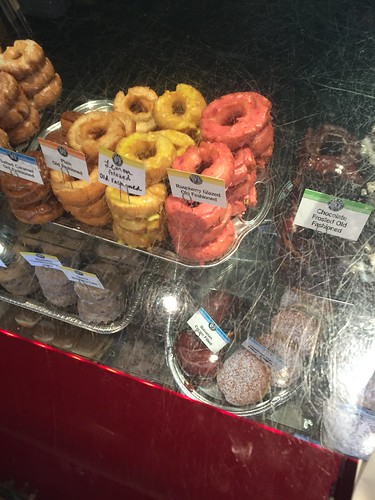
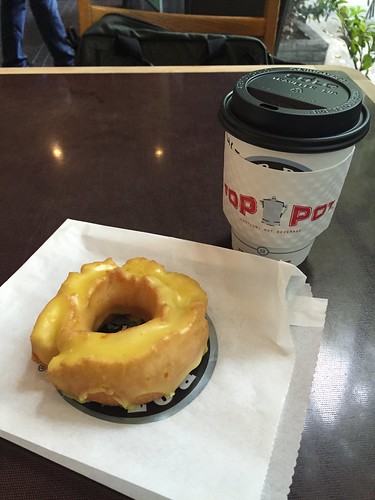
and on the last morning of the conference a delicious hot chocolate and donut breakfast:

More Seattle

More Seattle

More Seattle

More Seattle

Best of all, I got to see a lot of old friends and former coworkers that I hadn't seen in years, including my former RA, Erika:

More Seattle

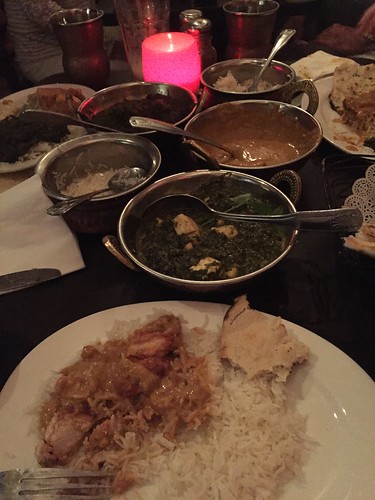
who not only took me out to a delicious Indian dinner:

More Seattle

but also referred to me as her favorite former supervisor, without prompting or bribing!

I also went to a lot of conference sessions and took a lot of notes, which was the point of my department sending me.

All of the sightseeing was just a bonus on top of that.

Friday, July 1, 2016

All the Homosexual Books I Read in June

Since June is Pride Month, I decided to tailor my reading list a little bit, and only read books with some gay-related content for the month. I had plenty of physical books in my "to be read" stacks that covered that, so I didn't have to go buy any, but I ran into a little bit of trouble when I decided to order a few extras for my Kindle. Since I was also going to be on vacation in June, I didn't want to finish a Kindle book without another one ready, so I decided to look for a few.

That's when I learned that if you type "gay male romance" into the search field on Amazon, every result will sound like a bad porno. For example:

Innocent Until Stiff

Blackmail Boy

Gay Rebel

Possibly I am misjudging what could be profoundly moving works of great depth and substance, but in reviewing the titles and cover shots on the list I really felt like maybe these weren't quite what I was looking for. I did eventually decide on a few other books for my Kindle (I only finished two of them, since I walk outside more than I do on the treadmill when it's warm, and I only read the Kindle on the treadmill), but doing so meant refining my search categories just a bit.

At any rate, here's what I read to celebrate Pride Month:

1) The humor of Robert Rodi's Bitch Goddess is almost destroyed by the way the novel is written. The whole story, about the rise and fall and rise and fall and possible rise again of 70s B-movie starlet Viola Chute, is told in the form of interviews, letters, magazine articles, voicemails, email transcripts, holiday cards, movie and television scripts, etc., which made reading it very, very slow. It's not just Viola's story, but also the story of how her gay ghostwriter, Harry, tries to unravel the truth behind the narrative that she's crafting for the public, and while it manages to be funny at times the structure really does pull it down.

I felt bad for not liking this, because I've read other books of his and really enjoyed them, but it really was an issue of the form, not the content.

2) Sometimes I search too many things on Amazon too close together, and it starts recommending things for me that are weird blends of things I was looking for. A few months ago, I spent about a week looking up books related to colleges and residence life, and then the next week I was searching a lot of LGBT books because someone forwarded me a list of the best of LGBT literature, and then the week after that, Amazon recommended A.R. Barley's Out of Bounds, a book about two gay guys trying to ignore smoldering sexual tension in their dorm room as they grow closer and closer together but try to maintain the boundary down the middle of their room.

And yes, that includes a scene where they watch each other masturbate from opposite sides of the tape.

I remembered this when I was trying to find Kindle books, so I though, "What the hell? I've read some real garbage before. How bad could it be?" The plot was pretty clichéd, in terms of a romance novel, which I guess is sort of cool since it was just as hackneyed as the old Harlequin bodice-rippers that my Nanny Maggie used to plow through over beer and cigarettes. The writing wasn't terrible, but there were numerous times when I read something and thought, "Wait, a student gay-bashed him on campus and there wasn't a judicial hearing? Wait, why is the other kid still in school? He's not suspended? Isn't anybody from the counseling center going to follow up with this kid and make sure he's ok? Why is the RA in charge of room changes? Where's the hall director? This must be the worst university ever." Since I read this on the treadmill, there were also a few moments when I hoped and prayed the people working out next to me would not glance over. I don't know what romance novels for straight people are like now, but this was pretty graphic.

I enjoyed reading this, but more out of amusement than titillation.

3) When he was a teenager, Congressional advisor Joel Lingeman saw a men's swimsuit ad in the magazine "Man About Town" (which is also the title of this novel by Mark Merlis) that shocked him into the realization that he was gay. Now, years later, Joel is still haunted by the boy in that advertisement, and thinks of it more and more often in the days after his partner of 15 years leaves him for a 23 year old, after he discovers that the gay dating scene has moved on without him and he may as well be invisible to the guys that he's so attracted to, and after he's required at work to help draft an amendment that would remove Medicaid from patients with HIV. Feeling everything sliding away from him, Joel decides to track down the boy from the swimsuit ad, as if answering the question of what happened to that boy can also answer the question of what's happened to Joel.

This was a good book, but also a little sad, and that's the problem I had with a few of the books I read this month and with a lot of queer literature in general: being gay almost always means being tragic. I get super excited when there's a gay book with a happy ending because I read them so rarely.

4) Alison Bechdel's Fun Home is described on the cover as a "family tragi-comic" and that's the best description I can think of. It's kind of tragic, kind of funny, and also entertaining. It tells the story of Bechdel's father, a historian who obsessively restored their family home after also inheriting the family funeral home business (the "fun home" of the title), and who also spent his life as a closeted gay man carrying on a string of homosexual affairs with her mother's knowledge. Later in life, after he is killed or maybe killed himself (Bechdel is unsure), she tries to figure out her relationship with her father, her mother, and herself in light of the secrets she finds out along the way.

At some points the comic is a little graphic, in that there are human genitals, depictions of sex, etc., which is probably why this tends to meet with pushback and outrage when it gets assigned in schools and colleges. God forbid we tell high schoolers and college kids that people have sex, or that gay people are also human beings.

5) I knew some of the story of Jill Lepore's The Secret History of Wonder Woman, but she covers it in much more depth through interviews and access to family diaries, photo albums, and other papers. This story isn't really about Wonder Woman, though, but is instead mostly a biography of Dr. William Moulton Marston, Wonder Woman's creator, and his family, which consisted of four children with two different women. All three parents lived together with a third woman, multiple adults in the household had college degrees, one of the women was the niece of birth control pioneer Margaret Sanger, and Marston created the character and guided the early stories in an attempt to portray women as equal to, and the eventual rulers of, men. Marston also, randomly enough, invented the polygraph machine.

Lepore tells the story of the family and the creation of the character against the backdrop of the women's suffrage and then women's equality movements, and includes both an epilogue and, in the paperback (and, I assume, e-book) editions an afterword. I guess this didn't technically have any outright gay content, but it was about non-traditional family structures, and Marston's wife and mistress lived together for the rest of their lives even after he died.

6) Josh Kilmer Purcell's Candy Everybody Wants tried too hard to be funny, quirky, and in any way worth reading, and turned out to just be a bland waste of time. It tells the story of Jayson, a gay high school freshman in the early 1980's who knows he's destined to be famous if he can just get out of Wisconsin, and his extended cast of whacky family members who get him into whacky situations as he tries to land a job on a sitcom starring comedy legend Helen Lawson (who is actually a character from another novel; she's a Broadway diva in the book and film versions of Jaqueline Susann's Valley of the Dolls).

I'm kind of sad I spent a day reading this, because it was a vapid waste of my time without even being entertaining about it.

7) My friend Leo sent me Girls Who Like Boys Who Like Boys, and I found it pretty enjoyable. It's a collection of essays from men and women about the relationship between gay men and their female friends and families, and covers a wide range of ages, races, and socioeconomic levels. There's a lot in here that I identified with, and some of the stories were really touching. At the same time, though, I have to wonder if they put Ayelet Waldman's essay last because she's so insufferable that they were afraid that people would stop reading the book before they finished if she was first.

A couple of thoughts on this book:

a) This was a super fun book to smack down on my table while eating alone at Cracker Barrel in the middle of Virginia. My server stared at it with eyes as wide as the MoonPies in the Cracker Barrel store. You never saw food come out of the back so fast or a check come so quickly without anyone asking me if I wanted dessert.

b) I realized while reading this that I don't really have a lot of straight male friends that I socialize with regularly. My social group here in Knoxville is mostly women and gay guys, to the point that when we went out for my friend's birthday a few weeks ago, there were over a dozen people at the table and all of them liked dating boys even though only three of them were female. All of the straight male friends that I see regularly are either people I work with or people who are married to my female friends, and it made me kind of wonder if I need to widen my social circle. I mean, what if someday I wanted to go to a strip club for something? Who would I go with?

8) Matthew Griffin's Hide is a touching, sad love story. Wendell and Frank have lived together outside of town for decades, cut off from their families and not having any friends. They don't leave the house together, keep separate mailing addresses, and never reveal to anyone in their tiny southern town that the two of them are lovers. That all changes when Frank suffers a stroke in the garden, and his recovery and deterioration forces them to confront all of the things they gave up to be together in a time when doing so was illegal.

I don't think this was annoyingly sad in the way I was complaining about above, though, because the sadness here is more from the oppression of society. The characters in the book were able to build a life despite that, but they could have been so much more happy if the world wasn't such a terrible place to people who are different.

9) I don't remember if the narrator said at the beginning of Garth Greenwell's What Belongs to You that it would end sadly or if it was just obvious all along, but by the end of the story everything felt very expected and inevitable. That may have been the point, though, as there was no way that the story of a male American teacher living in Bulgaria and falling in love with a homeless male prostitute was going to end happily. Along the way, the narrator examines and tries to understand his own life, but understanding the prostitute, Mitko, that he falls in love with remains stubbornly beyond his reach.

This was the other Kindle book I finished this month.

I haven't really determined a theme for July yet. I'm thinking of just shuffling a few stacks of unread books and reading the first thing off of the pile.
Sunday, June 26, 2016

The Adirondack Park

You see things in upstate New York sometimes.

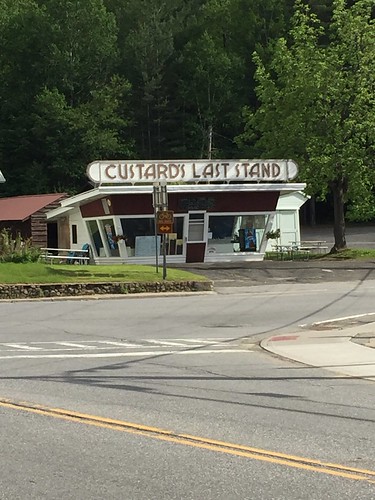
Things that you know your friends from other states would look at with curiosity:

Adirondack Park

Things that you're not sure if you should be offended by or not:

Adirondack Park

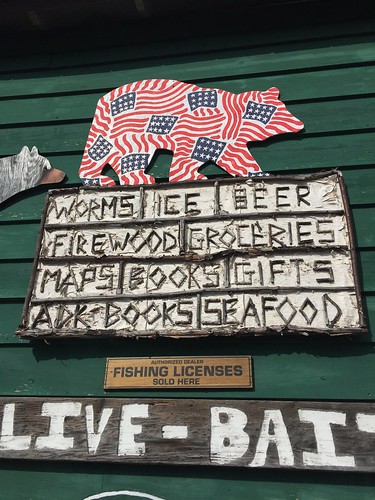
Things that make you scratch your head:

Adirondack Park

"Worms? Ice? Beer? You sure you don't want books? Because we also have books."

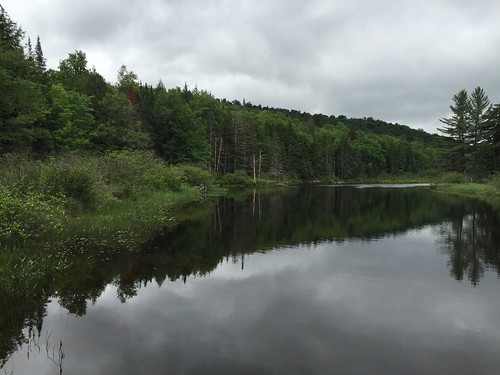
You see a lot of really pretty things, too, though.

Adirondack Park

Adirondack Park

Adirondack Park

The week before last I drove home to spend a week with my parents. I usually only go home at Thanksgiving, because summer is a busy time on campus, so I don't usually get to go to camp when I got home, since it's deep in the Adirondack Park, and that's not a place you want to drive to in heavy snow. Since I went home in summer, though, it was warm enough to go up to camp for a few days, something my parents do pretty much all the time since they are retired now.

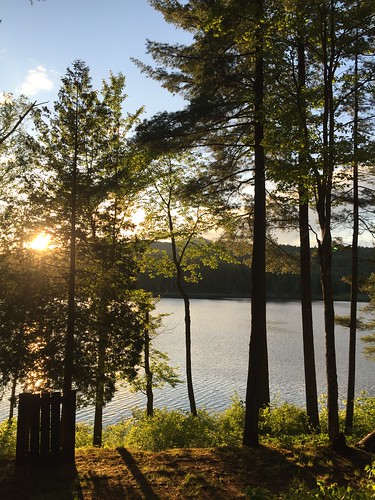
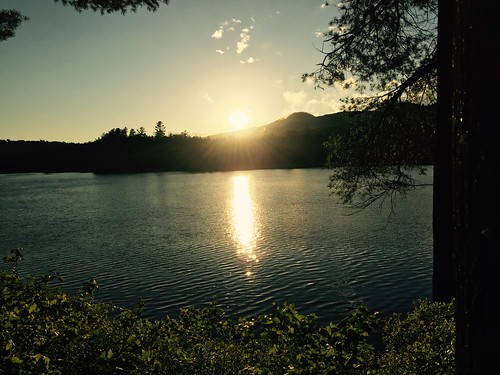
Our camp is on Long Lake:

Adirondack Park

which I've always thought is the place where A Place in the Sun is set, but it turns out that's actually Loon Lake. Even more confusing, the actual murder that the story is based on took place on Big Moose Lake, but what it boils down to is that, while our camp is really pretty:

Adirondack Park

Montgomery Clift never drowned Shelly Winters on film there.

Still, it's peaceful and shockingly cold. I expected it to be a little cold, since we were in the mountains, but the second morning I was there it was 39 degrees Fahrenheit.

In summer.

I packed shorts and t-shirts, and a polo in case we went somewhere nice to eat.

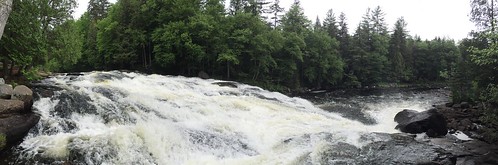
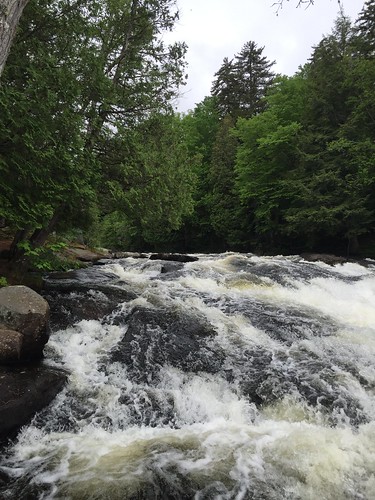
It wasn't that bad, though. Mom turned on the fireplace and Dad let me borrow a pair of sweatpants to get my steps in. I got most of them walking the four mile round trip from camp to Buttermilk Falls:

Adirondack Park

Adirondack Park

Adirondack Park

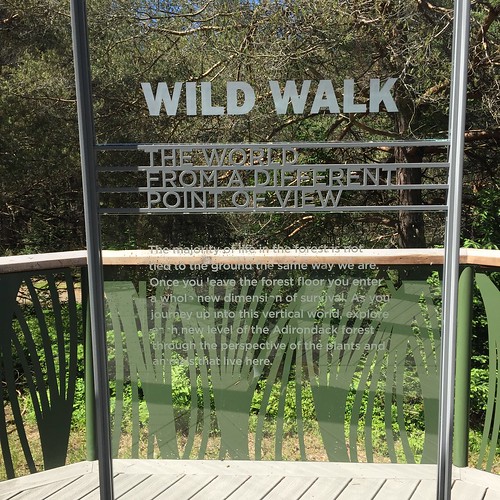
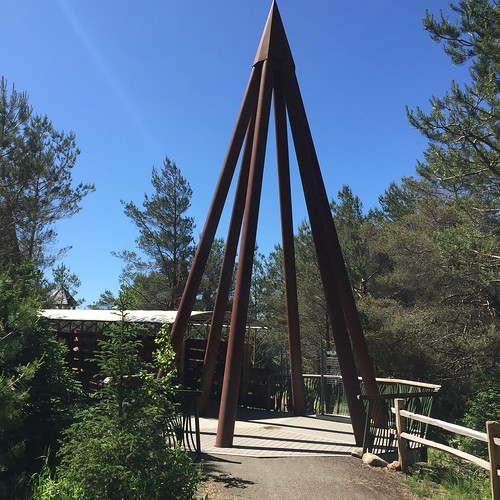
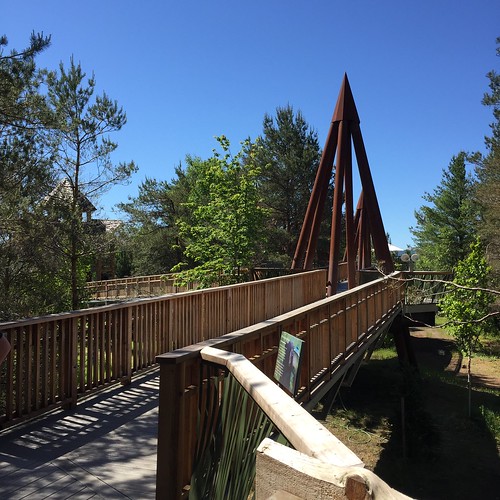
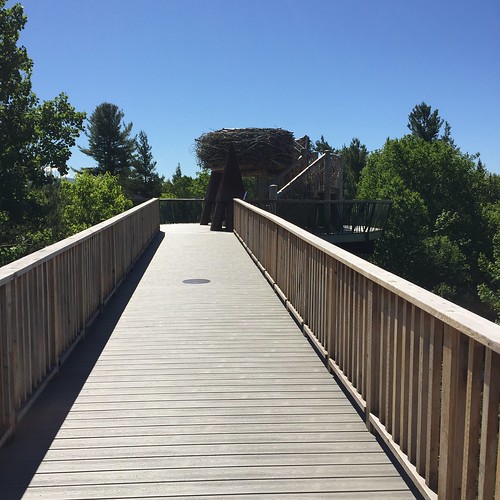
and then in the three days when we were at camp we went all over the Adirondack Park: Tupper Lake, Lake Placid, Blue Mountain Lake, Long Lake, and some other lakes I can't remember. We went to antique stores, general stores, candy stores, popcorn shops, and out to eat a few times, and one morning I also hiked the grounds of The Wild Center, including the Wild Walk:

Adirondack Park

Adirondack Park

Adirondack Park

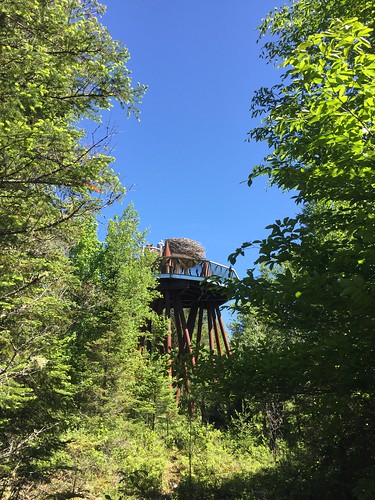
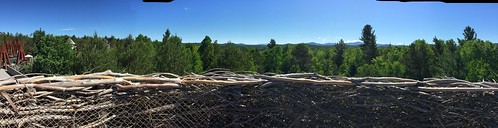
which rises to a height of three stories off the ground and includes a giant bird's nest that you can climb into:

Adirondack Park

Adirondack Park

Adirondack Park

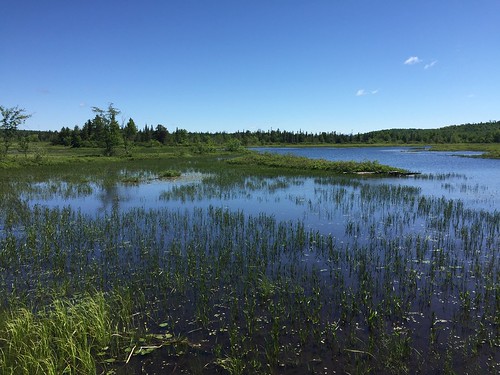
The rest of the grounds were really pretty, too:

Adirondack Park

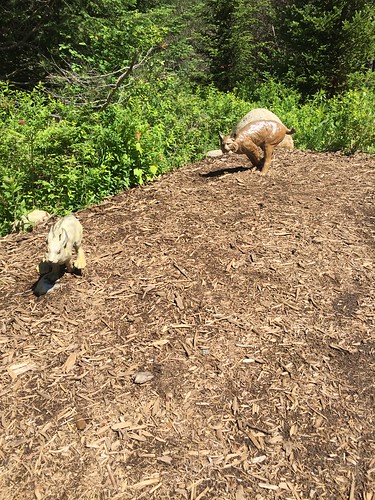
and I encountered this statue that I thought was of a cat pooping, because I didn't see the rabbit out in front at first:

Adirondack Park

It was a nice trip, and I may think about doing it again.

If I do, I'll have to take more time, since I spent almost half of the trip in the car.

Wednesday, June 1, 2016

All the Books I Read in May

Sometimes I have so many books on my "books I haven't read" pile (if we're being honest, "pile" is perhaps not the word to use; there are stacks of books under all three living room tables, some on top of the coffee table, and some additional books in stacks next to the coffee table) that I decide that for a month I will have a theme. My theme doesn't always apply to Kindle books, since I'm usually finishing one from the month before, but I can usually line it up fairly well with paper books. For May, my theme was "biographies and memoirs". Unfortunately, those are often slow reads, which means that my May total is a little low.

Before I could get to my memoirs, though, I had to finish the one Kindle book I read this month: Mike Bode's The Mirrored City, which picks up a few months after "The Queen of Lies" ended. Jessa, former princess and now empress, struggles to fight off a challenge to her own power while attempting to unite the city-states of her world. Heath, the assassin priest, tries to help her while also trying to cope with the changes to himself and his role that happened at the end of the last book, working with Maddox, the now-immortal archmage who used to be his lover, and Sword, the magic sentient blade who serves as his fighting companion. There are new characters, new dangers, and old threats from the past, plus the possible end of the world.

This was as entertaining as the last one, and I'm hoping for a third. As in the first book, there's a lot of world-building without clubbing you over the head with it, and the story behind the story that was hinted at in the end of the last book is a little more fleshed out in this one. I'm intrigued to see where it goes.

After I finished this book, I spent the rest of the month walking outside, rather than on the treadmill, so I didn't read another Kindle book.

The first biography I read was Gioia Diliberto's Diane von Furstenburg: A Life Unwrapped, which offers an interesting portrait of the fashion icon, delving into her mother's survival in the concentration camps, her childhood, her many marriages and lovers (and possible drug fueled orgies and bisexual flings), and the rise and fall and rise again of her business. DVF cooperated with this book, so it has a lot of personal information, but it also frequently drops casual stereotypes about Jewish people when it talks about her background, multiple times.

I guess it was interesting, but I didn't really take anything away from it other than that DVF had an interesting life. There's no advice for others or any really inspirational moments to think about later, so my overall feeling when I was done was mostly just, "I read this book, and it was a book."

I have really mixed feelings about the memoir that I read next.

Columbine is so iconic to Americans that we don't even call it "the Columbine high school shooting" or something like that. It has its own shorthand where we say the name of the town and the school shooting is the first thing people think of. It's the first school shooting that I remember getting major, around the clock media coverage. It's been exhaustively picked apart and analyzed in books, magazines, documentaries, and internet conspiracy theories, but in A Mother's Reckoning Sue Klebold reminds us that there's a side we haven't ever really heard: the families of the shooters. Who was Dylan Klebold? How did he grow up? Were there warning signs his parents missed, or did they see them and interpret them incorrectly? What's it like to receive a call at work that tells you your son murdered his classmates? How do you mourn him and mourn his victims at the same time? What happens to the rest of your life?

I found this compulsively readable. Sue Klebold comes across as honest and genuine, and shares her grief, anger, confusion, and what's she's learned as she struggles to carry on. She also points out that Columbine isn't just a story of murder and rage, but also a story about two boys who committed suicide. Could recognizing Dylan's suicidal depression have prevented what happened? Klebold doesn't make excuses, but she does point out as best she can the places where she could have done better.
I think it was very brave of her to come forward and finally tell her story this honestly and openly, because she lives a life that the rest of us can barely imagine: she's the mother of a mass murderer who has been savaged in the press and the courts of public opinion as a horrible parent who allowed this to happen, and she says over and over through the book that she would think the same thing about a mother if she saw this story on the news. There are some things she can't talk about, because of the many lawsuits that have been leveled against her family by those of the victims, but she also shares things that I never knew, like that she spent over a month after the shootings writing apology letters to each family, or that she is now a cancer survivor, or that she works for organizations promoting mental health and suicide awareness.

I don't know if I can say I enjoyed this book, but I did find it inspiring and sympathetic.

I wrapped up the month with Margo Jefferson's Negroland is part autobiography, part history lesson. What was it like to be an upper middle class African American before the progress of the civil rights era? Jefferson takes us inside a world of manners, social clubs, education, and the "right" neighborhoods as it slowly gives way to the world of power struggles and questioning whether she's turned her back on her culture to emulate whites. Along the way, she outlines heroes and heroines and cultural milestones that still inform behavior and attitudes today, and she doesn't shy away from discussions of race that may be uncomfortable for the reader.

This was a slow read, like the DVF book, but it was interesting.

I'm sticking with a theme for June, too. It's Gay Pride month, so I'm reading books with LGBTQ+ content.

It will hopefully be interesting.

Saturday, May 21, 2016

The Exotic KitKats of Japan

Recently a friend was leaving for a trip to Japan, and I begged for souvenirs.

Very specific souvenirs.

"Bring me the exotic KitKats that I see in Buzzfeed posts! I want to eat the Green Tea KitKats!"

"You can buy those in Knoxville."

"...what?"

"Go buy the Green Tea ones at Sunrise Grocery or Lucky Mart by the mall."

"...what?"

Things have been a little busy at work, so it took me a week or so to get over to Sunrise Grocery. Once there, I paced the candy aisle, but there were no Green Tea KitKats. I checked all of the racks by the registers, but there were no Green Tea KitKats there, either. I whined to friends in our ongoing "Brunch Scheduling and Other Chatter" months-long group text that I couldn't find the Green Tea KitKats, and then, just as I was about to leave, I decided to walk all of the aisles, and found the Green Tea KitKats exactly where you would think to look for candy.

In the produce section.

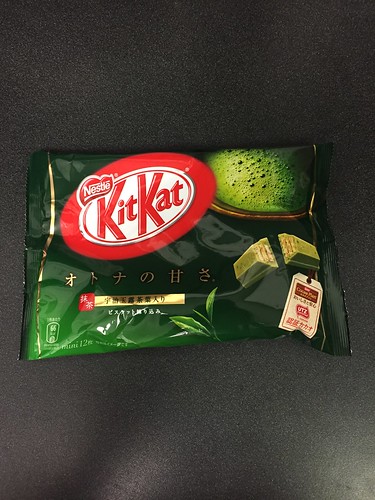
I can be excused for missing them, at first, because they weren't individually packaged like I thought they'd be. Instead, the Green Tea KitKats at Sunrise Grocery come in a big bag:

Japanese KitKats 2

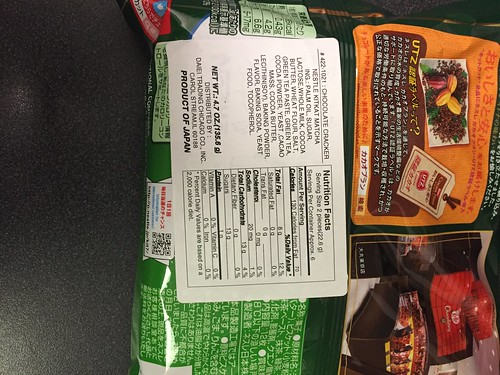
that fortunately has an English ingredients label stuck to the back, so I could make sure I wasn't eating anything I was allergic to.

Japanese KitKats 3

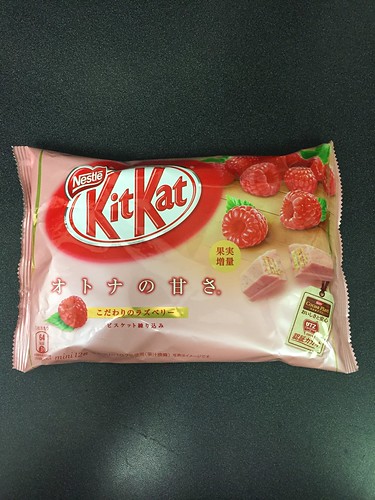
Sunrise Grocery was adventure enough. (Seriously, I might go back for the herb-flavored gelatin cups, because I'm so curious about them.) I didn't also want a trip to the emergency room. I did decide that I might as well also grab the Raspberry KitKats, because why not? They might also be exciting.

Japanese KitKats 1

Once I got the KitKats home, I tore open the bag

Japanese KitKats 5

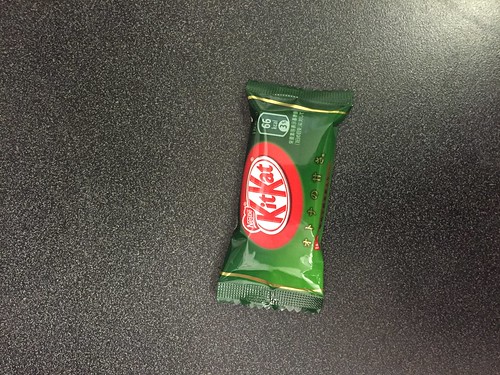
and then tore open a Green Tea KitKat:

Japanese KitKats 6

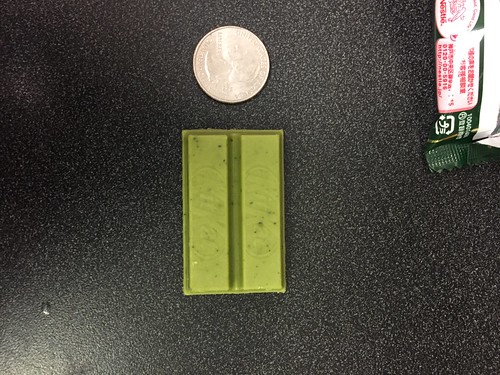
I didn't buy any American KitKats for comparison, but I think that's about the same size as a snack sized KitKat that you get in the bags of Halloween candy. It might be slightly smaller, but again, that's a guess, not a definite. I was immediately dismayed to see that they appeared to be made of white chocolate, a vile waxen imitation of real chocolate, but excited to see that they're definitely green.

In the interests of science, I bit one:

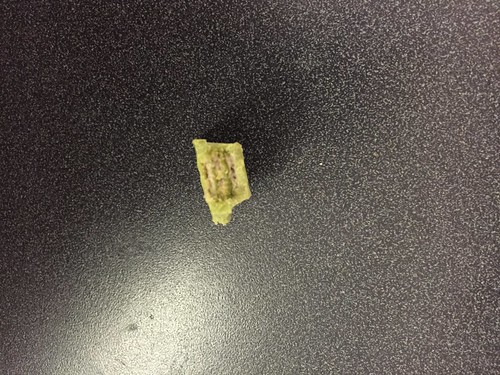
Japanese KitKats 7

and I was immediately disappointed.

They taste like a regular white chocolate KitKat. I drink green tea fairly often, and I didn't get even a hint of it from these. I ate another just to be sure, and still didn't taste anything but white chocolate and KitKat wafers.

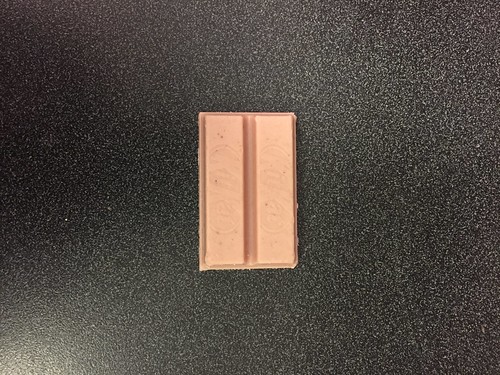
Dreams crushed, I turned my attention to the Raspberry KitKats, which were similar to the Green Tea KitKats in appearance:

Japanese KitKats 8

but also had noticeable differences: as soon as I opened the wrapper, this smelled strongly of raspberries. Granted, it was a little bit of an artificial raspberry candy raspberry smell, but it was way better than the Green Tea KitKats, which smell only of foul white chocolate.

Intrigued and hopeful, I bit one:

Japanese KitKats 9

These are so good. I can't believe they don't make this flavor in the United States, because it would sell heavily if they could convince people to try it the first time. It might be hard to tell in the picture, but instead of regular KitKat filling, which is actually made of other KitKats ("Soylent Green is people! It's people!"), they are filled with some kind of raspberry jelly or puree and it's so good that my mouth is watering right now just thinking about them even though I just ate one.

I might take the Green Tea ones to work and dump them in my candy dish there. Maybe someone will like them.

Then I might go to the Lucky Mart, and see if they have flavors that Sunrise Grocery didn't.

Sunday, May 15, 2016

Ten Dollar Biscuit

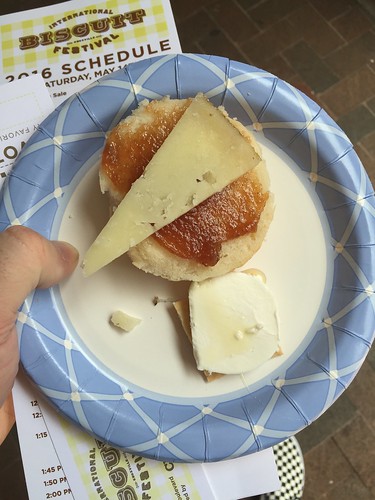
Yesterday I spent ten dollars on half a biscuit, and also a cracker. Would you like to see what a ten dollar biscuit half, with a side of cracker, looks like?

Biscuit Fest 2016 4

That biscuit was prepared by the staff of Kroger, and was decent. It had apple jelly on top with a slice of Manchego cheese, and the parmesan crisp alongside it was topped with a dot of honey and a slice of goat cheese. It made a nice, tasty couple of bites, but it was not worth ten dollars. For ten dollars, I could have purchased all of the components at Kroger myself and assembled more than one plate.

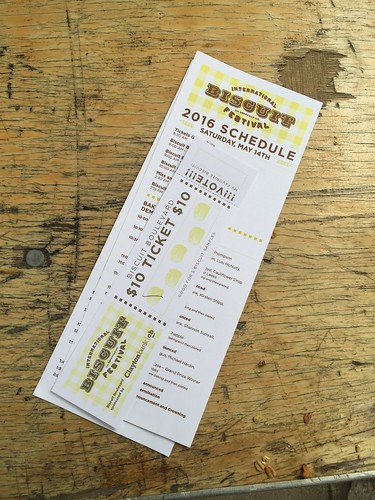
I spent ten dollars because I went to The International Biscuit Festival, which used to be fun but is now terrible. I've been to Biscuit Fest several times, and each time the general idea is the same: it's next to the Farmer's Market:

Biscuit Fest 2016 2

in a kind of small, already crowded area. You pay ten dollars for a ticket, which lets you taste five biscuits and then vote on one:

Biscuit Fest 2016 6

and yesterday was the first time in the several years that I have attended the Biscuit Festival that I did not vote on a favorite.

I didn't feel like I should when I was only able to taste one biscuit.

The biscuit tasting opened at 9 AM. In past years, as Biscuit Fest has slowly become more crowded, 9 AM has been a terrible crush of people and fighting to taste any biscuit. While tasting was still possible, it was annoying, so this year I decided to get there between 10 and 11 AM. This was also a horrible mistake, because all of the people that started tasting at 9 AM were still there, trying to taste biscuits. They were all in line:

Biscuit Fest 2016 5

Lines that stretched for over a block, per booth. The average line, based on talking to people waiting in four of them, was taking 45 minutes to an hour. Granted, it was Saturday and I didn't really have any plans, but that didn't mean I wanted to wait in line for five hours to eat five biscuits. I might not have gotten five, anyway. By the time I got there, some of the vendors had already run out of biscuits, which meant even more people clustering into the smaller number of remaining lines. I only got the one biscuit I did get to taste because I ran into a friend who told me there was a booth past one of the lines and around a corner, and most people hadn't fought through the crowds far enough to find it.

The sad truth is that the Biscuit Festival has outgrown its present location. When I went in 2013 you could walk up and down the rows. You could talk to people. You weren't at risk of being trampled by crowds or ground to death beneath the wheels of a doublewide baby stroller. This is no longer the case. The Biscuit Festival is now a nightmarish hellscape of crowds, shoving, and the smell of flour, with long lines and the claustrophobic crush of too many people jammed into narrow streets.

Biscuit Fest 2016 6

I won't go again if it doesn't change, and that saddens me, because I love living in a city with festivals and a food scene and fun.

I just don't love crowds.

Sunday, May 1, 2016

All the Books I Read in April

I noticed at the end of this month that I've read quite a bit less this year than I did last year, and wasn't sure why until I realized that my parents didn't come visit this spring. Usually when they come down we are sequestered in a cabin with limited internet, and I read a ton of books because when we're not out doing something we're mostly just hanging out around the cabin doing nothing. Without that week off, I'm behind where I was last year, but I'm hopeful that I can catch up by the end of the year.

While we wait until January 1 to find out if I'm right, let's look at what I read in April:

1) Carol Clover's Men, Women, and Chainsaws was a very interesting, but very dense, read. I really enjoyed this exploration of gender identity and depiction in horror movies, but it was very slow reading, and a few times I had to look up words to know what she was talking about, so I guess it was also intellectually challenging. It was almost like reading a textbook, but it still managed to be at least a little fun, and Clover's genuine appreciation of these types of movies shines through even when her language is really dry.

The only drawback I have is that she could have used some additional examples sometimes. She used one particular scene in Videodrome as an example in every chapter, sometimes multiple times in a chapter. Even if that one scene is evidence that every single one of her arguments is correct, surely there are others that also prove them. I do sort of want to see that movie, though, except that James Woods is in it and I've never really liked him much.

2) In Christopher Golden's Dead Ringers, your friends are not what they seem, and neither are you. Tess calls her ex-husband, Nick, to yell at him for ignoring her when they bumped into each other on the sidewalk, but Nick is out of town. Frank is attacked in his home and chained up in the basement by a man with his face, a man who starts wearing Frank's clothes and going to Frank's job. Tess' best friend is suddenly mistaken for a hot new artist, because the artist looks exactly like her. Who are these doppelgangers, and how are they linked to Tess and her friends? And are they the real danger, or is it the blind homeless man with the coat full of shadows who is stalking them across the city of Boston?

This starts out a little slow, gets a little creepy, but then kind of fizzles back to being a little slow. It also featured what was probably intended to be a shocking twist ending, but by that point I was kind of like, "Oh, wait. When did that happen?" and then couldn't be bothered to turn back a few pages to see what I missed.

3) I ordered The Queen of Lies for my Kindle because my friend Mike wrote it and I wanted to be supportive, and I'm glad I did because I also enjoyed it. A detailed fantasy novel starring a failed alcoholic mage, an assassin priest, a princess, and a cast of other characters, it accomplishes a lot of world-building without being boring. I was a little surprised by the sudden hot gay sex in the middle (mostly because I was on the treadmill at the fitness center and was like, "Holy shit, can the girl next to me see my Kindle from her treadmill?"), but it was also nice to have that show up in a fantasy novel that wasn't marketed as a "queer lit" book. There was also some straight people sex, too, if that's what you're looking for, but it was pretty entertaining regardless of the sex, too, in case that's not what you're looking for.

I guess I'm just saying, "This was good, I liked it, but maybe don't read it where people can see what you're reading in a couple of parts."

4) Sam Munson's The War Against the Assholes introduces Mike Wood, a not especially smart football playing Catholic school student with a clearly defined moral code. When a classmate he never speaks to gives him a small book of card tricks, Wood finds himself drawn into a clandestine world of magic, with tricks, secret meeting rooms, and amazing feats. He also discovers that there is a formal school of magic, training young wizards. Unfortunately the formal school is also part of a war to wipe out the unschooled magicians, the side that Wood has found himself on, and he finds himself drawn into a war against the assholes and their rules.

The further I get from finishing this book, the less I like it. It wasn't terrible, but it wasn't really all that great, either. More than anything, it felt kind of incomplete. Characters are never really fleshed out, so their actions don't always make sense. Major events happen without being shown, and the author spends way more time telling us how horrible the bad guys are than actually showing it, so they don't really carry any sense of menace.

5) Adam Christopher's Made to Kill takes us to mid-1960's LA, at a time when the great experiment of robots performing menial labor has come and gone. Humans distrusted the metal men, and they were all phased out of existence except for Raymond Electromatic and Ada, the giant computer that monitors and maintains him. As the last robot on earth, Raymond supports himself and Ada as a licensed private detective, and also as a hit man, two worlds that collide when a young woman with dark eyes and a bag full of gold bars steps into his office. She wants Raymond to find and dispose of an actor, but someone else also wants Raymond to dispose of her. Can he unravel the knot of who she is and what she wants as he pursues her through shady meetings at Hollywood nightclubs, Russian mobsters, radioactive movie stars, and a diabolical plan that may destroy Raymond as well?

This was an interesting blend of crime noir and science fiction, but it didn't always seem to hang together. Still, I enjoyed it enough to think about picking up the eventual sequels that I assume are coming, since Amazon says it's a trilogy.

6) Paul Tremblay's A Head Full of Ghosts was creepy and disturbing, and a very good read.

Merry is eight years old, and her family is in trouble. Her father was laid off after two decades working a factory job, and is slowly becoming devoutly, obsessively religious as her skeptic mother tries to support the family of four on a bank teller's salary. Meanwhile, Merry's sister, Marjorie, starts to exhibit strange behavior: hearing voices, telling stories, acting out, and then spiraling into bizarre physical behavior. When medical treatment can't help her, Marjorie's father and his priest reach a disturbing conclusion: Marjorie is possessed, and must be exorcised. As bad as that sounds, there's a possible opportunity for the family to pull themselves out of their disastrous financial situation while still helping Marjorie. Fifteen years later, Rachel, a bestselling author, is interviewing Merry. Rachel wants to write a book about "The Possessed", the six episode reality show that Merry's family starred in. She wants to explore what happened to Marjorie, what happened to the family, and how Merry ended up as the only survivor.

I really liked that this book was unclear about a lot of things, even whether or not the ending really happened the way Merry remembers it. Tremblay uses his unreliable narrator, Merry, in the best possible way, leaving the reader with an unsettling story of a family in some sort of crisis, but maybe not the kind that it seems like they're in.

Coming up in May: All biographies and memoirs! Hopefully I'll be able to read them faster than I normally do.