Tuesday, May 30, 2017

The Tangled Web We Weave Out of Dumpster Fire Neckties

There's a running joke at work, and on my Facebook, about the ways that people who contact me manage to misspell or mispronounce my name. You name the medium (phone, fax, email, hand-written note, etc.) and at least one person a week will refer to me as Jole, Jule, Troll, Charles, Joyle, or some other previously unimagined variation on the theme of "Joel", but there's one version that comes up most often: at least a hundred people in the last decade have referred to me as Jewel. In my head, I tend to hear it the same way Bette Davis hisses it in "Hush, Hush, Sweet Charlotte" whenever she screeches about Jewel Mayhew.

I get called Jewel so often, usually in conjunction with some sad butchery of my last name, that last summer someone sent me this shirt:
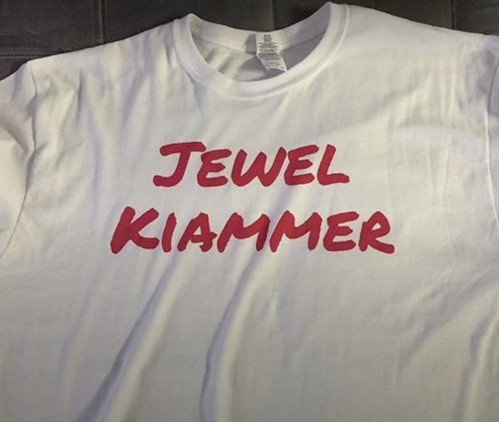
Gifts

They forgot to add a note, though, or the seller didn't let them, so I posted it on Facebook with a thank you message, and then a funny thing happened: two different friends said, "You're welcome."

Odd, right?

Neither one of them contradicted the other. Neither said, "You didn't buy that! I did!" This left a few options in my mind: maybe the one who bought it didn't feel like arguing, or maybe the two of them went in as a pair to buy it for me, or, unlikely but logical, neither one of them actually bought me that shirt. It's the only thing that makes sense to me, but I didn't want to force the issue, and just let it go.

Another running theme at work, especially for the last year, has been the use of dumpster fire memes. I have posted photos of dumpster fires on my Facebook page so many times in the past year that my friend Jocelyn bought me a dumpster fire Christmas ornament, and also I was asked to stop posting them in relationship to workplace issues. This wasn't a written rule or a reprimand, just a strongly worded suggestion.

A few weeks ago I was seething about something unrelated, as I sometimes do, and I started thinking about the unofficial, unwritten rules of our workplace, "No pictures of dumpster fires, Joel. Wear a tie every day, Joel.", and suddenly a lightbulb went on over my head: What if the two rules contradicted each other? If both rules were in the same place at the same time, what would happen? Would one trump the other? Would I have to take off the tie, or would I be allowed to present the dumpster fire to the world?

Determined to find out, I went online to Zazzle and designed and ordered my own dumpster fire tie, using some artwork I found online:
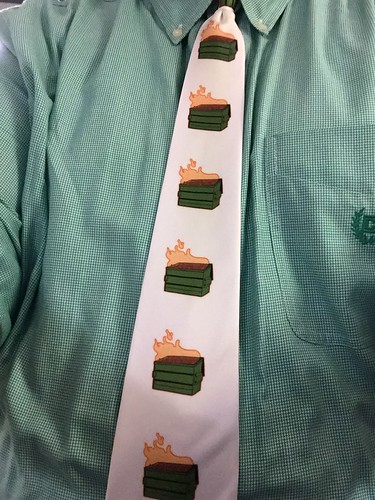
Gifts

A funny thing happened the night that it came in the mail, though. I was super excited to wear it, and was going to Facebook to post about it, but when Facebook opened the first thing at the top of the page was a Facebook memory of one year ago: the Jewel Kiammer shirt photo. I looked at it, and immediately remembered how two friends took credit for sending me that, and thought, "Could that happen again?" I decided to perform a little experiment, and posted a note on Facebook that I'd received a lovely tie without a note, and did not know who sent it to me. I then texted several friends to ask, "Did you send me a tie?" Since they didn't send me a tie, they all answered, "No."

Except that one of them, my friend Meghan, said, "Yes."

I was immediately skeptical, because I bought this tie for myself, and asked Meghan what was on it. Meghan sidestepped the question by pointing out that part of showing my gratitude should include a Facebook post of my gift with a nice thank you note. I promised to post such a thing, but mentioned again that I did not believe she had sent me this particular gift. Meghan mentioned that my skepticism hurt, so I apologized, thanked her for my gift (which I bought for myself), and promised to tag her in the morning.

During the night, six other friends took credit for my tie. Some of them were clearly joking, but Meghan was holding firm to her story.

Prior to posting in the morning, I offered Meghan the chance to retract her statement, but she did not. I posted a lovely thank you note to Meghan, regarding the tie I purchased for myself. When we got to work, I told her again that I did not believe she had purchased this tie, and not only did she insist that she did, but she told other people in the office that she did. Meghan was all in on claiming to have purchased the tie that I purchased and lied about. I couldn't tell the truth without revealing my lie, but I still gave her repeated chances to retract hers.

Meghan stuck to her story, and I looked like a terribly ungrateful person who couldn't just take a nice gift and be happy.

Around noon I asked Meghan again if she wanted to confess, and texted her a screencap of the order confirmation email, claiming a friend had sent it to me. I carefully cropped it to remove the header that was addressed to me, the person who had placed the order. Meghan responded by claiming that it could be photoshopped, or someone could have logged in and gone through the entire process of ordering to take that photo without actually paying. I posted the cropped order confirmation to the Facebook thread, and Meghan continued to claim that she had ordered me the tie.

I again invited her to confess, and she again stuck to her story.

This left me in a difficult position. Should I go ahead and reveal that I ordered the tie myself, exposing Meghan as a fraud, or was I, as a friend, now obligated to support my friend by covering for her lie? I met some friends for dinner on Sunday and explained my dilemma, and they were unanimous in their answer:

"Dump her out, Joel."

So here I am, dumping out both Meghan and myself, but I did give her another chance on the way to lunch today to confess before I wrote this. She says that she meant it as a joke, but once she started she was just in too deep and couldn't figure out how to get out.

There's probably a moral in there somewhere.

Or this whole thing could just be a long, messy dumpster fire.

Wednesday, April 26, 2017

Books 17-21: "Might as well finish this one first..."

I'm not doing so well at this "post a review every single time I finish a book" idea that I started this year, and the past month or so has been the worst yet. It happened because I spent a long time on #17, and then flew through the rest so fast that every time I thought, "I should talk about these books," I also thought, "Well, I'm already halfway through this one, so I might as well finish it first."

Five books later, I really need to get books some books out of my house and haven't started number 22 yet, so here we go:

Where You Go Is Not Who You'll Be, by Frank Bruni

I decided that I needed to read more books about my field just as I was walking through Barnes & Noble past a table that this was sitting on the corner of, so I picked it up and brought it home. (I paid for it first.) Bruni offers a fascinating, horrifying portrait of admission to elite colleges, painting a nightmare landscape of tears, paid consultants, and a girl who applied to over 60 colleges on purpose through the Common Application. At the same time, though, Bruni dissects the way elite colleges perpetuate their own reputations, manipulate their exclusivity, and the way that "US News and World Report" actually produces their list of the nation's top schools.

Bruni's main argument, backed up by example after example, is that no one actually cares where you went to undergrad. They may care about the schools you went to for degrees after that, but employers and grad schools care more about the skills and experiences you pick up in undergrad more than they care about the name of the school on your degree. Bruni argues that college students should seek out a place that will give them new experiences, challenge their ideas, boost their confidence, and nurture their critical thinking, and points out the fact that there are overlooked schools all over the country where this can happen if high achieving students can shake off the blinders of the Top 25.

This idea was fascinating to me, because I have often wondered what would have happened if I went somewhere else for undergrad. I got into my first choice school, but couldn't afford it, and ended up with a choice between two state schools. The one I ended up going to offered better financial aid and scholarships, but there were really three deciding factors:

1) They seemed to want me. They recruited me for their Honors Program, called me to check in every couple of weeks, sent someone to my Senior Awards Night to personally award me a scholarship, and basically made me feel like they actually wanted me there. I chose them over schools that offered me a full ride scholarship, even though it meant working all the way through school, because of the personal touches.

2) Several close high school friends were going to the other school. Sometime during senior year, I decided that I liked my friends, but I wanted to be away from everyone I knew. Bruni's book suggests that this was a wise choice.

3) I hated the other campus. Mom and I drove all the way out there (the round trip was over six hours), and neither one of us was impressed. I didn't like the way the buildings looked, didn't like the way the town looked, and didn't like the way the other students looked. Mom talked repeatedly on the drive home about how our tour guide (who was probably a perfectly nice girl) had a "herpes cold sore, right there on the side of her mouth!" If I ask my mom about that tour now, she probably still remembers this, a couple of decades later. Within a week of that tour, I committed to my undergrad school, and saw it for the first time at an Open House after I had already decided to go there. Good thing I liked it.

Bruni's book was a good read.

Carsick, by John Waters, was not a good read. I love John Waters' movies, but the structure of this tale of Waters deciding to hitchhike across the United States from Maryland to California got old fast. Waters breaks the book into thirds, two of which are imaginary: a story of the journey where every ride that picks him up is a magical, wonderful experience; a story of the journey where every ride is a horrible nightmare of violence and depravity; and the actual true story of what happened.

The middle section of this book was a drag that became more and more of a slog as the book went on, and the actual rides were interesting enough to have really been a book on their own, but Waters didn't spend nearly enough time on them. Instead he wasted time on imaginary characters that weren't that entertaining or compelling, and weren't expected in a book that was marketed as nonfiction.

The Night Sister, by Jennifer McMahon, was also not what I expected, but in a good way.

Set at the Tower Motel in London, Vermont, it jumps between three time periods while telling the dark, violent story of one family. In the 1950's, the motel is a thriving tourist attraction run by Rose and Sylvie's parents. Something a little strange is happening at the motel, but Rose isn't quite sure what to make of Sylvie's nighttime disappearances, the unspoken strain on her parents' marriage, and the threat of a new highway cutting off the flow of tourists. In the 1980's the motel is closed, but Rose's daughter, Amy, and her friends Margot and Piper play among the 28 locked rooms and the crumbling castle tower. Amy's grandmother, who never got over the disappearance of Sylvie decades before, raises Amy alone, and the three girls are fast friends until the day they discover a dark secret that shatters their friendship. In the present day, Piper returns to London after a call from Margot telling her that Amy is dead, a suicide after killing her son and husband, leaving her daughter behind. Next to the body the police found a photo of Rose and Sylvie, with the message "29 rooms", and Piper knows she has to come home and help Margot deal with the secret they've held about the motel since childhood.

This book is an exercise in building tension, and at the end turned out not to be the book I thought I was reading. In hindsight, all the answers were there, but McMahon deftly drops the clues in front of the reader while simultaneously convincing you to look the other way. I really enjoyed this book.

I also really enjoyed Adam Christopher's The Burning Dark, a ghost story set in space. After losing a leg in battle and earning the highest honor in the fleet, Captain Ida Cleveland has been sent on a final mission to supervise the decommissioning of a space station orbiting Shadow, a purple star emitting toxic light that drives people to madness.

Is Shadow's light to blame for the moving shadows and apparitions that crew members see around the station? Is it behind the system failures and glitching environmental controls, or the radio transmission Ida keeps picking up of a Russian cosmonaut who died a thousand years ago? And why doesn't Ida's service record seem to exist anymore? And why can't anyone find the station commander? When crew members start getting attacked in the halls or vanishing, is it already too late, or can Ida save himself, the fleet, and all of humanity?

For the last book I went from space ghosts straight to zombies. Peter Stenson's Fiend gives a very different picture of the zombie apocalypse, told through the eyes of Chase, a longtime meth addict who thinks he's hallucinating but instead discovers that he woke up in a completely new, very dangerous world.

Humanity went to bed, and the ones that woke up the next morning had become mindless flesh-eaters in the night. The only ones who survived were junkies. Now the survivors of humanity, a collection of speed-abusing truck drivers, meth addicts, and violent drug dealers dipping into their own stashes fights to stay alive while also trying to score the next high, to keep themselves from turning. Chase and his acquaintances, who can't really be called friends, are fighting their way through hell, but as addicts they also carry their hell with them, proving that there are all kinds of monsters, human and otherwise.

This book is dark, and makes no move to glamorize addiction. It was a little disturbing, but I'm glad I read it.

Thursday, March 30, 2017

My Man-Sized Cold

I have a cold.

This came on fairly quickly. I went to brunch and a movie with friends on Sunday, and during the movie I kept feeling cold. I thought maybe the temperature control at the theatre was messed up, because it's the time of year in Tennessee when there are 40 and 50 degree temperature changes between dawn and sunset but when I got to my car I realized that no, I was having chills. I had a fever, and spent most of the night before bed putting on and taking off my Snuggie as I alternated between sweating and shivering. On Monday I called in, but my fever was gone by Tuesday, and I thought I might be getting better.

Then yesterday the coughing started.

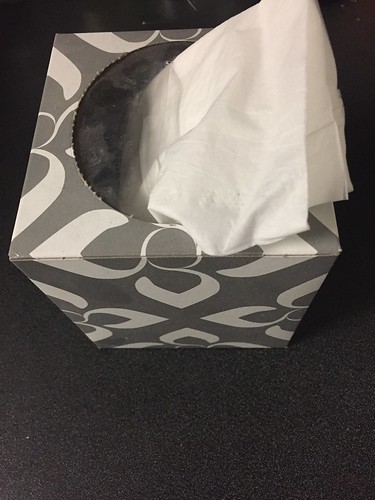
And today I suddenly have to keep blowing my nose. That's a problem, because all I had around to blow my nose were, you know, regular tissues.

Tissue comparison

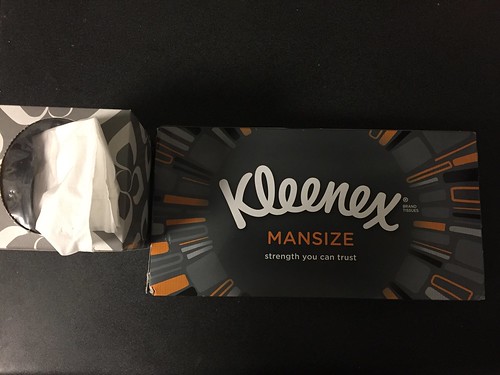
Those are fine and all for, you know, regular people, but I'm a man. Even with a cold, my notion of masculinity must be protected at all times. I can't use tissues in pastel tones, or with scented lotion, or flowers on the box. What kind of man would I be then? And what would I blow my nose with?

Tissue comparison

Oh, thank God.

In all seriousness, I saw the mansized Kleenex a few weeks ago in a post about needlessly gendered products. (Cracked? Buzzfeed? Who really knows?) Because Amazon now has us all living in a world where I can have things in my hands before the momentary impulse to purchase them has even passed, I've had the mansized tissues ready and waiting for my next tissue-related health crisis.

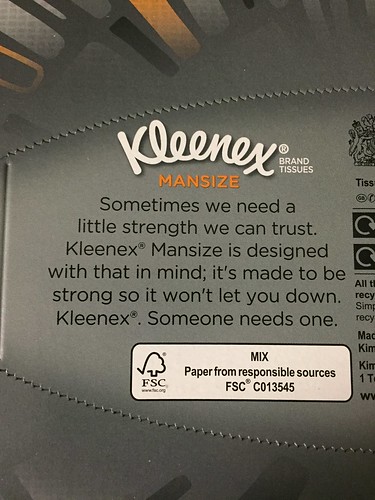
So, how are they? Well, before I'd even opened them the box assured me that I'd made a strong, manly purchase:

Tissue comparison

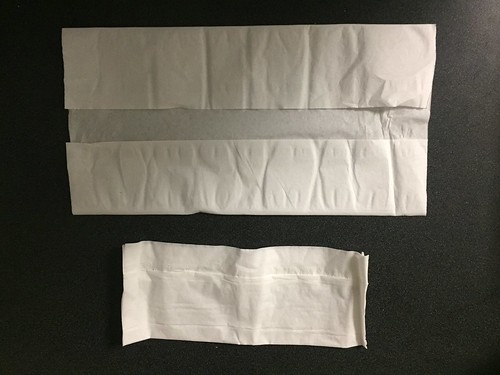
And then the tissues themselves are huge:

Tissue comparison

Each one of these tissues is the size of a paper towel.

Which is fortunate, because my nose is filled with a mansized ocean of snot.

Sunday, March 19, 2017

Books 13-16: Mixed Bag

I've finished four books since the last time I reported back on my reading, and they were kind of a mixed bag as far as themes went and as far as my feelings about them went.

13) In Josh Lanyon's Murder in Pastel, Kyle Bari is a writer, living in the house his father, a famous painter, vanished from ten years ago. Cosmo didn't vanish alone, though, but instead disappeared along with his masterpiece, the "Virgin in Pastel". Kyle's quiet existence is interrupted when his father's former protégé, and Kyle's former crush, Adam returns to the house next door for the summer, with his attractive, somewhat bitchy boyfriend Brett in tow.

Brett's depiction is my first problem with this book, as he is described on the back cover and on the Amazon review as "beautiful but poisonous", but nothing in the book ever makes him seem that terrible. He's kind of bitchy, and he flirts with and sleeps with any male in the vicinity, but most of the problems the group of friends in the book have are already there before Brett gets there, and I feel like the reader is told to hate him way more often than we're given actual reasons to.

In a somewhat rapid turn of events, the "Virgin in Pastel" is discovered hidden in an old dresser, Brett is suddenly murdered, and Kyle's exploration of the events of his father's disappearance and Brett's odd connection to it may mean that Kyle's next.

This book was pretty short, and in the end I still didn't understand if I was supposed to hate Brett or feel bad for him or what, but at least I felt something about him. Kyle and Adam were kind of blandly there, and once Brett was dead the book became a slog.

14) Thomas Olde Heuvelt's Hex was so disturbing that I had trouble falling to sleep the night I finished it. Somewhere during the year I saw it on a "interesting books you should read" list and stuck it on my wish list, and I'm glad I did, because it was a good read. Disturbing as hell, but good.

Black Spring is a tiny town of 3,000 or so people in the Hudson Valley. It's also home to the three hundred year old Black Rock Witch, who walks among the townspeople with her eyes and mouth sewn shut, popping up on street corners, in the grocery store, and in their living rooms at will to stand and somehow stare, even though her eyes are closed. The town lives under her curse, unable to leave Black Spring for more than a few days at a time without being compelled to suicide, and HEX, the town's secret police, does its best to keep her actual existence hidden from the outside world, because the last time people came to study her, people died, and no one knows what will happen on the terrible day when her eyes and mouth are finally opened.

HEX controls the phones, the internet, the postal system, and watches the town and the witch on a network of surveillance cameras, blocking her from the view of outsiders and keeping people from blocking her path as she walks the streets of Black Spring. This is the way the town has survived for 300 years, but now something is wrong. Some of the teenagers want to reveal the truth of the Black Rock Witch to the world, but the only way they can do that is with evidence, and the only way to get evidence is by breaking town law and interfering with the witch.

Framed by one family's attempt to live a normal life in an abnormal situation, this book starts out lighthearted, and then just gets worse. And worse. And worse. By the time I got to the end I was terrified of and for the characters, but it was a hell of a good read.

15) After that book, I needed something to clear my head, and I ended up reading MGM: Hollywood's Greatest Backlot, a historical exploration of the former backlots at MGM Studios in Culver City. Once the largest studio backlots in the country, and possibly the world, they are now almost completely gone, covered by housing developments and stores. Before they came down, though, these backlots were home to countless movies and television shows, and the authors painstakingly map out the various locations, sets, and films, bringing the former studio back to life.

Now that I'm watching Feud, I feel like this kind of knowledge can only help.

16) Everyone kept saying I should try a book by Liane Moriarty, and The Husband's Secret seemed interesting, so I gave it a try, and it was pretty good.

Cecilia Fitzpatrick has a perfect suburban life, but Tess, who just found out that her husband has fallen in love with her cousin, does not. Neither does Rachel, who has never really recovered from the death of her teenaged daughter many years ago and whose son is moving her grandson to New York. None of these women interact much, as they seem to have little in common, but that all changes the day that Cecilia finds a letter addressed to her in a box of old papers. The letter is from her husband, and is to be opened in the event of his death. The problem is that Cecilia's husband is still alive, and the letter holds a terrible secret that will ripple out through the lives of Cecilia, Tess, Rachel, and everyone around them.

Moriarty does a good job of building the characters' lives and twining them together before the letter is ever opened, and once the secret is out the tension builds continuously until the final chapters. While I didn't like the epilogue, which neatly tied up every single character's stories (even the dead ones), overall this was a good, engaging read.

Thursday, March 16, 2017

Last Place

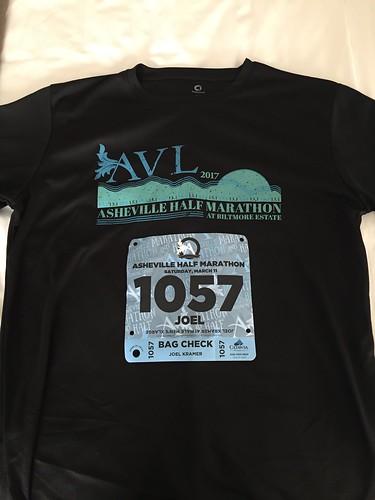
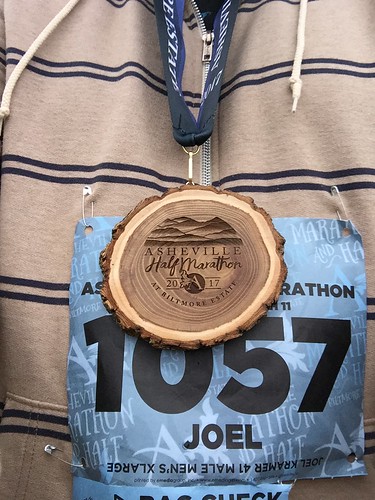
I had a half marathon on Saturday, the Asheville Half Marathon at the Biltmore Estate, but it's taken me a couple days to write about it because I was waiting to figure out how I felt about it. See, unlike last year when I did this race and set a personal best, this year I did it and set a personal worst, and not just in regard to my finishing time.

I came in last place.

I'm not being overly dramatic, either. I was the last male finisher. Twenty women finished after me, but I was last for the guys.

Finish line

I was so last that the photo above was taken by my friend Lauren's dad, because the official race photographer had already left the finish line area. Apparently if you are not at the front of the race you may as well not have been racing at all, and it doesn't matter if you finished because your achievement isn't worth being photographed. I've never before wanted to go find someone and scream the Starfish Story at them quite as much as I do the photographer right now, but that's not the feeling I've been trying to sort out for a few days. I've been trying to figure out how I feel about it.

The honest answer is that I feel fine.

I knew going in that this was going to be a hard race for a couple of reasons.

First, it's a hard course, as far as hills are concerned. I remembered this from last year, but since you probably haven't done the race yourself, feel free to look at the elevation changes chart at the bottom of this page. The hills are at the beginning, and the stretch between Mile 4 and Mile 6 is brutal. I slowed down a lot in that part and honestly thought about quitting, and another lady who was walking beside me for that stretch gave me kind of a pep talk about how she was struggling, too, and how we would both get through this and finish and everything would be ok. I pulled past her at Mile 7, and she was swept from the course for being too far behind just after Mile 8. I felt guilty about this for several hours, because she helped get me through a rough patch and I felt like I should have done more to help her, but other than offering encouragement I'm not sure what else I could have done.

She and I were struggling for the same reasons besides the hills: we were both heavier than the last time we did this race. I mentioned when I did my last half marathon in September that I had put some weight back on. I didn't get rid of that extra weight over the winter, but instead put a little more back on to go with it. I'm working on turning that around again (I've lost seven pounds since January, which is great, but I could definitely be working on that a little harder, and will, rather than working on fitting All Dressed chips into my mouth; why do they have to be so good, like Salt and Vinegar chips and BBQ chips had a delicious baby?), but in the meantime being bigger means being slower, and that's a concern on this race since they are very strict about the time. There are certain checkpoints, and you have to be above a specific time when you pass them, or you are removed from the course. Last year I didn't even see the sweeper, a man on a bicycle with a black broom across his handlebars, but this year I did: at Mile 8 there was a brief out and back (this is where you walk out to a point, turn around, and walk back) and he was coming into the out and back just as I was leaving it. I swore, sped up, and put him mostly out of my mind. The lady who talked me up the hill was entering the out and back just before he turned in to it, so I believe this is where he got her.

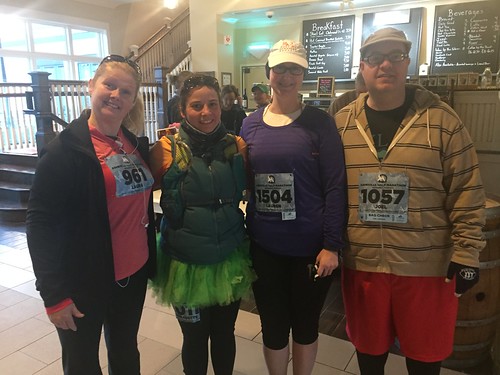
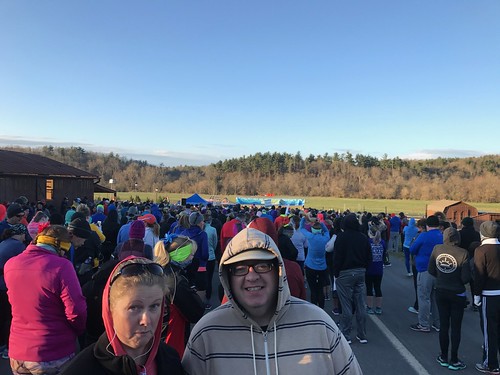
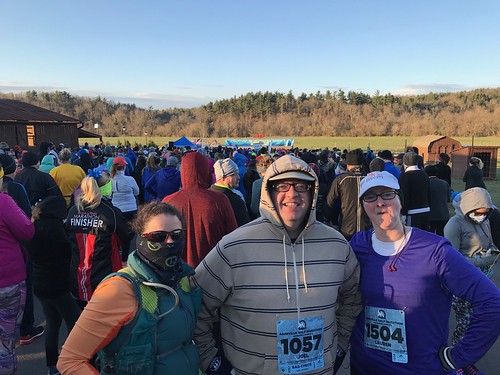
The last reason we were all struggling was the cold. The temperature was somewhere between the high twenties and low thirties Fahrenheit the entire race, and when I passed the house it flurried for a minute or two. Sure, we bundled up:

Asheville Half Marathon at the Biltmore 2017

Asheville Half Marathon at the Biltmore 2017

Asheville Half Marathon at the Biltmore 2017

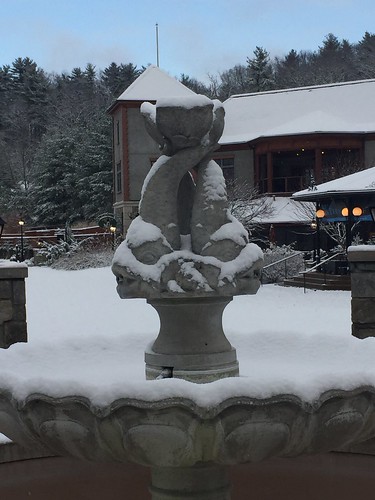
but there's something mentally draining about walking in cold weather for me. All of my cold weather races are always my slowest ones, and it's not because I have extra layers on. Instead, there is a constant refrain in my head of how cold it is, how I could be on my couch right now, how cold it is, how I want a hot chocolate, how cold it is, how sane people are inside right now, how cold it is, etc. Walking in the cold pulls my focus, so I never reach that moment where I forget that I'm walking at all and just truck along. It could have been worse, though. The people doing the full marathon on Sunday had to deal with snow:

Biltmore Antler Village snow

Biltmore Antler Village snow

Biltmore Antler Village snow

Biltmore Antler Village snow

Biltmore Antler Village snow

I hope they all stayed warm.

So, I had a race:

Asheville Half Marathon at the Biltmore 2017

I finished:

Asheville Half Marathon at the Biltmore 2017

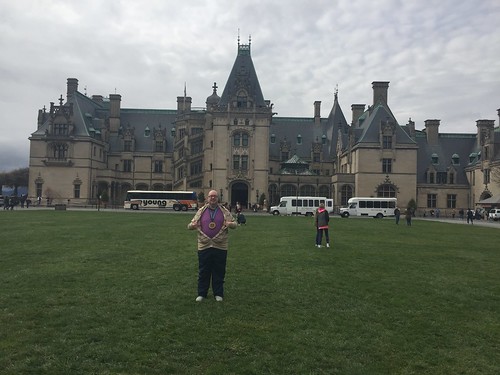
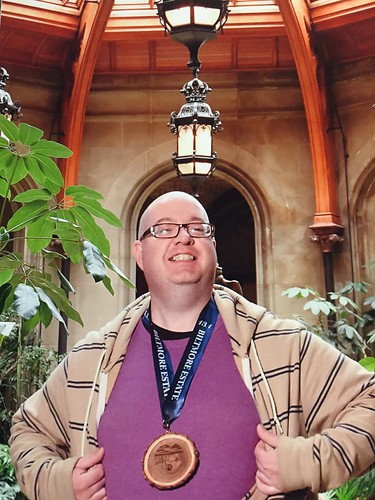
and I celebrated my victory:

Asheville Half Marathon at the Biltmore 2017

Biltmore 2017

like I wasn't the man in last place:

Biltmore 2017

Mentally and physically, I'm in a much better place about this than I was after that half marathon in September. I'm not in pain, I only needed a day or two to recover, and I only got one small blister, from wearing the wrong socks. I discovered on Sunday morning that I actually had packed the correct socks, but I somehow couldn't find them in my bag on Friday night when I was laying out my race clothes. When I finished the race on Saturday and got back to our room I calmly told Laura and Bernadette, "There's some kind of situation in my shoe. I might have a blister, I think," and when I pulled off my sock there was a quarter-sized circle of blood on the bottom, but it had already burst sometime during the race and didn't hurt.

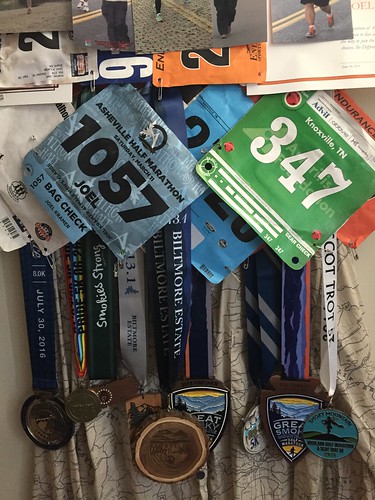
Now it's time to hang up my medal:

Asheville Half Marathon at the Biltmore 2017

and focus on the next race.

Which is in two weeks.

Because I might be insane.

Friday, March 3, 2017

Books 9-12: Three of Them Were Supposed to be Really Good

When I decided for New Year's that I would post about books as I finished them this year, my original intention was that those posts would be interspersed with regular blog posts, and this wouldn't just be a whole bunch of book reviews in a row. So far, that's not working so well, so I need to concentrate on that a little more before this blog just turns into endless book reviews. Waiting for myself to do something exciting, and then not doing anything worth writing about, also means that I may end up with stacks of books to review, like I have now.

Clearly this idea needs some fine-tuning.

In the meantime, here are four books, three of which were gifts from my parents:

9) Gold Fame Citrus, by Claire Vaye Watkins (whose name makes me think of Claire Voyant, the 1940's Black Widow and also the first female character in comics to have both superpowers and a costume), was one of those books that everyone said was so good but when I read it turned out to just be ok. It tells the story of Luz, who at birth became the California Department of Conservation's mascot, the symbolic innocent victim of the state's growing drought. Now, in the near future, the state is completely dry and mostly evacuated as most of the American Southwest is swallowed by a growing Sahara-like desert that swallows entire cities. Luz and her partner live in an abandoned mansion in the Hollywood Hills, scavenging and surviving on her modeling fortune until the day that they accidentally end up with an abandoned baby. Now, forced to care for something instead of being cared for, Luz and Ray make a desperate gamble to cross the desert to Kansas City to make a new life for their new family, despite the patrols, bandits, blistering heat, and rumors of a strange missionary who can find water in the sands and commands a cult of desert dwellers.

There are interesting ideas here. Given our current times, any exploration of imminent dystopias and the ways that humanity will behave in the face of social, economic, or environmental collapse is probably of value, and there are also interesting thoughts on the nature of right and wrong, truth and illusion, and sacrifice. At the same time, the ending felt flat to me, and I wished for a better resolution.

10) I picked up Robert Trachtenberg's When I Knew at the Library Book Sale last summer, and it's been sitting on my coffee table ever since. It's a series of one or two page vignettes by gays and lesbians explaining when they realized that they were gay or lesbian, and sometimes what that meant for them and their family. I thought it was cute and interesting.

In case you missed it, I wrote about my coming out story a few years ago, which can be summed up like this: a quiet night under the stars with a boy who had great abs, leaves on his jacket, and OH SHIT I'M GAY. Someone asked me a few weeks ago what I would say to that first boy if I had the chance to talk to him now (because of Valentine's Day, everyone was talking about their first loves), and after thinking about it I realized the answer is "nothing". I'm not mad at him anymore for not being in love with me the way I thought I was in love with him, and I doubt he thinks of me at all. Twenty-one year old me probably wouldn't believe that, but forty-one year old me can't even imagine how we would begin a conversation. "Hey, how did the rest of your life go? Do you still have good abs?" What would we really say after that? Just because I'm not mad at you anymore doesn't mean I want to know you, either. I tried that once and it didn't work out so well.

11) I don't remember which friend said, "I think you'd like this book", but whomever told me to read Jen Mann's People I Want To Punch in the Throat gave out some really good advice. I was wary of reading another blog collection after Let's Pretend This Never Happened, because that one, while funny, was also exhausting (although that blog is probably really funny when you read each entry a few days or weeks apart), but I decided to just dive into this anyway and I'm glad I did. A consistently entertaining rant against suburbia, carpool moms, classroom moms, PTA moms, book club moms, cheapskates, Pinterest crafters, people who do their kid's homework for them, and various other everyday offenders, this book made me want to be friends with the author. Knowing that she would immediately put me at a distance for a while, the way I do with new people who try to befriend me, made me want to be her friend even more. I'll be looking for the rest of her books soon.

Also, everyone who got a look at the title asked me about what I was reading. Servers at restaurants, people in the elevator, coworkers, everybody who saw the name wanted to know what it was about and if it was any good. I told them it was.

12) Drew Magary's The Hike is another one of those books that everyone said was so good but when I finished it I wondered if I missed something. Again, it wasn't bad. I don't feel like I wasted a few days of my life reading it, but at the same time I found it underwhelming. I probably would have had more fun going on a real hike instead.

This tells the story of Ben, father of three, who drives to a strange hotel in northern Pennsylvania for a business meeting. Arriving early, he decides to go on a hike on the hotel grounds which immediately turns into a multi-year quest to get back to his family, complete with zombies, giants, talking animals, magic potions, weapons, smoke monsters, and impossible choices. Why is this happening to him? When will it end? Will it end at all? And will his family be the same when he sees them again?

And why did everyone think this was so good?

Either way, the book I'm reading now seems interesting, but they all do in the first thirty pages or so.

I guess we'll see.

Sunday, February 19, 2017

Books 7 and 8: Twice the Prince Lestat

I'm starting to wonder if series of vampire books all turn insane by the end. I only have three series to judge on, but let's look at them:

The Anita Blake novels, by Laurel K. Hamilton

These started out sort of interesting. The main character was a reluctant necromancer, accidentally dating a vampire and a werewolf at the same time. For the first two or three books it was sort of interesting and sort of diverting, and then the sex kind of took over. A lot of sex. So much sex with werewolves, vampires, werepanthers, regular humans, and other supernatural creatures that finally, in one book, they never resolved the plot. There was an opening chapter, a dozen or so chapters of creature sex, and then the bad guys just left town with a note that they'd be back.

The Twilight novels, by Stephenie Meyer

I freely admit that I have read all six Twilight books. If you didn't know there are six, I understand. Most people think there are only four, based on the movies, but there really are six, and they're all terrible. A whole chapter where Bella fills out college applications! Buildups to big fights that happen off the page! Vampire baseball! And sparkles! SO MANY SPARKLES! When I was reading the first four I was also carpooling with my friend, Jeannie, and every day I would update her on the new insanity.

"They're immortal, so they keep going to high school, over and over!"

"There's something called imprinting, and it makes werewolves mate for life with toddlers!"

"Their wedding night is so hot that he tears up all the pillows so he doesn't hurt her, and she ends up all bruised and in pain but it's somehow romantic!"

"THE VAMPIRE BABY FRACTURES HER PELVIS FROM INSIDE AND A FOUNTAIN OF DELICIOUS BLOOD SHOOTS OUT OF HER MOUTH!"

Batshit crazy, those books.

Also, there are actually seven, but one was only partially published online because it leaked and then Meyer stopped writing it.

The Vampire Chronicles, by Anne Rice

Oh, Anne. I liked you for so long. I discovered you in college and read you voraciously. I even read The Sleeping Beauty Trilogy and Exit to Eden (which, oddly, became a sex comedy starring Rosie O'Donnel). The longer the Vampire Chronicles went on, though, the worse they got. Lestat, the protagonist, met Satan. Every supporting character got their own book, and only some of them were interesting. She tied the series into her Mayfair Witches series, which had also degenerated into nonsense by only the third book, and the result was almost unreadable.

I'm serious. Blackwood Farm and Blood Canticle were so awful that I can barely remember what they were about. All I remember is that they were so bad, and so poorly received, that Anne Rice stopped writing about vampires. That was fortunate because I was ready to stop reading about vampires for a while, and I say that as a person who wrote a senior thesis on vampirism in popular modern American fiction in undergrad. Anne Rice made me love and eventually hate vampire books, but this month I gave her another chance.

The results were mixed.

In Prince Lestat, Rice kind of catches us up on where almost everybody has been. I say "almost everybody" because there are two notable exceptions that I'm calling notable because they had their own books: Vittorio and Ursula aren't mentioned in this book or the next one, and neither are Merrick, Mona, Quinn, and the rest of the Mayfair Witches and Blackwood Farm vampires, although their absence is eventually explained in the second book. Aside from checking in on everybody, there's a mysterious Voice urging old vampires to burn up young ones, and all the vampires have to come together to discover the source of The Voice and confront the danger to them all.

"Prince Lestat" is Queen of the Damned all over again. Cast of thousands, powerful but previously unknown old vampires, everybody coming together to defeat an ancient threat, etc. If you liked that book, you'll like this one, too, and (spoiler) it ends with Lestat as official Prince of the Vampires, with Amel, the spirit that created and animates all vampires, housed inside him and communicating with him.

And then in Prince Lestat and the Realms of Atlantis things go all the way insane, because it turns out that not only was Amel a ghost, not just a spirit, but he was the ghost of the ruler and creator of Atlantis.

And also he was sent to Earth by aliens.

Yup.

Not only that, but the aliens, an avian reptilian race that feeds on suffering and watches Earth from afar, sent other immortals to Earth, too, to stop Amel and destroy Atlantis, and now those immortal humanoids have read the Vampire Chronicles and know Amel is still around and they're coming for him for unknown reasons that may destroy all of the vampires and also all of humanity. And there are lots of other ghosts, too, and some of them wear clothes and talk to vampires. And it's right in the middle of all of this that Anne Rice reveals that she hates "Blackwood Farm" and "Blood Canticle" as much as I do. How do I know?

She reveals that the entire cast died horrible off-panel deaths, in less than two pages of discussion.

Two vampires are discussing the humanoids, and both say, "I've never seen a creature that looks human but isn't human, not in thousands of years", and I'm thinking, "Wait, what about the Taltos monsters from the Witching Hour books?" but no one ever mentions them. They do mention Merrick, though, for a minute. "She burned herself up." Oh, no. Well, what about Quinn and Mona? "Oh, they burned up, too. It was really quick, but sounded horribly painful."

So all of the other characters from all of the other books survived, more or less, except for the casts of the two really awful books?

OK, then. Back to the aliens, ghosts, and vampires. And Atlantis.