Sunday, March 13, 2016

"Use your glutes, ladies!"

"Use your glutes, ladies!"

A woman in red arm sleeves screamed this somewhere around mile five Saturday, at approximately the same time that my internal monologue was saying, "Half marathons are bullshit. This sucks. We're never doing this again." She can be forgiven for saying "ladies" because, for most of the race, I was the only man at the back, surrounded on all sides by women.

Mile five was the fifth mile out of six and a half miles of continuous uphill walking. Three times in the first seven miles one of the race volunteers said, "You're past the worst part! It's all flat and downhill from here on out!" Two of those times were lies.

Let's back the story up a little bit, though.

On Thursday, I drove to Asheville to meet up with my friend Bernadatte, so that we could participate in the Asheville Half Marathon at the Biltmore Estate. We signed up for this kind of impulsively last year, at the expo for the Great Smoky Mountains Half Marathon. If you haven't done a big race before, the expo is an event the day before when vendors come, and you pick up your rack pack, and everyone gets really excited. Last year we were so excited to be at a half marathon together that signing up for another before I'd even walked my first one seemed like a great idea, and we registered on the spot.

Our trip didn't get off to the best start. We were supposed to meet up to climb Mount Mitchell, the highest peak in North Carolina and the highest peak in the United States east of the Mississippi River:
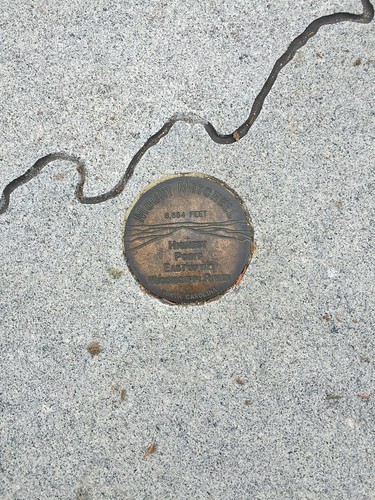
Mount Mitchell 9

but there was a closed road in the middle of the park where the mountain is:
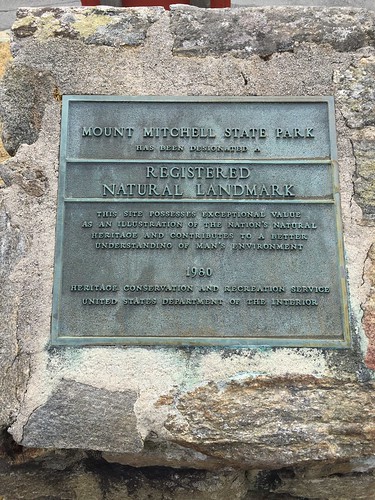
Mount Mitchell 4

and after three attempts at navigating around it only to have my car redirect me back to the same stretch of closed road I texted Bernadette that I was giving up and going to hang around the hotel. As part of impulsively deciding to do this race, we also decided to stay on the grounds of the Biltmore Estate, which turned out to be a smart choice for two reasons:

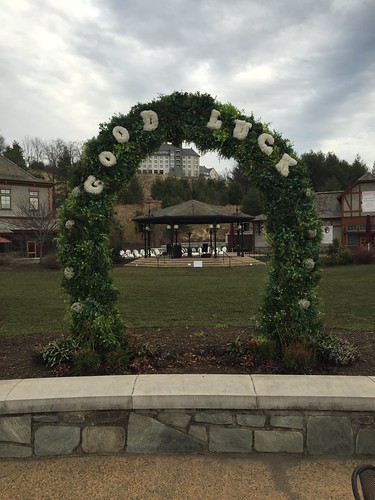
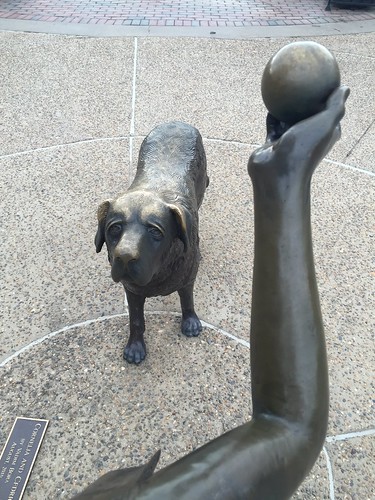
First, it was so peaceful and restful. We went for a walk the day before the race, covering a few miles of the course, and everything was very calm:
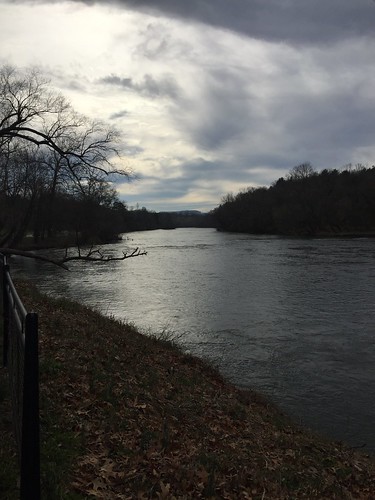
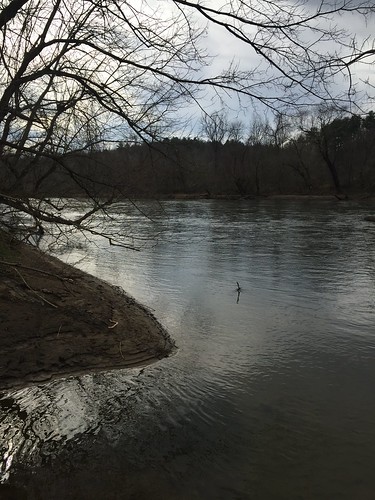
Biltmore Estate 1

Biltmore Estate 12

and really pretty.

Biltmore Estate 6

Biltmore Estate 2

Biltmore Estate 3

Biltmore Estate 5

We could also walk to the winery, where I purchased enough bottles of wine for them to give me a box to carry them all, because that is a totally normal thing that adults who live alone do.
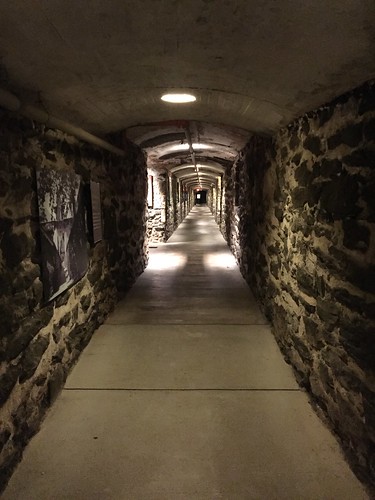
Biltmore Estate 8

We walked all of this because the Biltmore was not yet renting bicycles for the season.

"We're trying to have some tomorrow!"

What's there to try? You have a bicycle barn, full of bikes, marked on the map. Unlock it and let the bicycles out, and the problem's solved.

Anyway, the other reason staying on the grounds was a good idea was that we got to wake up in the morning and walk right out to the race a half hour before start time. We had time to have breakfast, pose for photos:
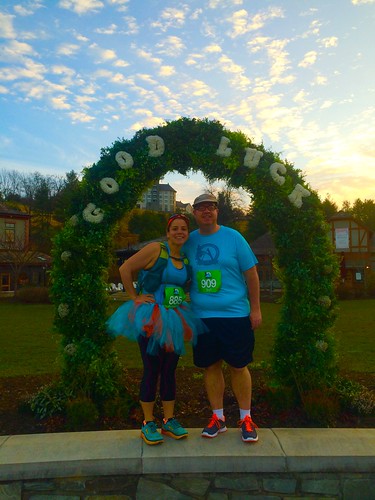
Race day

and didn't have to get up at five AM to sit on a shuttle bus and then stand around for an hour.

We got up at five anyway, because we are crazy people.

I went into the race with doubts, because there was no pacer for the time I expected to finish in. The pacer is a person with a sign who is going to finish in the time printed on their sign. You can use them as your guide to figure out if you are keeping your pace, or need to speed up, and in my other half marathon they had them for every fifteen minutes up until 3 hours and 30 minutes. When you start the race, you find your pacer, and that way people who are faster don't have to push their way around you to get going. With that in mind, I went hopefully searching for the 3:00 pacer, but couldn't locate one.

"I'm the last pacer," 2:45 told me.

"There's no one after you?"

"The sweeper, at 3:30."

The sweeper lets you know that you will not finish in time. If the sweeper passes you, you get pulled off the course and you do not receive a medal. I talked about this last time I wrote about a half marathon, but I'll say it again: the sweeper is failure. You must stay ahead of the sweeper.

This filled me with terror. I'm sort of conscious of my own pace, but I know I get slower the longer we go on, because I get tired. That means my pace starts changing, and it's hard for me to tell because I'm mentally fraying at that point. Everybody before 2:45 got to know where they were plus or minus 15 minutes, but 2:45 to 3:30 was a 45 minute no man's land, where you might be on the verge of succeeding or might get swept up by the sag wagon at any moment.

Since we stayed at the hotel, and got to roll into the race right before the start, I only had ten minutes to agonize over this, which may have been to our advantage, because the gun was going off and the race was starting before I could really psych myself out.

Mile three marked the first lie from a race volunteer: "It flattens out right up ahead."

Mile four was where I realized I wasn't replenishing calories fast enough, and jammed three cubes of Shot Bloks into my mouth because I was lightheaded for a second. Personal recommendation: avoid the strawberry flavor, which is distilled not from strawberries but instead from dust and sadness.

Somewhere in that first few uphill miles a table offered us Girl Scout cookies, which was a charming idea. Unfortunately a milkless Girl Scout cookie when you're panting from several miles of uphill walking is petty much like rubbing your tongue with delicious sandpaper.

I mentioned mile five at the beginning of this. At that point I was among a crew of older ladies who all know each other and race together. They wore matching shirts and all walked at more or less the same speed, except for Judy, who was way ahead. One of the ladies explained to the other lady how much she does and doesn't like Judy, who is faster than all of them.

"I've never liked Judy. I don't dislike her. I've just never liked her."

It sure as hell sounds like you don't like her, but I don't know your life.

Just after mile six one of the volunteers told us that we were past the worst of the hills and the rest of the race would be downhill. I believed he was lying, like the two lying liars before him, but it turned out that he was true.

Just before the mile seven mark we were joined on the path by the staff of the Biltmore House, who were walking from the staff parking lots to the house for their workday. They were very nice, and very supportive.

Miles seven to ten are kind of a blur for me. They were very pretty, with waterfalls and shaded paths and such, and mostly downhill. Eventually the course joined the route Bernadette and I had walked the day before, and I was comforted by the familiar.

At mile ten, we were encouraged onward by Lady Biltmore, who I had met the day before at the expo:
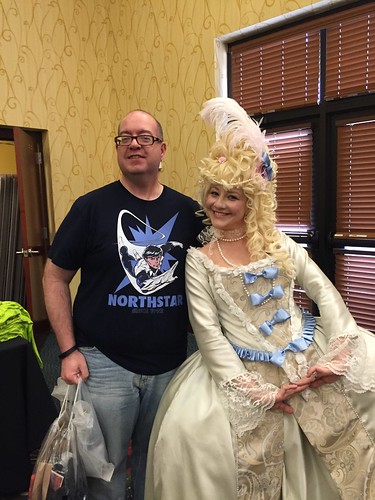
Biltmore Estate 9

and who I saw again at the end of the race:
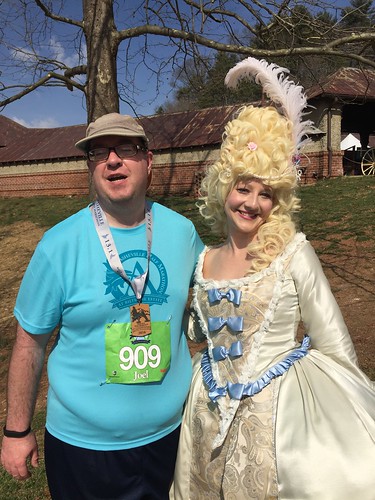
Asheville Half Marathon 6

There was a sign at the water station by her that informed us that anyone passing mile ten later than 2:10 into the race was going to be pulled off the course. No one pulled us off at that point, so I knew I was still faster than 3:30, but I had no idea at that point how fast or slow I was moving.

At mile 11 I fell into some kind of mental fugue. I have no memory whatsoever of seeing the mile 12 marker. Mile 11 is the last one I remember seeing, and then, all of a sudden, when I was coming toward the finish line, I saw the 2:45 pacer directly in front of me.
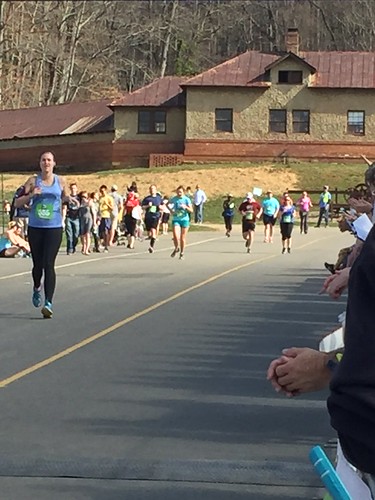
Asheville Half Marathon 1

See that little white square toward the right side of the picture? That's her 2:45 sign. And that's me directly next to her.

My initial thought was that I was hallucinating.

My second thought was that she got tired.

"Are you still on pace?" I loudly demanded. "Are you still 2:45?"

She held up her wrist watch. "Yes."

I have no idea how this happened. I should have stayed with her, but I was exhausted. Even though the finish was downhill and Bernadette was screaming at me to run, I was too dazed. Instead, I became a princess.

I'm serious.

I walked that last minute to the finish line giving my best pageant wave and thanking everyone on both sides of the course.
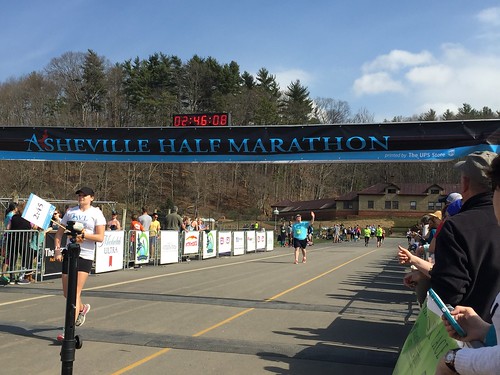
Asheville Half Marathon 3

"Thank you! Thank you so much!"

Asheville Half Marathon 2

"Thank you!"

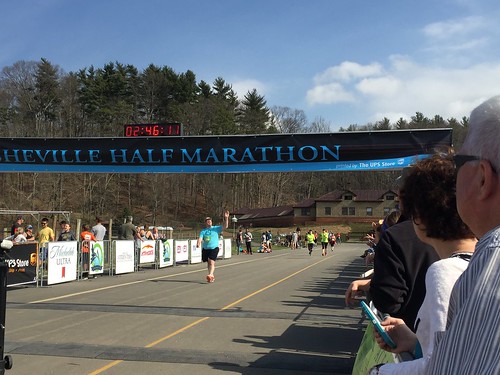
As I crossed the finish line the announcer said my name:
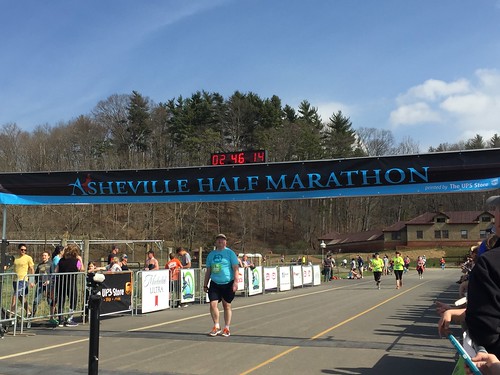
Asheville Half Marathon 7

and I screamed, "That's me!"

I may not have won the race, but I sure as hell acted like I did.

I finished at 2:46 clock time, and chip time of 2:44. My chip time on the last half marathon was 3:07. I somehow took over twenty minutes off of my time. That's almost two miles, because the stats also say I was averaging a pace between 12 and 13 minute miles.

I just barely made it out of the bottom fourth of finishers, but I still finished:
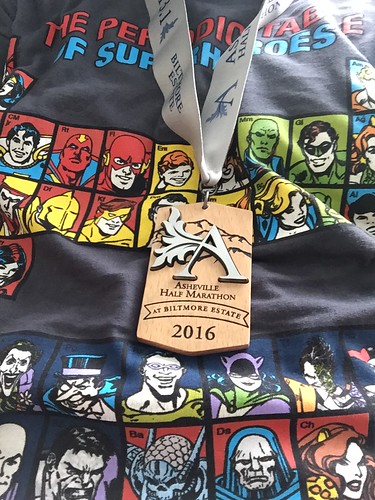
Asheville Half Marathon 4

and I did it ahead of 300 other people.

Friday, March 4, 2016

Bring Your Action Figure To Work Day

Today, according to the many tubes of the internets, was National Bring Your Action Figure to Work Day. I know because when I read about the day last year I put a note on my calendar for a week before the proposed 2016 date, so that I could check and see if this was a real thing that would happen again this year. It turned out that it is a real thing, as much as any holiday invented on the internet can be, which left me with the question of which action figure to bring, as I assumed the ones that hang out in my office all the time didn't count.

For a while I figured I would just bring my default, Superboy, but then I remembered that he gets to go a lot of places already. I considered my Namor figure, which I always think of as Sad Namor (I'm not sure why), or maybe Supergirl, but then I thought, "What about Northstar?" Yes, what about Northstar? He's cute, he's gay, and he likes to sneer derisively at things. Perfect!

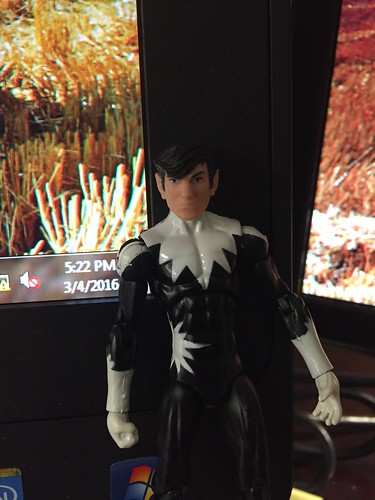
So Northstar came to work with me, and immediately began sneering.

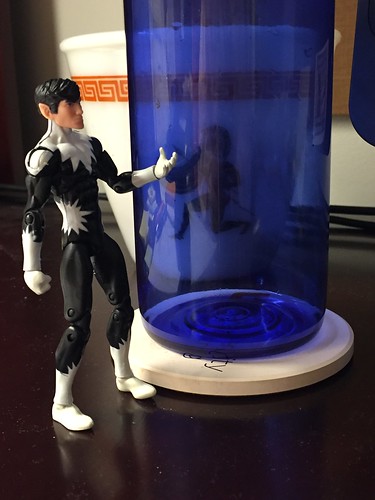
Bring Your Action Figure to Work Day 2016 (1)

Why is your water bottle empty? Don't you want to stay hydrated? You should, at your age.

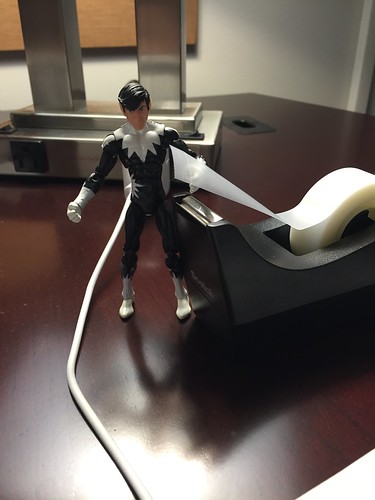
Bring Your Action Figure to Work Day 2016 (2)

Did they issue you this tape dispenser, or did you go back to 1970 yourself to get it?

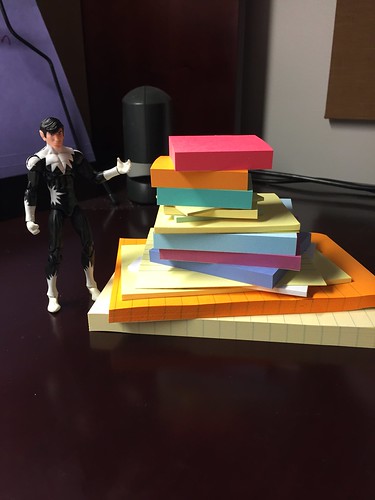
Bring Your Action Figure to Work Day 2016 (5)

Why do you have so many kinds of Post It notes? How forgetful can one person possibly be to need this many reminders?

I started to feel like Supergirl would have been a little nicer.

Bring Your Action Figure to Work Day 2016 (8)

Your tie is hideous. Take it off.

OK, I guess...

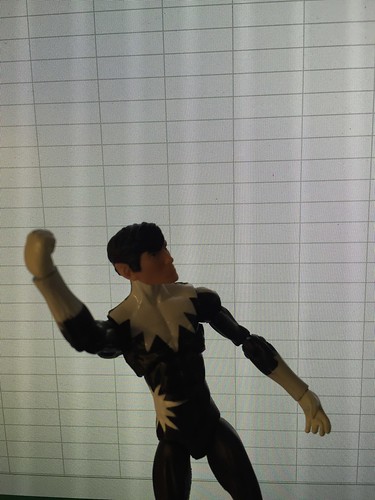
Bring Your Action Figure to Work Day 2016 (4)

Why are you still staring at Excel? Are you being punished? Who did this to you?

I'm doing some reports. This is what work looks like sometimes.

Bring Your Action Figure to Work Day 2016 (6)

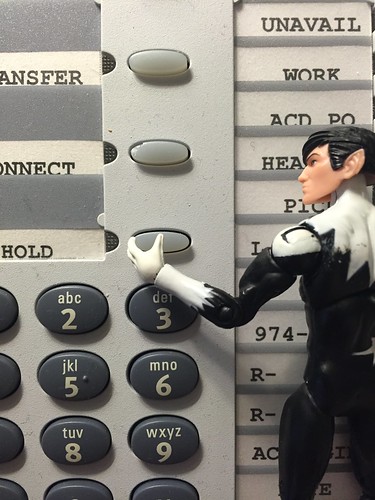
Enough of this. Let's put all the calls on hold and go to lunch.

Bring Your Action Figure to Work Day 2016

And so we went to lunch, a nice long walk to and from the office. By the end of the day, we'd even come to a sort of quiet understanding.

Bring Your Action Figure to Work Day 2016 (7)

It's after 5. Why are we still here? Haven't you had enough?

I thought about it, and yes, I had.

So Northstar and I went home.

Monday, February 29, 2016

The Short Month in Books: February

February tends to be one of our busiest months at work and that, combined with it being the shortest month of the year, means that I got very little reading done this month. It's been unseasonably warm most of the month, so I've been doing a lot of outside walking instead of on the treadmill, which cuts into my kindle time, and I've been walking at lunch and not eating out a lot, which are the other two main times when I read. As such, my total for the month is really small, and the extra leap day didn't really help.

1) In Carol Goodman's River Road, college professor Nan Lewis is driving home from the English faculty department party in a blizzard when she hits a deer. Unable to find the deer or to get her car up her unplowed driveway near campus, Nan leaves the car overnight, only to be awakened in the morning by the Sheriff. Someone ran over beloved student Leia Dawson and left her to die in the snow, and the police are certain it's Nan. Nan's own daughter was killed by a drunk driver years ago at the same place in the road, but Nan only had a couple of drinks, right? And she wouldn't leave someone to die, right? Especially not a good girl with no secrets like Leia, right? Now Nan has to clear her name even as dark secrets from Leia's past rise up around her.

I like Carol Goodman's books, but they very rarely leave much of an impression after I've finished them. I've even reread a few, and they're fine and entertaining when I'm reading them, but the minute they're over they tend to slide right out of my mind.

2) People have been telling me for a few months that Jessica Knoll's Luckiest Girl Alive is "so good! Just like Gillian Flynn!" There's even a blurb right on the cover that compares the two, but there's a difference here: this book does feature a damaged, hard to like, non-traditional female lead struggling through the rest of her life after a terrible tragedy in her youth, but the flashbacks also show us that she was terrible and hard to like before tragedy even befell her. The tragedy may have sharpened her, but she's annoying to read about before and after, and the story itself basically boils down to a Lifetime movie, all the way down to the last minute reveal and comeuppance at the very end. I guess it's sort of interesting to read about someone who is both the victim and the victimizer throughout her story, but when I was finished I just kind of shrugged and moved on. There wasn't really anything to think about or ponder over like a Gillian Flynn book.

This might be ok for a vacation read? Like if you were on the kind of vacation where you don't want to think about anything?

3) I haven't read any of Philip Roth's work since I was in college, and I'm not sure how Indignation ended up on my reading pile, but I enjoyed it. The year is 1951, and Marcus Messner has transferred to college in Winesburg, Ohio, to escape his paranoid, controlling father, a Kosher butcher in Newark, New Jersey. With the threat of the Korean War hanging over campus, Marcus is at war with himself, pressured to make the right friends, date the right girl, and think the right thoughts in an environment that doesn't tolerate dissention. This was a short, turbulent read.

This is the second best book I read all month, for what it's worth. It was an interesting portrait of college as it no longer exists, and presents some social issues for your brain to chew over.

4) In Lafeyette in the Somewhat United States Sarah Vowell takes us on a trip back to a time when the US begged for France's help, when Freedom Fries did not exist, and when the patriots of the Revolutionary War welcomed the aid of a French general who was below the current legal drinking age. Following Lafeyette's journey through the US both during the war and later, when he came back to celebrate the 25th anniversary of the victory and spent a year being celebrated by everyone in the US, Vowell gives an amusing picture of the way the war is remembered today contrasted with the way it actually was. This was an entertaining, informative read.

This was the best book I read all month, because Vowell is adept at combining the past with current events in a way that lets the reader see exactly how one flowed into the other without the sense that you are reading a textbook. She also has a very dry sense of humor, and I appreciate being educated about the Revolutionary War through the lens of her getting the reenactors at Colonial Williamsburg to break character or a description of how hard it is to find a monument that now stands in the corner of someone's front yard. Her books present American history in a way that entertains Americans.

So, yeah, I read a grand total of four books this month, but I have less than 10% of a book left on the Kindle.

I promise to read more in March.

Sunday, January 31, 2016

The Month in Books: January

I'm fairly confident that I'm not going to finish my current book in the next four hours, because I'm going to play video games, lay out tomorrow's clothes, and go to sleep. With that in mind, I figured it was ok to go ahead and talk about all of the books I read this month, and if I randomly do plow through that last hundred pages I guess I get a head start on February.

Here are the first books I've read for the new year:

1) In Patrick Ness' The Rest of Us Just Live Here the indie kids, the ones with the cool names ("There are three of four named Finn, and there are two Satchels, a boy Satchel and a girl Satchel") who don't join the cheer squad or go to dances or any of the regular high school stuff are always out in the woods, fighting vampires and monsters and stopping the end of the world, occasionally blowing up the high school to exorcise the sorrow from Japanese soul ghosts or opening fissures to the realm of the immortals, being the Chosen One and following their cosmic destinies. This isn't a novel about the Indie Kids. It's about the kids who sit next to them in class, who have problems of their own and who really want to survive and graduate without being collateral damage and before the next time something blows up the high school.

This was an ok read, but I wouldn't read it again. The idea was entertaining, but in execution this just didn't come together and wasn't really that interesting.

2) Tabatha Coffey's memoir, It's Not Really About the Hair, talks about her life and her journey to finally becoming the host of "Tabatha's Salon Takeover". It kind of makes me a little sad that they didn't talk about her or show more of her own life on the show, because as entertaining as it was to watch her stories about growing up in her parents' drag clubs or travelling the world to demonstrate hair cutting and hair products are kind of more interesting than watching her yell at someone about their dirty floors.

I may be miscounting, but I think this is the fourth book by a Bravo network personality that I've read. I feel like I should be way more ashamed of that than I am.

3) I can't remember how Catharine Arnold's Necropolis ended up on my radar, but my best guess is that I saw it referenced in another book about archeology somewhere in the last two or three years, stuck it on my wish list, and then gradually forgot why I did so. An account of how London has dealt with its dead from the days of the Roman conquest all the way up through Princess Diana's funeral, there was some interesting stuff here, but this was also fairly dry, like a textbook, and difficult reading on the treadmill. I finally powered through on a seven mile day, but it was pretty slow going before then. Part of that might be that this is written more as an educational book, almost a textbook, than it seems to be written for the general public. People who really like London might enjoy it, though.

4) Gregory Maguire's After Alice, the book I was forcing myself through off the treadmill at the same time I was forcing myself through a book on the treadmill, wasn't nearly as magical as promised. A reinvention of "Alice's Adventures in Wonderland", it concerns the adventures of Ada, a neighbor girl who falls into Wonderland a few minutes after Alice, and all of the people around her and Alice. Above ground, Alice's sister, Lydia, and Ada's governess try to get along long enough to search for the missing girls while Alice and Lydia's father entertains a prestigious visitor: the elderly Charles Darwin. Meanwhile, Ada finds herself following Alice through Wonderland, trying to catch up with her, after Alice in the sense of chasing her and after Alice temporally, always a few minutes behind. Eventually there's a third lost child, but Ada manages to find herself. I normally like Gregory Maguire, but this was boring.

Reading two boring books at the same time was kind of excruciating.

5) I didn't make it to the theatre to see "Carol", so I put Patricia Highsmith's The Price of Salt on my wish list, and my parents bought it for me for Christmas. It chronicles the beginning of a troubled love affair between Therese, a stage set designer working a temporary job at a department store, and Carol, a suburban housewife whose marriage is collapsing. It was a little depressing, as being gay sometimes is, but managed not to end in tragedy, which is a nice change from most gay literature of that period.

Now that I've read the book, I'm intrigued by the way some of the commercials for the movie present this. I saw a few that called it a thriller, and noticed that none of them mention that there are lesbians in this. I'm wondering if this is a deliberate move to widen the potential audience (a lot of people would automatically decide not to see something about lesbians, and might think this is some other sort of period piece instead) or if the story is only loosely based on the book.

6) I know that, as an adult, I'm not supposed to read teenage lit, but Danielle Paige's Dorothy Must Die looked interesting, and it was! Mixing the Oz books with the currently popular "dystopian teenage nightmare world", Paige gives us Amy Gumm, a pink haired misfit from a trailer park in Kansas. When her trailer is picked up and blown away by a tornado, Amy finds herself in Oz, but a very dark, very different Oz. Dorothy, all grown up, is queen, and is mining all of the magic out of Oz to have for herself. The land is dark and the people live in fear under Dorothy's lieutenants: they might be eaten by the Lion while he consumes their fear, they may have their brains removed by the Scarecrow to enhance his own, or they may have their limbs replaced with tin and steel to become soldiers for the Tin Woodsman. Amy is recruited by three witches to join the resistance and to train for a mission that could save all of Oz: Amy must infiltrate the palace and kill Dorothy, but to do it, she'll have to get past the Scarecrow, the Lion, the Tin Woodsman, Glinda, and possibly her own idea of who she is. I enjoyed this so much that I picked up the sequel before the blizzard, just in case, and then we didn't even have a blizzard.

7) The sequel to "Dorothy Must Die", The Wicked Will Rise, picks up right where the last book left off. Amy Gumm and her allies have been scattered through Oz, lost and possibly killed. Amy, with Ozma in tow, sets out to find them and complete her mission: to kill Dorothy and restore magic to Oz. Faced with shifting alliances and betrayal, who can Amy trust? And is learning magic turning her into the thing she fears, and making her just as bad as Dorothy? The ending left me unclear on whether or not there will be a sequel, but this was a good read, if a little fast.

I guess the year is off to a pretty good start, but I should probably lay off the young adult books for a little while.

Monday, January 18, 2016

Bread Pudding for One

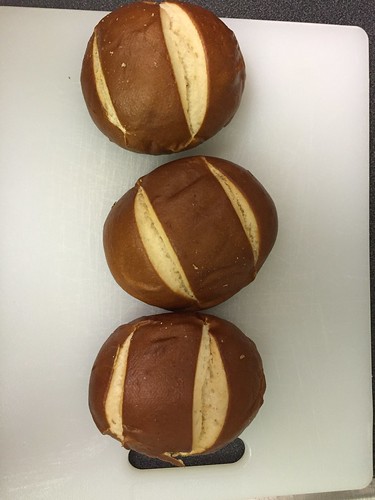
The grocery store had some little pretzel dinner rolls on "manager's special" today, which is their way of saying, "Old bread, on clearance. Please buy it before it molds." I had no firm plans for lunch, so I thought, "Hey, why not make sandwiches on little pretzel rolls? Could be different. Might be good," and I bought the clearance pretzel rolls.

Bread pudding for one (1)

They weren't terrible, but they weren't wonderful. They were dense and a little chewy, and they didn't especially taste like pretzels. Instead they just tasted like salty bread, and I didn't really want to eat any more sandwiches on them. I didn't want to just throw them away, though, since that seemed wasteful, so I tried to think of what else I could turn them into. They were too thick for French toast, and I didn't have anything I could use as sauce to make mini pizzas on them. I could have gone to the store again, but it's cold outside, so I had to think of something to do with them using ingredients I already had.

"Bread pudding? Is it possible to make bread pudding for just one person?"

Google suggested that it was. That recipe seemed a little flexible and vague, so here's what I ended up using as the base ingredients:

3 slider-sized pretzel rolls, diced
4 tablespoons skim milk
2 tablespoons melted butter
2 tablespoons sugar
3 eggs
pinch of cinnamon

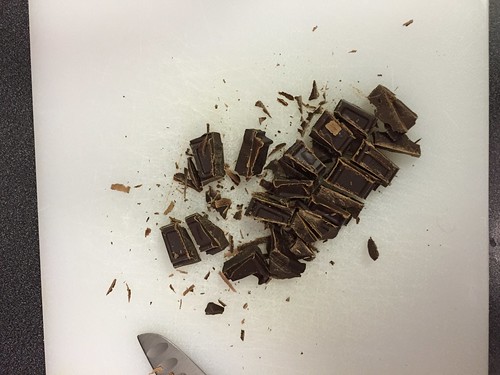
I had some baker's chocolate left from making fudge, so I roughly chopped two pieces:

Bread pudding for one (3)

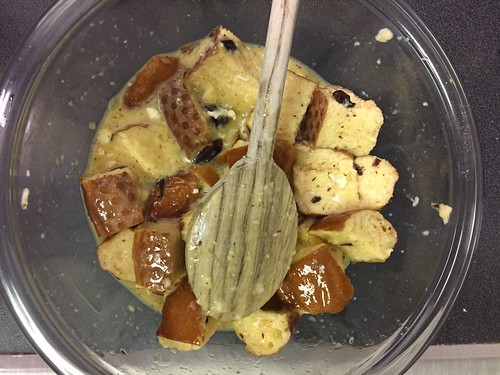
and I mixed in a handful of raisins:

Bread pudding for one (2)

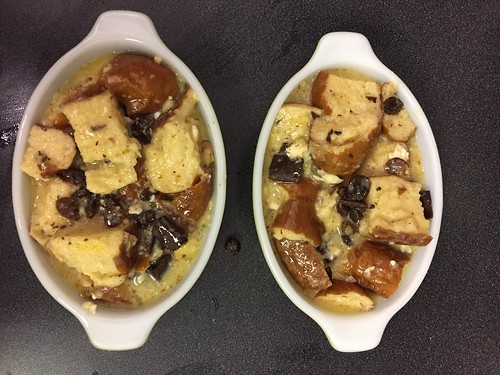
After I pushed on the bread with the spoon to try to get it to soak up as much of the liquid as possible (you may want to let it sit for a few minutes if you're using dense bread) I split it into two Pyrex 700s, which are tiny little 10 ounce casserole dishes:

Bread pudding for one (5)

and then I put them in the microwave for two and a half minutes, then let them cool for five minutes.

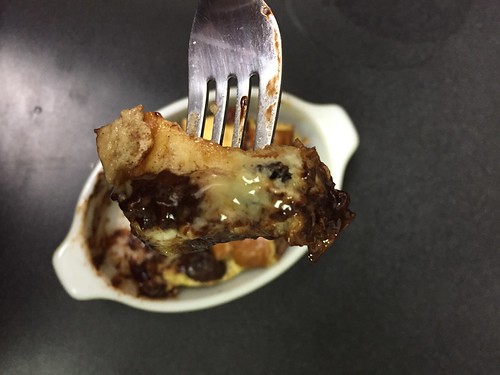
When done, I had decent bread pudding:

Bread pudding for one (4)

Is it the best bread pudding ever? Well, no. It's bread pudding I made in five minutes in the microwave.

If you have some bread to use up, though, or have a craving and don't want to spend 45 minutes baking in the oven, or want to make just enough for one or two people and not a whole pan, this worked out pretty well. I'm thinking of doing a savory breakfast version without the sugar and with bacon bits, a couple of slices of wheat bread, and some shredded cheese.

Sunday, January 10, 2016

All The Food I Cooked Over Break

Our university gives us a week of paid leave in December, and when I'm not traveling during that time I usually make a lot of grand plans that end up falling by the wayside as the luxury of being able to lay around the house and not interact with other people for days at a time becomes comforting, routine, and hard to snap out of. Seriously, not talking to another person for more than three days can be much more exciting than I ever imagined. When I was in high school we took those career aptitude test things a few times, and one of the times it told me I should look for "solitary professions", and actually offered "lighthouse keeper" as an example. At the time I was like, "That sounds so depressing", and now I'm like, "But the lighthouse has internet and gets Amazon Prime shipping, right?"

Anyway, my plans this time were somewhat more modest:

1) Meet daily step counts. Done!

2) Buy a new TV. Still not done! I went to the store, was overwhelmed by options, realized I needed to do more research, did the research, and then never went back for the TV.

3) Go new look at new cars. Still not done! Haven't even started!

4) Cook a bunch of recipes I had written down on my notepad. Done!

Over the weeks leading up to the break, I started thinking about Christmas dinner and Christmas dessert, and making notes of potential recipes. Then the week before break I won an electric fondue pot in our office non-Christmas December break season party Sneaky Snowman not Dirty Santa gift exchange, and decided that I wanted to use that, too, but that I didn't want to have fondue for Christmas dinner. With that in mind, I decided to start my week of break with...

Cheddar and Chorizo Fondue

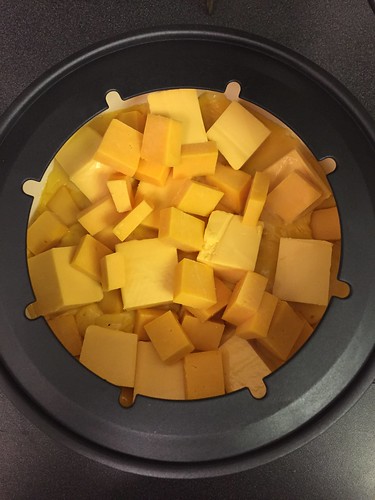
I did not use a recipe for this, because I still had most of a giant brick of Velveeta left from the Velveeta Fudge Experiment. (FYI: Do not make the Velveeta fudge, no matter how many people tell you they always do. After a few days, it developed an oily sheen, and a day after that it began to discorporate into strange components.) Despite the common practice of microwaving Velveeta and Rotel as a dip, I was concerned about using it in the fondue since I remember from the macaroni and cheese that Nikki made out of it on Top Chef Chicago that once it stops being liquid it locks up into a hard solid, but I decided to add milk, a little corn starch, and some regular cheddar to it and hope for the best:

Fondue (1)

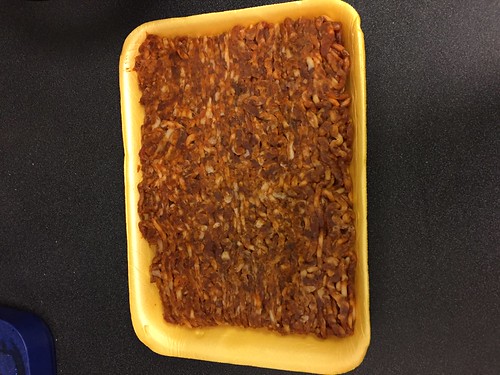
With the cheese slowly melting, I got to work on browning the chorizo:

Fondue (2)

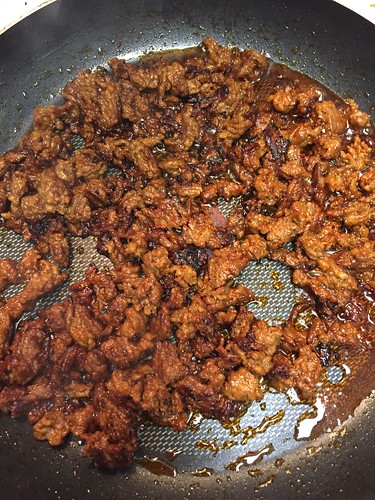
and cooking it down to small, browned nuggets:

Fondue (3)

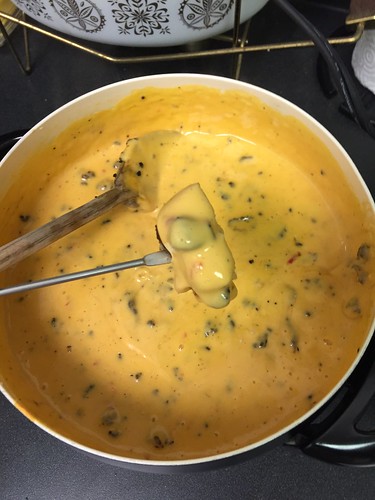
This wasn't the brand of chorizo that I usually use, but was on sale. Next time I will switch back to the other stuff, because it cooks down to a better texture. Regardless, I stirred in my finished chorizo, diced half a loaf of bread, drizzled the cubes with olive oil and fresh ground pepper, toasted them on low heat under the broiler for a few minutes, and enjoyed an evening of fondue in front of a movie.

Fondue (4)

Later in the week, I used the leftover fondue as the sauce for cheddar and chorizo macaroni and cheese, and then used the rest of the loaf of Italian bread to make mini pizzas, to eat alongside...

Ina Garten's Pea and Fennel Soup

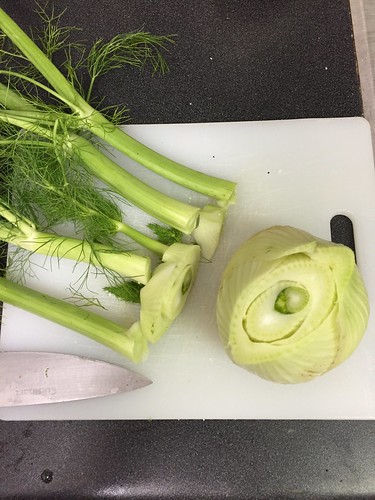
This was super easy, and I will definitely make it again. The cashier at the grocery store was confused as to what my bulb of fennel actually was, having never seen one before, but I was equally confused the first time I used fennel, and we spent most of the transaction with me explaining what it tastes like, how you prepare it ("Usually you chop it up and only use the white part for cooking and sometimes the fronts for garnish"

Pea and fennel soup (2)

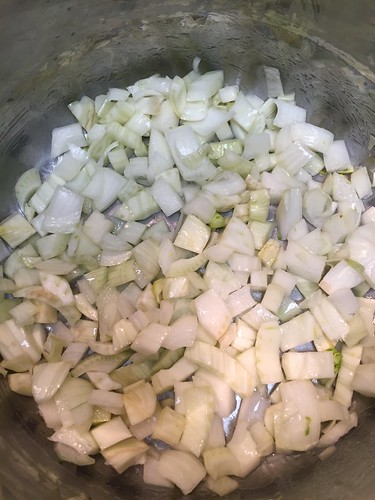
), and what I was going to do with this piece. The answer was that I was going to chop it up, cook it down with a diced onion:

Pea and fennel soup (1)

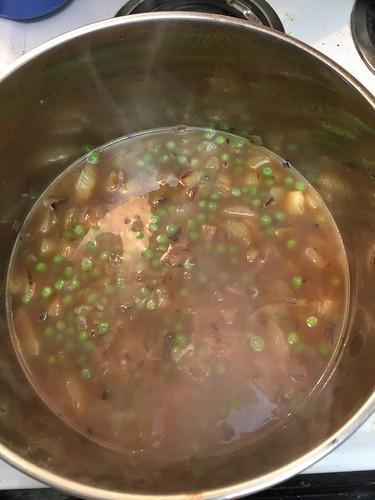
add peas and stock:

Pea and fennel soup (3)

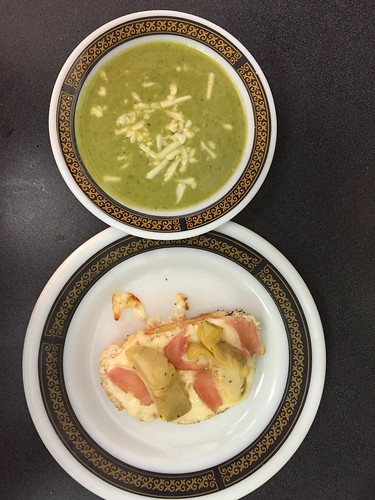
then puree the hell out of it, add crème fraiche, and serve it alongside mini pizzas with artichoke hearts and prosciutto:

Pea and fennel soup (4)

It was so good.

Coasting through the week on leftover soup and leftover chorizo mac and cheese, I got ready for Christmas dinner by making dessert the night before...

Jelled Holiday Nog

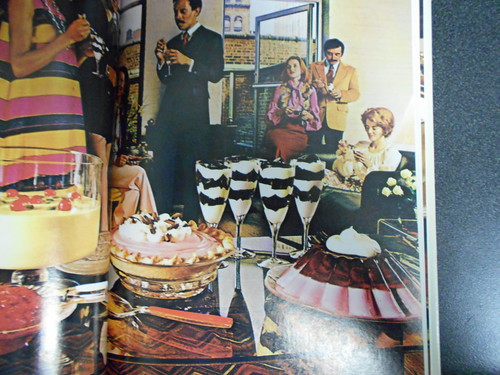
I've wanted to make the Jelled Holiday Nog since I saw it on the far left of this photo:

topaz parfait (4)

in The New Joys of Jell-O cookbook. My friends reacted with predictable horror when I explained that I was making Jelled Holiday Nog, but I explained that it may not be as frightening as it sounds, because it doesn't contain any actual dairy:

Jelled nog (3)

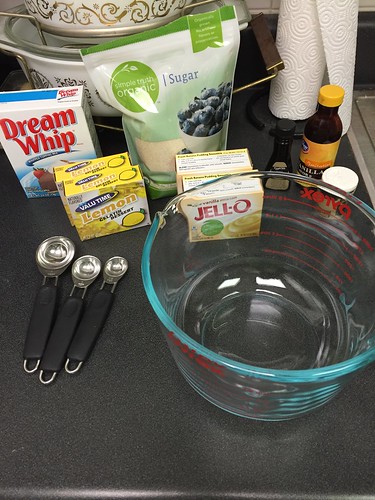
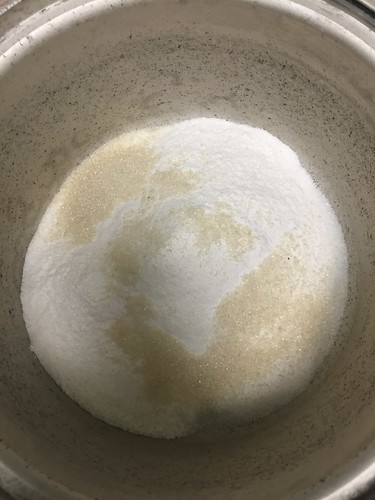
Nope, it's just a collection of powders:

Jelled nog (1)

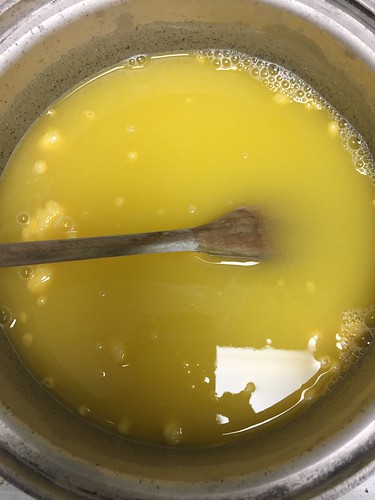
mixed and cooked with water:

Jelled nog (7)

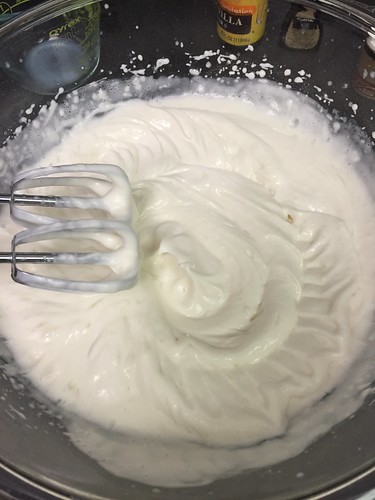
and prepared Dream Whip topping mix:

Jelled nog (4)

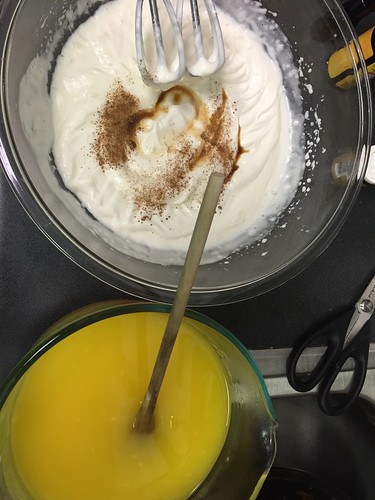
plus extracts and more powders and then combined:

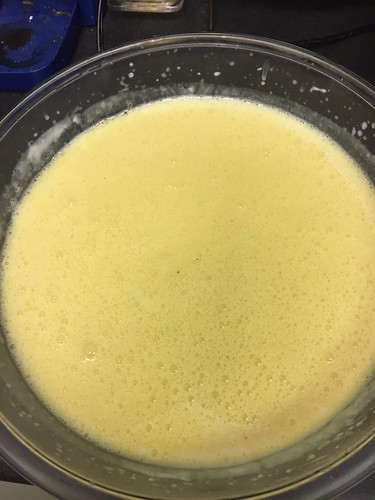
Jelled nog (8)

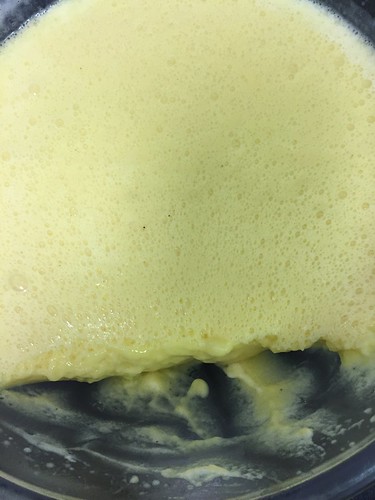
to make a big bowl of Jelled Holiday Nog:

Jelled nog (2)

Once it set overnight in the refrigerator, gelling (or Jelling, if we want to stay on-brand), I scooped some out:

Jelled nog (5)

and had a taste:

Jelled nog (6)

Everyone who likes eggnog should make Jelled Holiday Nog for every Christmas for the rest of their lives. It is a gallon sized bowl of pudding that tastes like eggnog, and it is delicious. Even better, you can make it any time of year when you have an eggnog craving. It also made a nice complement to my Christmas dinner...

Slow Cooker Sweet Fire Chicken

I saw this recipe in a Buzzfeed post (I follow Buzzfeed Food on Facebook) and was intrigued by how easy it sounded and how good the photo looked, even though I know online photos of food are not to be trusted unless I or someone I know who is not a food stylist took them. I was slightly concerned about using a sauce that called for corn starch to thicken it after I had a little bit of trouble that one time, but I figured I could just be more careful this time and everything would be fine.

And it was!

I diced up my chicken:

Fire chicken prep (2)

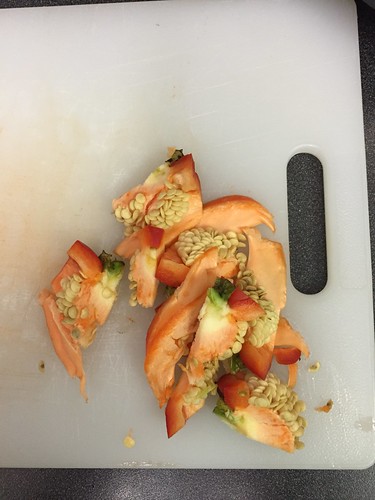
gutted and diced a red pepper:

Fire chicken prep (1)

and added them to the slow cooker with a can of pineapple chunks:

Fire chicken prep (3)

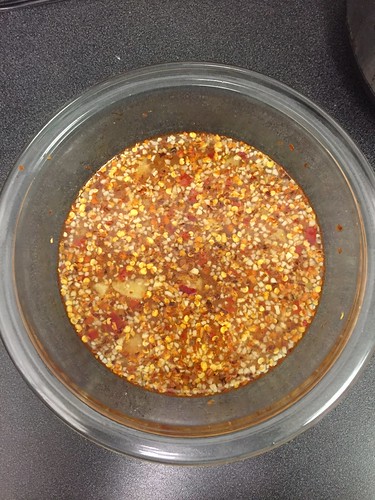
and a sauce that seemed to have quite a bit of pepper flakes in it:

Fire chicken prep (4)

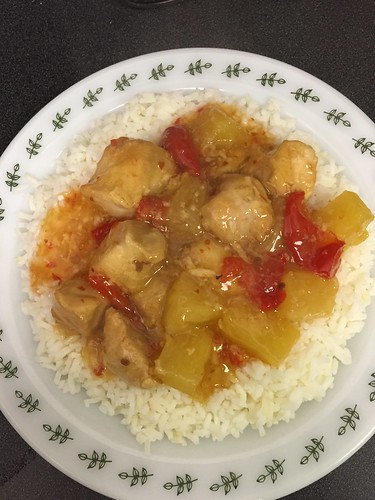
and ignored it for the day. Later I finished the sauce, made some rice, and served it up:

Fire chicken (1)

and it was delicious. As promised, though, it was very spicy, especially since I added extra chili pepper to mine.

Friday, January 1, 2016

The Best Books I Read in 2015

Every year for the last several years, I've had this goal of reading 52 books during the year, and then on New Year's Day I started writing a post with short reviews of all of the books. Most years, this is a long post, but not a terrible slog of reading and writing, because most years I barely make more than 52 books, as the totals for all of the years I've done this show:

2007: 49 books
2008, the first year I started the blog post: 44 books
2009: 53 books
2010: 52 books
2011, the year when I settled into a new average: 76 books
2012: 74 books
2013: 79 books
2014: 87 books

After 2014, several people mentioned how long it took them to read that entry, and I was exhausted after spending over three hours putting it together. In the last few months of 2014 I started reading a regular book while also reading a Kindle book on the treadmill, and from that moment on whenever you see me I'm actually reading two books at the same time, all the time. Given that I'm reading twice as much as I used to, I decided that this entry would be way, way too long if I did it the way I have been, so this year I started doing monthly tallies instead:

January: 10 books
February: 8 books
March: 8 books
April: 14 books
May: 5 books
June: 7 books
July: 6 books
August: 5 books
September: 8 books
October: 10 books
November: 10 books
December: 8 books

I read 99 books in 2015.

Here are the ones that I liked the most:

Torn by Justin Lee

In January I said: I heard Justin Lee speak on campus last year and put Torn, his book about being gay and being Christian, on my wish list immediately after, but it took me this long to get to reading it. Part autobiography and part spiritual debate, Lee argues that Christians have made a mistake and turned away from Christ by their treatment of gay people, and that there is a path to being in committed gay relationships and to staying true to the teachings of Christ. I'm not sure many Christians will actually read this, but it sort of made me want to go give church a try again. That didn't actually happen, but for about a week there I did give serious thought to it, so that should be a sign of how well-written this was.

Living in a deeply Christian area of the country, I know a lot of people who struggle with being LGBTQ+ in our community, and I feel like the message here could help them reconcile their own religious beliefs with their identities and also help them to discuss it with their friends, families, and churches. This book convinced me that it is possible to reconcile being gay and being Christian, so now every time I hear people default to the "it's wrong because it's a sin" argument I feel like really, they just don't like gay people and are using their religion as an excuse.

Neil MacGregor's A History of the World in 100 Objects

In March I said: Neil MacGregor's A History of the World in 100 Objects was a fascinating look at 100 objects in the British museum, and how they represent the history of civilization. Starting at axe heads and stone tools, the book moves through religious iconography, currency, technological advances, exploration, trade, social issues (I was surprised to see a chapter about LGBT equality and one about equal rights for women) and ends, with object #100, with a look toward the future.

Things that I liked:

a) I learned a lot. For example, I had no idea that paper money was invented in China.

b) Even though the book is 700 pages long and can seem intimidating, each chapter is short, only 5-7 pages, so you can slowly chip away at this and still feel like you're making progress.

c) The author doesn't shy away from negatives. He doesn't pretty up the negative aspects of colonialism, war, slavery, or intolerance.

d) This really is a world history. The author includes multiple chapters on the civilizations and cultures of Africa, Central and South America, and Asia. I was concerned that since all of the objects are housed in the British Museum this would be a history of the world from a Western Civilization perspective, but this is very globalized.

The thing that I didn't like was that in the entire book the author only mentions once or twice the idea that any of these objects, several of which are unique and culturally and historically significant to specific countries around the world, should be returned to their places of origin. I probably wouldn't have thought about it, but the author himself raises the point in one chapter that there have been discussions about returning this object to its homeland, but it's really better off being kept safe in London where everyone can enjoy it. That, to me, smacked of "old white patriarchy", but when I discussed it with my friend Jackie and Keri, they both pointed to the current situation in Iraq where ISIS is destroying historical artifacts, so I can see both sides of the argument. Every country isn't Iraq, though, and there are probably several where the object could be returned, since the "everyone" who can see things in the British Museum is actually a rather narrow slice of the whole of humanity. On the other hand, this probably isn't the kind of argument I can settle in one paragraph, either, so I'll move on.


I said a lot about it in March, so I'll just sum it up again by saying this was a really fascinating read.

Fred Venturini's The Heart Does Not Grow Back

In April I said: The protagonist of Fred Venturini's The Heart Does Not Grow Back, Dale Sampson, has a painful, wonderful gift: he can regenerate lost limbs and organs. Traumatized by the high school tragedy that revealed his ability, Dale is depressed and adrift until his best friend convinces him to take his talent to television, and Dale becomes rich and famous as The Samaritan, a man who gives away limbs and organs to people on the transplant list. When the girl who got away in high school comes back into his life, Dale sees a chance to do things over and right past wrongs. The only problem is that she needs something, too: his heart, the one organ of Dale's that will not grow back. Funny, crude, and at times heartbreaking, this is a novel of hope and loss that I was glad I read.

It's been a couple of weeks, but I'm still thinking about this book. I'm wondering if I still will be by the end of the year.


It's the end of the year, and I still am. Mostly I've thought about how our experiences in high school shape us more than we like to give them credit for sometimes, and how some people never really move past it. It's also a story of sacrifice, and makes you wonder where your own limit would be when you try to figure out if someone is asking too much.

Jon Krakauer's Missoula

In May I said: Jon Krakauer's Missoula was a fast, searing read. While people have tried to argue that the city of Missoula, Montana, doesn't have a problem prosecuting sexual assaults, facts are hard to argue with, and Krakauer documents case after case, a count that ultimately climbs into the hundreds. At the same time, he brings a humanizing tone to the story by framing his investigation with the specific stories of a few cases involving women assaulted by members of the college football team, which was apparently allowed to behave with impunity and without consequences. Sexual assault on college campuses, and the way that colleges respond to it, has been an increasingly debated topic within the past year, and this book highlights the reason why: things have to change.

One of the things I like about Krakauer's writing, and have since I read Into Thin Air, is that his narrative voice doesn't pull any punches. He gives credit where credit is due, but is also more than willing to assign blame when it's needed. While he does allow the reader to draw their own conclusions in some cases, his conclusion is also always obvious, and he doesn't flinch away from uncomfortable truths. This is a topic where too much is hushed up and made polite already, so it's nice to see someone acknowledge the parts of sexual assault that are horrible but also try to move the discussion forward beyond that, and to try to find ways to change things for the better. This is definitely a good read, especially for those working in higher education or with young adults in any capacity, but given the subject matter it probably goes without saying that this may also be triggering for some people.

We must continue to discuss this issue and work against it until it is no longer an issue.

Rebecca Harrington's I'll Have What She's Having

In July I said: Rebecca Harrington's I'll Have What She's Having was hands-down the best book that I read this month. I laughed over and over, once even snort laughing so loud that people around me at lunch heard me and stared, but I don't care because her talking about being dizzy from hunger on Posh Spice's "5 Hands" diet was killing me. She got dizzy and hungry on a lot of the diets in this book, which was her account of trying out different celebrity diets for a week. Another highlight is her account of the jittery caffeine overload caused by drinking ten Diet Cokes a day on Karl Lagerfeld's diet plan (Karl Lagerfeld has published a diet plan? Who knew?), and trying to follow the workout videos from Madonna's trainer while following Madonna's diet. There wasn't a lot of substance to this, but Gwyneth Paltrow's sesame pancakes (which actually sound more like crepes) sound like something I actually want to try, and I'm concerned that Dolly Parton's account of how she chews food just for the flavor and then spits it out is actually an eating disorder. Overall, I really enjoyed this book.

This was just a breezy, funny book. I even ended up making the sesame pancakes. Spoiler: They were kind of gross.

Hanya Yanagihara's A Little Life

Yesterday, I said: My friend Leo bought me Hanya Yanagihara's A Little Life for my birthday. It was challenging to read in some places because it resonated with my own life in some ways, but deeply moving. It made me cry on the treadmill twice, so I finally just went on a three hour reading binge to finish it. I'm a little disappointed that I didn't see the main twist coming, but I was so under the spell of the story that the possibility never entered my mind even though I've guess the same thing correctly in movies I've never seen. This was a very absorbing book, and worth the read. It's hard for me to sum up all the things I felt while reading this, but it's still sticking in my head several days after finishing. I'm already thinking about possibly rereading it, but need to give myself a little time before I do.

I still don't know how to talk about this book, as I did not read it so much as experience it. It's definitely worthy of all of the acclaim that I've heard about it this year.

So, that's the best of what I read this year. This is not to say that everything else I read was terrible. I really enjoyed a lot of things I read, and some of them were really good, but these are the ones that still stick out in my mind as "I'm really glad I read that".