Saturday, November 25, 2017

Moose

My friend Leonor sends out a newsletter every week. It doesn't really contain a lot of news, but is more like a blog that I get by email, and every Thursday I get to read what Leo's thinking about, what she's reading, which GIF sums up her week, what she's watching, and a bunch of other stuff that sometimes I just skim but sometimes is also really interesting. (Sorry, Leo. I don't listen to podcasts so I skip that part.)

This week, she talked about her dog, Moose, whose death spurred her to start the newsletter. I wrote back to let her know that I, too, once had a dog named Moose, and that dogs named Moose are generally the best dogs.

Moose was one of the iconic dogs of my childhood, a large weimaraner with amber eyes whose real name wasn't actually Moose. Since he was a purebred, with papers and a bloodline, his official name was Baron of Ulster. My parents are from Ulster County, New York, so this probably made sense to them, but for most of his life we called him Moose, and that's what he answered to. In his later years, my brother took to calling him Vern for reasons unknown to me, and he sometimes answered to that as well.

Moose tumbled into our lives in 1980, when we were living at the Stewart Air Force Base. I was four, about to turn five later in the year, when Moose exploded onto the scene. The explosion was literal: Gretchen, Moose's mother, gave birth to him in our house during a Cub Scouts meeting. My mom, excellent multi-tasker, kept the meeting running while ducking into the other room to midwife the puppies. I barely remember Gretchen, as she had a stroke while giving birth and only lived a few more weeks, but I remember the puppies. Since they all looked the same except the small tiny runt of the litter who, I think, died, my mom tied colored string around their necks so that we could tell them apart, and we called them by the names of their strings: Blackie, Greenie, Bluey, and a few other colors.

I have no idea which color Moose was, but he was the one we kept, and he moved with us to Kentucky, then to Alaska, then back to New York. We also had Yapper, a hateful fox terrier that my parents had before I was born and who never liked me until he was much older and dying, for most of this time, so each time we moved my parents drove two kids, a fox terrier, and a large weimaraner across the country. Coming back from Alaska, they also transported a caged gerbil, because I was unwilling to give him up. When we lived in Kentucky we briefly also had two beagles, Bandit and Old Yeller, but they did not move with us to Alaska, and lived at a kennel, never at our house, so they never actually felt like pets. I'm not sure if we sold them or just gave them away, and now that I realize I don't know I'm afraid to ask my parents because I don't want to hear that they sent them to a shelter.

Knowing how my parents value dogs, I don't think they did, but again, I choose not to find out for sure.

Maybe they went to live out at a big farm in the country, with lots of room to run around and other dogs to play with.

There aren't really any definitive stories about Moose. He didn't save a bus full of schoolchildren from an oncoming train, or run for help when I fell down a well. (I didn't actually fall down a well. I'm making a Lassie reference. I did fall into a pool once, while dressed as a ghost in a sheet with no eyeholes cut into it, but that's a story for another day. Moose did not save me then, either.) In his later years, he was missing a tooth, because my brother was playing a game with him in the backyard where he'd hit a ball with a bat and Moose would bring it back, and Moose got too close while he was hitting and caught the bat on the backswing, knocking his tooth out. The vet offered to put in a steel tooth, which my brother and I thought was the best idea ever but which my parents vetoed.

In thinking about him for the past few days, I realized that my memories about Moose are hazy in two significant ways:

1) He didn't live as long as I thought he did. I remember us having him forever, through so many homes and moves. He was always a warm, large, but somehow soft presence, rubbing his head against your leg to get petted or curling up on a couch cushion. I remember him in so many of our homes and backyards, coming back from hunting trips with dad or barking at neighbor kids when they ran into our yards, but when I checked the plaque on his statue:
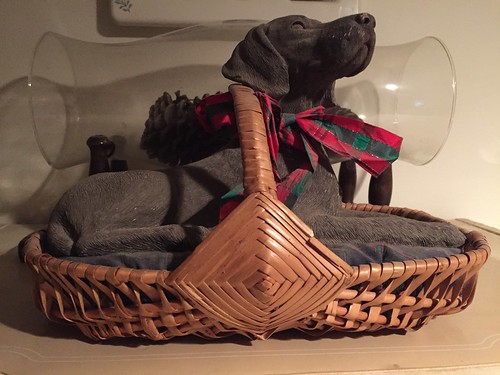
Moose - 1980-1991

it turns out that we put him to sleep in 1991, when he was eleven.

And I use the word "we" very generously above, as I think my mom actually had to take him to the vet herself because we were too sad and wouldn't go with her. My dad might have gone, but I don't remember.

2) I struggle to remember him as an older dog. I know that he aged. I know he got cataracts and had trouble seeing out of one eye. His joints hurt him, and he couldn't go hunting anymore, because charging through the woods left him laid up in pain for days. I vaguely remember that he had trouble climbing up onto the couch or jumping down from it, but I don't remember what the final illness was. Instead, when I picture him in my head I remember him how he was when we lived in Alaska, which I guess was middle age for him.

I mostly just remember that he loved us, and he was a good dog.

Tuesday, November 7, 2017

Books 50-57: I've been reading kind of a lot

I've read a bunch of books between September and now, especially because I went to Atlanta (where I almost died) for a week and always read more when I'm out of town. I don't really have an excuse for not discussing them sooner other than procrastination, though, so it's time I went ahead and started working through the stack.

Mostly so that I can take them to the used bookstore for more credit to buy more books.

Seriously, we had a candidate in for an interview yesterday and she asked if anyone would be interested in a book club, and my "YES" was louder than the other 40 people in the room.

I might be too excited about reading.

50) I ordered a copy of Aimee Friendman's Sea Change because I watched the movie on Lifetime and still had some questions. Unfortunately, the book didn't answer my questions, because the movie was pretty different. I hate to say it, but the movie was actually better, because it made the story more coherent in the same way that the movie versions of Big Fish and V for Vendetta take the interesting ideas of the original source material and make them better.

If you're interested, the book is about a girl who moves for the summer with her mother to a mysterious island, rumored to be founded by mermaids and pirates. She meets the rich summer tourists, and the much nicer but more mysterious island natives, and starts to fall in love with Leo, a local boy with a heart of gold. (In the movie, that heart lies beneath rippling, Emmy-worthy pectorals that flex and twist as he pulls his clinging wetsuit on and off and on and off and on and off again.) Is Leo more than he seems? Is he hiding a dark secret? Is Miranda's life in danger?

Who cares? This was diverting enough for an afternoon, but just watch the movie.

51) I bought Hillary Clinton's What Happened because I kept seeing news stories that said, "Hillary said this about Bernie" and "Hillary said this about why she lost" but kept giving a sentence or a paragraph, and I wanted the full story. I didn't vote for Hillary in the primary, but I did in the main election, and I wanted to see for myself what she had to say and the context in which she said it.

This was, mentally, a hard book to get through. It wasn't because the writing or vocabulary was difficult. This is very readable, and covers her life, typical days on the campaign (there's a whole section about one day, from morning to night, with travel, hair and makeup for appearances, meals, etc. and how all of that gets coordinated that was fascinating), an overview of the campaign itself, the policies she would have implemented, and what she thinks about how to move forward. The mentally difficult part was reading this at night, then turning on the morning news for an immediate contract between where we as a nation could have been and where we actually are.

I would recommend this book to anyone, whether they voted for her or not.

52) Searching for a mental palate cleanser, I moved from the horror of reality to just plain old horror, and read H.P. Lovecraft's At The Mountains of Madness, partially inside of a Hard Rock Café playing Michael Buble. It was way more amusing than the time I cried at Chili's, but possibly just as disturbing.

I've read a lot of books that reference Lovecraft, including graphic novels, and am aware of the basics of Lovecraftian mythology (cosmology?), but I realized after reading Meddling Kids in September that I haven't ever actually read any of Lovecraft's work. I guess I went in with high expectations, and while I enjoyed this, I found it not really horrifying. Maybe it would have been if I didn't already know so much about it going in, but I guess I would qualify it more as disturbing than as horror.

53) My friend Sandy left Sheryl Monks' Monsters in Appalachia in the guestroom when I went to stay with her, in case I had finished all the books I packed for my trip. I hadn't, but this was short, so I decided to read it anyway.

This is a collection of short stories about Appalachia, but only one of them has monsters in it. In all of the other stories, the people are the real monsters, but that's the way it is in most stories. This was a fast read, but I liked it.

53) I guess I was still in a horror mood, because I moved on to Grady Hendrix's Paperbacks from Hell, a book about horror books. Hendrix walks the reader through the pulp horror paperback boom of the 70s, 80s, and 90s, with summaries, discussions of trends and the real world factors that influenced them, tons of illustrations of cover art, and interesting profiles of the publishers, writers, and artists who helped create these books. I was amused to discover that I had read multiple books that appeared here, and also thought about seeking out some others because they sounded entertainingly bad.

I mean, one of them is a book about genetically altered Nazi leprechauns in a haunted Irish castle. Why would I not want to read that?

54) I changed gears for the next book, but kind of wish I hadn't read it. Remember when J.K. Rowling wrote The Casual Vacancy and everyone was like, "Hmm, yeah, are you gonna go back to wizards and muggles soon?" The Next Queen of Heaven is Gregory Maguire's "Casual Vacancy", although I'm pretty sure from things mentioned in the book that he wrote this before Wicked and just didn't publish it until after.

This book tells the story of fall and winter in a small town in upstate New York, mostly through the eyes of a troubled family and the troubled music director at the Catholic Church in town. There's also a retirement convent of elderly nuns, a lady speaking in tongues, a surprise wedding, a couple of surprise pregnancies, and a gay male singing trio looking for a place to rehearse. Also, someone's speaking in tongues, someone's dying of AIDS, and someone burns a church down, but really I didn't care much about any of the characters and mostly just wanted this book to be over.

55) I witched gears back to horror, sort of, with Colin Dickey's Ghostland, which was a really fascinating American history of haunted places. Dickey doesn't actually ever say whether he thinks ghosts are real or not, but instead talks about the sociological and historical reasons why a place becomes "haunted", how history is distorted and hidden by hauntings, and how they become commercial and profitable. In touring America's haunted places he brings us to buildings, bridges, ponds, and even whole cities that are haunted, and explains the history behind the stories as well.

This was a really interesting read.

56 and 57) Fully returned to horror as a topic area (which is probably fitting, so close to Halloween), I read an article that discussed how Lois Duncan was underrated as a novelist, and how her books still hold up today. Curious to see if this was true or not, I picked up a few of her books at the used bookstore, and they are entertaining, if a little short.

Stranger With My Face introduces us to Laurie Stratton, whose life is finally on the right track. She has a cute boyfriend, she's friends with the popular kids, and she gets along with her whole family, but things suddenly go awry when people start seeing Laurie around town. Was she meeting another boy on the beach? Did she ignore entire conversations? Is she out walking on the dangerous rocks by her house? Or is it someone else who looks exactly like her, who knows her, and who wants to be her?

Down a Dark Hall brings Kit Gordy to an exclusive boarding school in Blackwood Hall, so exclusive that it turns out to only have three teachers, and Kit is one of only four students. Just into the start of the new term the girls are discovering hidden talents for painting, music, math, and poetry that they never had before, but they're also constantly exhausted and not eating. Their letters to family members and friends keep disappearing, and the only phone is locked in the headmistress' office. Is the school bringing out undiscovered gifts in the students, or is something taking them over, slowly consuming them until there's nothing of the original girls left?

Both of these were entertaining, and a good blend of atmosphere, character, and speedy plot. They're meant for young adults, but the author of the article I read was right. These books do hold up, decades later.

Sunday, October 15, 2017

Mom's Rice Cakes

A few days ago, my friend Kim asked us to describe a favorite childhood meal. My friends mentioned things like fried chicken or pork chops, and I casually mentioned that my mom made rice cakes.

Sara: "What...is that?"

Me: "What are rice cakes?"

Jackie: "You mean those hard things you toast and slather peanut butter on?"

Renne: "Or do you mean something like arancini?"

Me: "My mom takes leftover rice, mixes it with an egg and a little bit of flour, and fries it into little rice fritters that she dumps a lot of salt on. This isn't something that other people's moms do? I assumed it was like a regular mom dish."

In discussing it with other friend groups this week, it turns out that nobody's mom made these. I was asked a few times if I meant arancini, but these didn't have a breadcrumb coating, and they weren't round. They were like little patties, crispy on the edges and soft in the middle, and each time I explained them nobody seemed to know what I was talking about.

I was surprised by this, because my mom's rice cakes are the meal I remember best from childhood.

My mom is a good cook, but my mom is also a home cook, which means that a lot of her recipes involve pinches, dashes, and just knowing by looking if something is the right consistency or if it needs a little more flour. She makes lots of things well, and many nights she made two dinners because I was such a picky eater, so I remember getting a lot of things that were variations on other things: white pizza, sauceless lasagna, spaghetti with olive oil and garlic instead of red sauce, etc. I remember the rice cakes as a treat, though, something we usually only got on weekends and not every weekend. In my head, my mom made them out of leftover rice from dinner, but I think she actually made rice just to make these.

Last time I attempted to make these was in 2007, and they did not come out as well as I remember Mom's. In retrospect, I overanalyzed Mom's recipe, and tried to make it exact when it's not really an exact sort of process. Ten years later, I am a better, more confident cook, so I decided to ask Mom for the recipe again and give these another try.

Now that I have, here's an updated recipe, which I have been given permission to share:

2 cups of cooked rice (however much one cup of uncooked rice makes)
2 eggs, beaten
3 tablespoons of flour
a pinch of sugar
a pinch of salt

Leave the salt container out, because you're going to need it again.

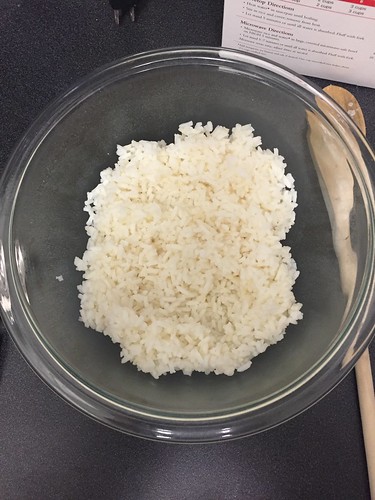
1) Put your rice in a bowl.

Rice cakes

If you have a Pyrex bowl of any sort, that's best, but if you don't then just use whatever mixing bowl you have.

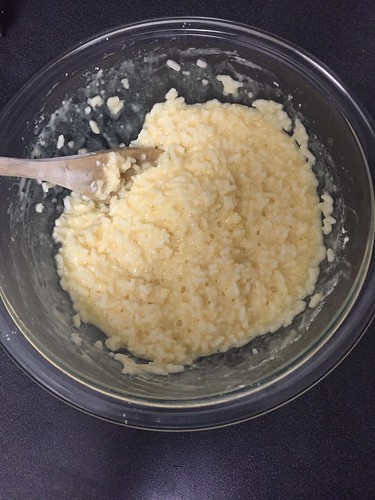
2) Mix everything together.

Rice cakes

I mixed the eggs, sugar, and salt in first, then mixed the flour in after.

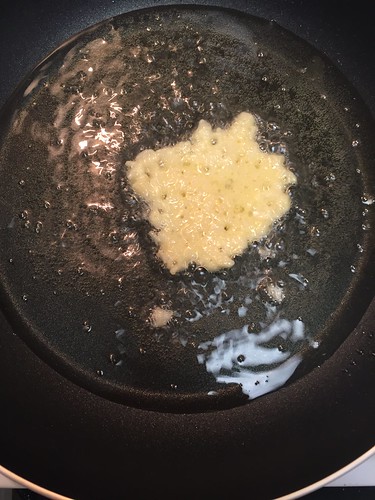
3) Heat 1/8-1/4 of an inch of oil in a frying pan with decently high sides. The oil is going to spit a little, and you don't want it all over the stovetop. I set the heat exactly between medium and high. You want these to get crispy on the edges, but not so hot that they brown too fast.

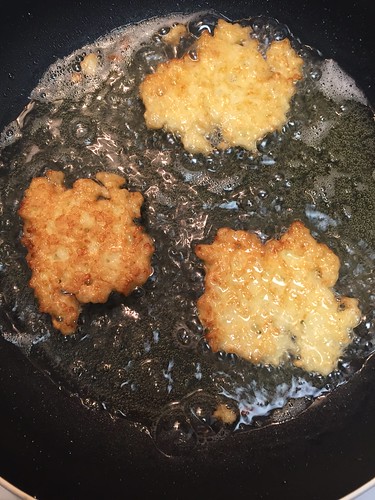
4) Spoon the rice mixture into the oil and use the back of the spoon to flatten it. It should look like a little patty.

Rice cakes

5) When the edges look golden brown, turn it over and let it cook for about another minute. (It won't take as long as the first side because that side partially cooked while the other side was cooking, like pancakes do.)

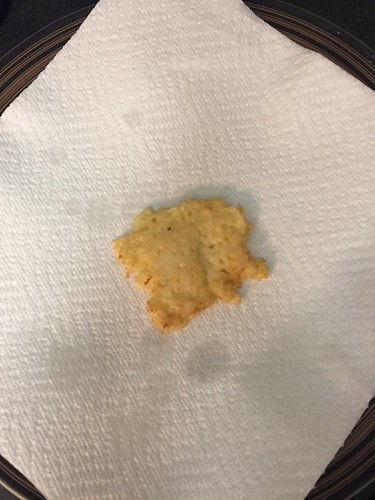
6) Using a slotted spatula, remove it from the oil, let it drain for a few seconds, and then put it on a plate that's covered in paper towels and immediately sprinkle salt on top.

Rice cakes

7) Now that you've built up your confidence by doing it right one time, start making more than one at once.

Rice cakes

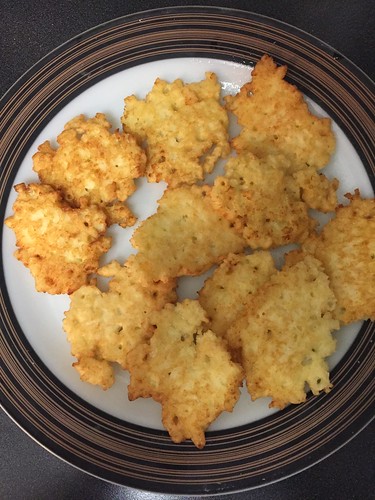
It makes about this many rice cake, plus two that I ate while I was making the others:

Rice cakes

If you're trying to cut salt out of your diet, try adding something to the batter to flavor these, like chives or a spice blend.

Also, eat them while they're still warm, or room temperature. If you put them in the fridge to get cold, they get kind of gummy, and I have no idea how to reheat these.

Saturday, October 7, 2017

All the things I saw in Atlanta

I'll be leaving Atlanta in the morning, having survived a harrowing five minute ordeal of near death elevator riding, and since it's unlikely that I will see more sights before then, I will do a quick rundown of the things that I did see.

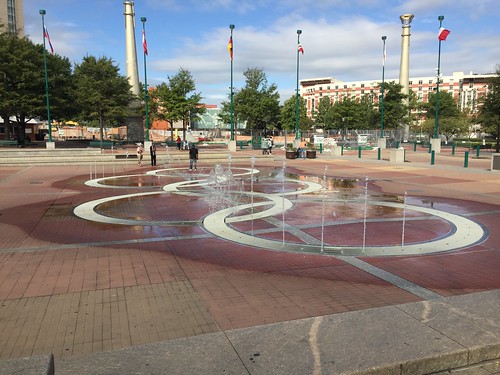
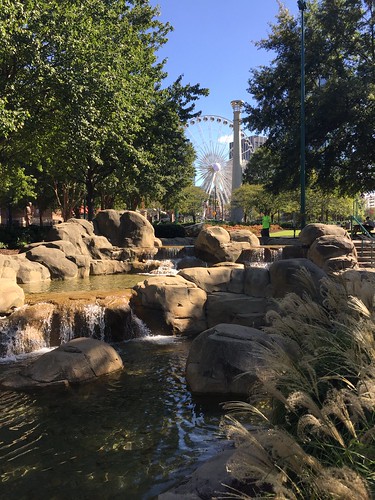
I didn't do much sightseeing on this trip, since the conference schedule was pretty tight, but a friend and I did walk down to the Centennial Olympic Park one free morning, since it was only a half mile from our hotel. There, we saw the Olympic fountain:

Atlanta 2017

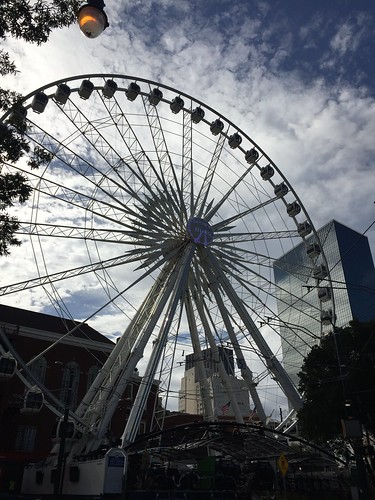
the Ferris wheel that Atlanta has for some unknown reason, despite not having a scenic skyline or any major landmarks that need to be seen from the air:

Atlanta 2017

Atlanta 2017

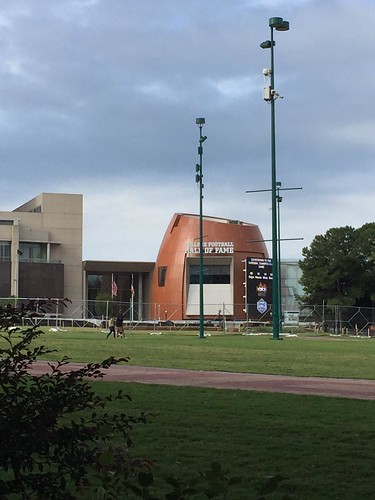
the College Football Hall of Fame:

Atlanta 2017

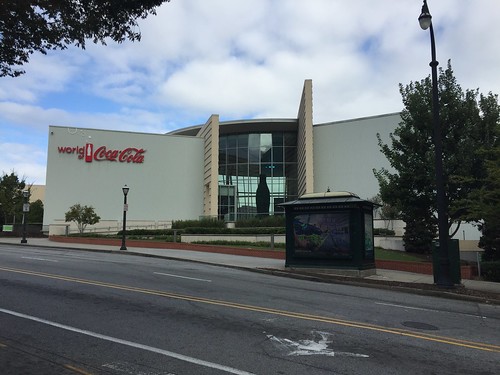
the World of Coke, which is a museum of Coca Cola:

Atlanta 2017

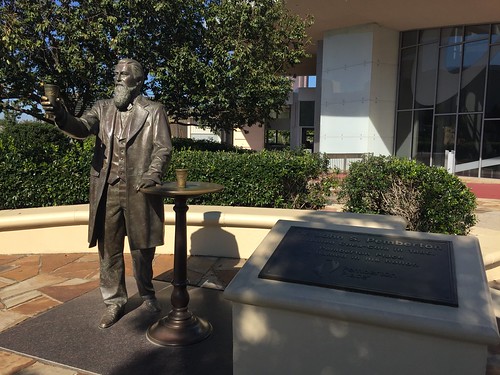
and includes a statue of Coke's inventor:

Atlanta 2017

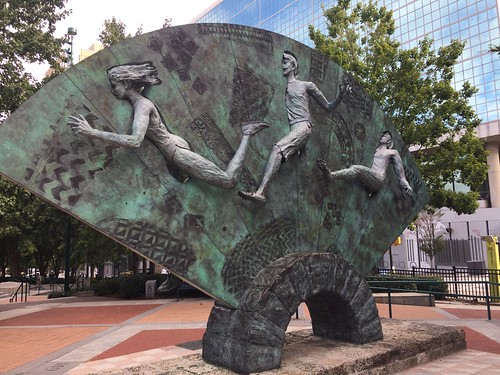
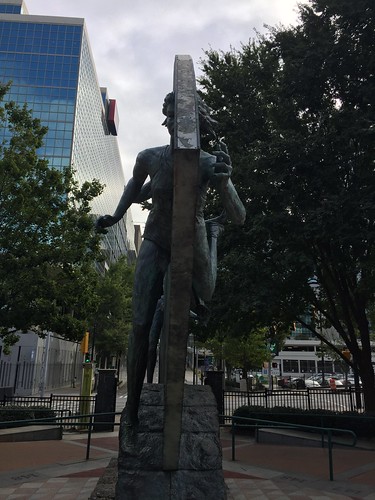
and a statue that I thought was interesting:

Atlanta 2017

Atlanta 2017

but also vaguely unsettling.

Later that day, after lunch, we took my friend Lauren to see the Marriot, which I've stayed in and which you might recognize as the tribute training center from the "Hunger Games" movies:

Atlanta 2017

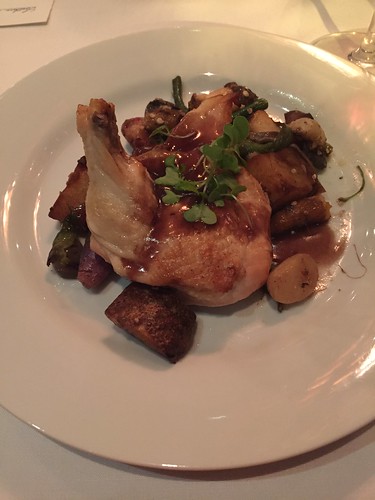
On Tuesday night we went to a dinner where the chicken had bones in it:

Atlanta 2017

and I ate it anyway even though food with bones in it is a struggle for me.

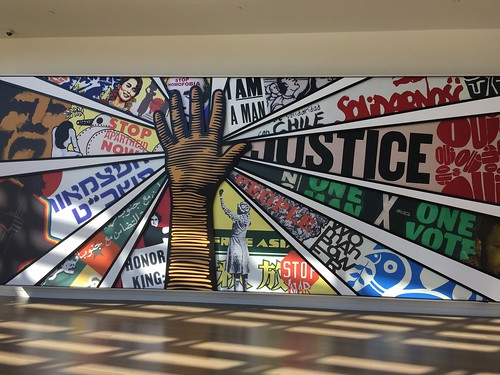
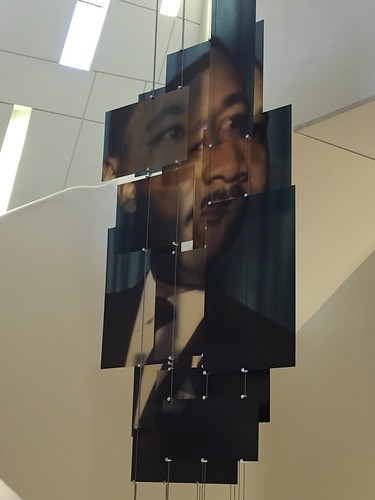
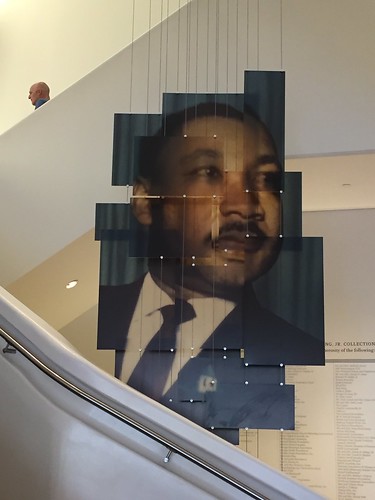
On Wednesday the conference wrapped up in mid-afternoon. They organized some groups to go to the Georgia Aquarium and the World of Coke, but I didn't want to go to either of those things since I've been to both, and my friend Andrea and I went to the Center for Civil And Human Rights instead.

Atlanta 2017

Atlanta 2017

Atlanta 2017

It was a moving, powerful afternoon, and I think our time was much better spent there than if we'd gone to the soda museum next door.

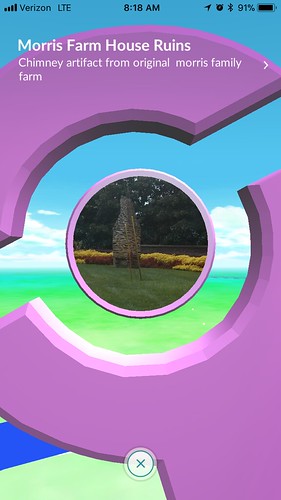
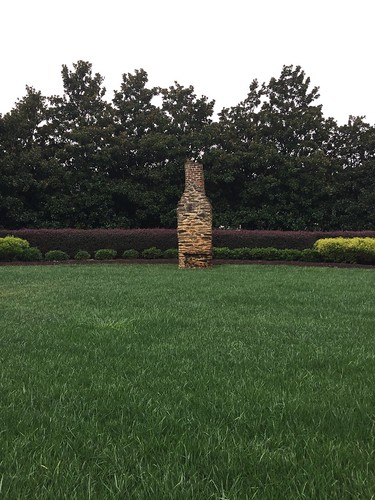
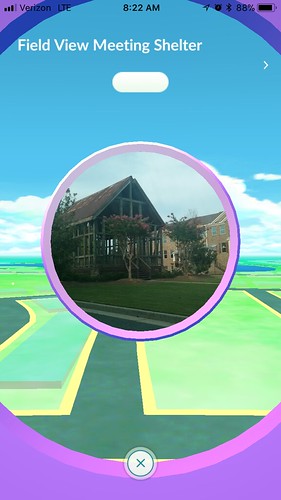
On Thursday morning I drove over to my friend Sandy's house, where I've been ever since. We've run around to antique stores and restaurants and gone on errands, but haven't really done a lot of sightseeing, unless you count the things in Sandy's neighborhood that PokemonGo tells me are sights, like the Morris Farmhouse Ruins:

Milton, GA

Milton, GA

and the Field View Meeting Shelter:

Milton, GA

Milton, GA

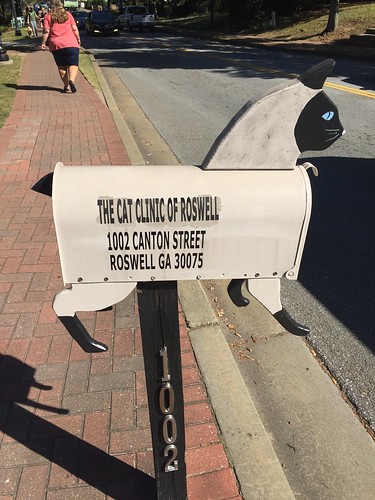
Oh, and I also saw this mailbox shaped like a cat:

Cat mailbox

which I think the tail broke off of.

This wasn't really a sightseeing trip, but I'm glad I got out to see something, and to catch up with so many friends.

Thursday, October 5, 2017

Hellevator

Last night, I was stuck in an elevator for approximately three minutes.

To get out of it, I had to jump through doors that had been pried open by an elevator technician, which seemed unsafe and possibly deadly.

Before that, I had to drive to Atlanta.

I've been in Atlanta since Sunday, when I came down for a conference. Since it's only a few hours from Knoxville, I drove rather than flew, and that was an adventure in itself, as it taught me two things: my car hates Chattanooga; and when robots take over the world, they will use the navigation system in my car to kill me and I will allow it because just driving where the car says is easier than arguing.

I started Sunday on campus, because I needed to drop something off for someone else to have on Monday, and when I was leaving I programmed the hotel's address in. I know how to get to Atlanta, but I didn't know how to get to the Sheraton Atlanta Hotel, where the conference was. The trouble started when I was driving from my office to Cumberland Avenue, to get onto I-75.

"In 400 feet, turn left onto Andy Holt Avenue."

"I can't. That's not a street anymore." It's not. That part of Andy Holt Avenue was closed and turned into a walkway several years ago. Also, don't pretend you've never talked to the navigation system in your car when it talks to you.

"Turn left."

"I can't."

"If possible, make a legal U-turn, and then turn right onto Andy Holt Avenue."

"I can't! I'm just going to get on Cumberland!"

"Make a legal U-turn."

"I CAN'T!"

"Why aren't you making the legal U-turn, Joel? Do you even want to get to Atlanta?"

Lois Lane, the car, freaks out if you have the navigation on and don't do exactly what it says. Because of that, I went ahead and did exactly what Lois said for the rest of the day, which is why, as I followed I-75 south to Atlanta, I listened to the car when it told me to get off of I-75 at Cleveland, Tennessee. I followed one road, then another, then another, and then on the far side of Chattanooga Lois told me to get back on I-75. For reasons completely unknown to me (traffic? construction? Lois' intense and previously unknown hatred for the city that invented the MoonPie and the tow truck?), we detoured completely around Chattanooga rather than driving through it.

I realize now that Lois was just testing me, and lulling me into falsely believing she knew best, so that she could trick me into driving her directly into the seething traffic filled heart of downtown Atlanta.

"Bear left."

"I'M TRYING, BUT NO ONE WILL LET ME OVER!"

"Bear right and continue on I-75, then bear left."

"Still on I-75? I DON'T UNDERSTAND WHAT I'M SUPPOSED TO DO!"

"Bear right."

"OK. I'm bearing right."

"Your destination is ahead on the left."

"GOD DAMN IT, LOIS! THIS ROAD IS FOUR LANES WIDE! WHY AM I BEARING RIGHT THEN?"

"Kill all humans."

When I finally arrived at the Sheraton Atlanta Hotel, I decided not to move the car again until Thursday. I should have also decided not to stay at the Sheraton Atlanta Hotel, because the overall hotel experience was not good. In no particular order:

1) My friends Myrinda and Alison found someone else's panties in their room.

2) My friend Aaron tried to eat at the hotel bar the night he got in and could not. He sat at the bar for fifteen minutes and then left, because the bartender didn't come over and the manager passed him twice and waved. I'm shocked that the manager didn't come over, since I ate at the same bar the same night, alone with a book, and the manager came over to talk to me six times while I was eating despite the open book in front of me.

3) There was some elevator drama in the north tower. Besides the freight elevator, which was hidden around a corner and down a hallway, the north tower has a bank of three elevators. Two of these elevators were out of service for the duration of my four night stay, with the exception of last night when the right hand elevator was briefly back on.

Just long enough for me to get stuck in it.

I got on the elevator on the second floor lobby level, and pressed six. As I passed the third floor, I thought, "Hey, I don't think the elevators doors are all the way closed. That seems bad." Before I could think anything else about it, the elevator reached the fourth floor, where it stopped moving, but the doors didn't open. I pushed the door open button, but they still didn't open. I pushed the four button, then the six button again, and still nothing. I pushed the alarm button, but it just rang a bell until I stopped pushing the button. Then I saw the "call" button on the opposite panel.

"How may I help you?"

"I'm in elevator three, and it's stuck on the fourth floor."

"Are you inside it?"

How the hell do you imagine I'm pushing the call button from outside the elevator, lady? "Yes."

"In elevator four?"

"No. I am in elevator number three, on floor number four."

"How do you know what floor it's on?"

"The display says four."

"OK. I'll call someone."

And that was it. No offer to stay on the line, no asking if I was ok, nothing. Whoever she called must have been close, though, because I had enough time to post that I was stuck on Facebook, but not enough time to tweet it, when suddenly the doors were pried open.

And I actually mean pried.

The Otis elevator technician's fingers pulling the doors apart were the first thing I saw.

When the doors opened, I was looking down at him, because the floor of the elevator was about two feet above the fourth floor hallway.

"Sir, are you ok?"

"I'm stuck. The elevator is stuck."

"Yeah. I need you to jump down here."

"...out of the elevator?"

"Yeah. I'll hold your hands, and you jump into me. I'll catch you."

"I have to jump out of the elevator? I COULD DIE."

I'm not going to lie: I started freaking out, worse than the car does when you don't follow the navigation directions or you let the air in one of the tires get low. You know how people die in stuck elevators? They die trying to get out of the stuck elevator. They try to climb to the next floor, or jump to the one below, and they fall into the shaft instead and die. My friends, especially my friends Keri and Sandy, have discussed this for years. Google says 26-30 people die this way in the US every year, and my heart said one of those people could be me.

"Jump, sir. I'm right here. Just jump."

"What’s below the elevator floor? Am I gonna slip and fall into the shaft? BECAUSE THAT’S HOW PEOPLE DIE GETTING OUT OF STUCK ELEVATORS."

"We have it blocked off, sir. Jump into me. I’ll catch you."

To prove his point, he kicked something below the floor of the elevator. I couldn't see what it was, but I could hear his foot colliding with something, so I took his hands, and jumped into him. It turns out that the elevator car has a metal apron that reaches down about two feet, so it covered most, but not all, of the space between the bottom of the car and the hallway floor. No sooner than I was out of the elevator than I was confronted by a hotel security officer.

"How did you get into the elevator, sir? Because they’re working on that one."

"I PUSHED THE BUTTON IN THE LOBBY AND THE DOORS OPENED. HOW DO YOU IMAGINE I GOT INTO IT?"

I didn't even have to add "I could have died" before he was offering to escort me to the front desk and comp me a meal. Since I didn't want to eat dinner in the hotel again, I requested free breakfast, and the front desk manager promised that he would leave a note at the restaurant that my breakfast was comped.

This morning the restaurant didn't have that note, and I had to loudly explain to the manager in front of the other diners that I had been promised that my breakfast would be comped because I was trapped in their elevator and could have died. She went ahead and gave me the free breakfast after that.

They only had waffles, though, and no pancakes.

Because the Sheraton Hotel Atlanta is a terrible place.

Saturday, September 16, 2017

I've been reading a lot: Books 43-49

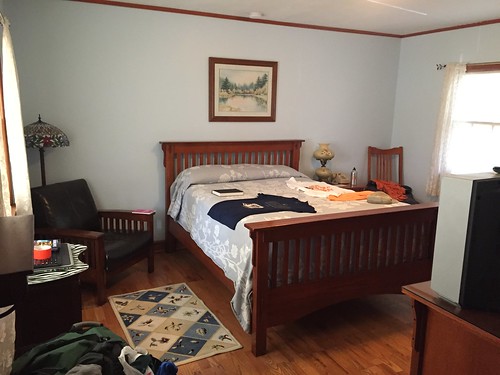
I've been reading kind of a lot lately, because I had some days off and because my charmingly old fashioned hotel room for the half marathon:

Tally Ho Inn

didn't have the internet. I picked that hotel because its parking lot is also the finish line, and walking right from the end and into a shower was wonderful, but staying there with no internet for Friday night and the rest of the day on Saturday meant I plowed through the three books that I'd packed, and I had to drive over to Pigeon Forge to grab another one.

I needed to stretch my legs, anyway, even though my feet hurt, so it was kind of just as well.

Before all of that, though, I finished some books at home.

43) Somebody told me I would enjoy Riley Sager's Final Girls, and I did. It tells the story of Quincy, the lone survivor of the Pine Cottage massacre. Recovering from the loss of her college friends, Quincy is contacted by Lisa, the sole survivor of a murderous rampage through her sorority house, and Sam, who battled the Sack Man during her overnight shift at the Nightlight Inn. All three women are survivors of horror, and the media dubs them the Final Girls in a nod to the classic horror movie trope.

Years later, Sam has dropped off the grid, going into hiding. Quincy has built a life as a baking blogger with a handsome fiancée, moving on and looking forward until the night that Lisa contacts her, and then kills herself. Before Quincy can even respond to this news Sam appears on her doorstep, claiming to be worried, but something about her is a little off. She drinks heavily, shoplifts, and keeps asking questions about the night at Pine Cottage that Quincy has done her best to forget. She wants something, but what? And why didn't she tell Quincy that before coming to New York to see her, she'd been out west, visiting Lisa?

Sager moves back and forth between the past and the present throughout the book, contrasting the present day with the night at Pine Cottage as Quincy's memories come back. In the end, there are twists, as there are in all horror movies, but they fit the story. Overall, this was a good read.

44) I moved away from fiction to read Chuck Palahniuk's Stranger Than Fiction, a collection of true stories that sees the author of "Fight Club" travelling around the country to attend sex festivals, farming combine demolition derbies, wrestling tournaments, and other interesting but out of the way places. There are also personal essays here, dealing with the murder of his father or the time he tried steroids for a month at the gym, and overall this was a good, if sometimes unsettling, read.

45) The unsettling continued with Alissa Nutting's Tampa, which some article said was one of the most interesting books of 2013. (I'm a little behind, I guess.) It tells the story of Celeste Price, a smoking hot sociopath married to a policeman, who goes into teaching because she wants to seduce high school boys. She goes about seducing one, then another, and then spirals into a web of evasion and covering her tracks that includes drugging people, lying, seduction, and death.

While this is thematically similar to that book I read a few weeks ago, "The Manhood Ceremony", it was somehow less disturbing, possibly because Celeste knows all along that what she is doing is terrible, rather than the author trying to make her in any way a sympathetic character. You don't root for Celeste, and she doesn't want you to. It was an interesting read, but I feel like 2013 must have been a really bad year for the publishing industry if this was one of the best books.

46) Meddling Kids, by Edgar Cantero, was a really good book, and not just by comparison to the last one. The first of three books I brought with me to the half marathon, it tells the story of the Blyton Summer Detective Club, four plucky kids and their dog who, in the summer of 1997, unmasked the Sleepy Lake Monster, an old man in a costume trying to scare people away from the Deboen Mansion so that he could look for the fortune allegedly buried there.

13 years later, Andy, the tomboy, is wanted in two states and unable to sleep without nightmares of bodies, symbols, and terrible creatures crawling out of Sleepy Lake. Kerri, the beautiful redhead, tends bar in New York City, living alone behind locked doors with the grandson of the club's Weimaraner. Nate, the sarcastic horror movie fan, has committed himself to an asylum where he is constantly visited by Peter, the all-American jock. Peter killed himself a few years ago, but that doesn't stop him from dropping by. Determined to conquer her fears, Andy decides to get the team back together, to go back and solve the real mystery of the Deboen Mansion and the Sleepy Lake Monster, but she doesn't realize that Sleepy Lake has a lot of monsters, and they've been waiting for those meddling kids to return.

This book was nostalgic, hilarious at times, and also disturbing, and was a fast, entertaining read.

47) May Day, a short novella by F. Scott Fitzgerald, is one of those books that I can't remember if I've read before. It was published in "Tales of the Jazz Age" with other stories, and I know I've read that, but I had no impression of reading this before when I read it. A short tale of acquaintances from college meeting up a few years later in New York City, it deals with Fitzgerald's usual themes of youth, wealth, success, and mortality. It was an OK read, but I plowed through it in under an hour.

48) I was going to say that Wives, Fiancees, and Side-Chicks of Hotlanta, by Real Housewife of Atlanta Sheree Whitfield, was at the opposite end of the spectrum from Fitzgerald, but it's really not. The Fitzgeralds lived a tabloid life, and if reality TV existed in their time, they would have been on it. While Fitzgerald considered himself an artist, he also admitted that he wrote for the commercial market to sell stories, to support his more artistic work, and given his penchant to mine his own life and the lives of those around him for material, maybe Sheree's efforts in the same direction aren't really that far from his after all. (Except in the area of skill. Sheree may be a good talker, but she has an average vocabulary and writing level.)

This book tells the story of Sasha, who graduates college and heads to Atlanta with a year's worth of savings to become a fashion mogul. She has a plan, and is determined to let nothing stand in her way, even after a handsome basketball player tries to sweep her off her feet. Is he too good to be true? Is he worth taking her eyes off the prize, and following love instead of her goal? And what kind of person is his life of wealth and parties going to turn her into?

This was a quick read, but it's designed to be. Somewhat hilariously, Sheree only makes it 74 pages in before trashing another Real Housewife with the line, "at least Casey wasn't going out like one of those drunken reality TV housewives with a tampon string hanging out", and manages to get all the way to page 168 before Sasha utters Sheree's signature line, "Who gon' check me, boo?"

I got everything out of reading this that I expected to. I also got done with it too quickly, and had to go select another book from the Pigeon Forge Kroger, the first store I saw that seemed like it would have books inside. Had I wanted airbrushed t-shirts I could have stopped multiple times before then. Anyway, I ended up with this:

49) Into the Water by Paula Hawkins, the author of "The Girl on the Train".

Nel, a single mother, is found drowned in the local river, only months after her daughter's friend, Katie, was found in the same spot. Nel was known, and resented, throughout the village for writing an unpublished book about the women who have drowned in the river over the years, and now her sister, daughter, and the local police are wondering if her death was a suicide or murder. There are plenty of suspects, motives, and opportunities, and at one point I wondered if maybe the whole town got together in the middle of the night to kill her. That turned out not to be the case, but I found this somewhat unsatisfying, and some of my questions were still unresolved at the end.

Sunday, September 10, 2017

"Walk it off!"

For the first few years of high school, I had a gym teacher who had one answer for anything that happened to you in gym class.

Hit in the face with a volleyball? "Walk it off!"

Body-checked into the bleachers during floor hockey? "Walk it off!"

Ruptured your spleen during football? "Walk it off!"

OK, that last one didn't happen, but it could have. "Walk it off" was his stock answer for everything, to the point that it was jarring when we got another gym teacher later in high school who was all, "Do you want to switch teams so that you're not skins? Are you not feeling well, and just want to walk the track today? Do you want to help me referee? Maybe we need three or four refs for this," it was mentally jarring to have a teacher in gym who actually seemed to acknowledge that high school is a terrible time that couldn't always be walked off.

During our few years together, I imagined a number of things happening to that first teacher. I imagined him on fire. I imagined him crushed beneath the wheels of a school bus. I imagined him having a heart attack while screaming at someone in the middle of the gym, and all of the students running for help while I stood over him and whispered, "Walk it off", but I never imagined that, later in life, I would hear his voice in my head, and somehow find it inspirational.

Friday night, as part of the Great Smoky Mountains Half Marathon weekend, I took part in the 5K. When I did the half marathon last year and the year before I didn't do the 5K the night before, but I was unhappy with my performance last year and decided that if I was going to do this again this year, then I was going to challenge myself, and do more than just complete a half marathon. If you do the 5K on Friday and the half marathon on Saturday, they call it the Black Bear Double, and I signed up for it.

(Let's take a moment to recognize that over the course of a few years I've changed from a person who couldn't complete a half marathon to a person who feels that completing one isn't quite enough of a challenge. Holy shit. Who am I?)

Some people were pushing themselves on the double, which followed a lollipop-shaped course: there was a straight mile, a circular loop for a mile, and then you retraced the straight mile back to the starting and finishing line. I was between the first and second mile marker when the first runner heading toward the finish came back heading the other direction, but most of us were not pushing ourselves hard. Much of the back of the 5K was people who were doing the Black Bear Double, and we were all talking to each other about how we wanted to get an OK 5K time but not use up too much energy before the half marathon tomorrow. Everything was going according to plan, and then we got to the loop.

The loop was in a field.

The 5K was not advertised as a partial trail run, and the field didn't even have a trail. It had a path where a lane had been cut into the grass, and we had to follow it for a mile. At first I thought maybe I had just missed that part of the course description, but then everyone around me started complaining about it, too, especially the guy pushing someone in a wheelchair. I've never trail run before, but I've hiked, and I know that there's always a hole or a root or a rock waiting to trip you the minute you let your guard down. Sure enough, the second I realized that I was twenty feet from finishing the loop and getting back on the paved walkway, I looked ahead instead of at the ground and gave my ankle a good, hard roll.

It hurt.

It hurt a lot.

I staggered for a moment, and the two women walking with me both asked if I was ok, since they'd both seen me almost go down. Before I could answer, I heard a voice in my head.

"Walk it off."

I still had a mile of 5K to go, and then 13.1 miles in the morning. I could decide I was too injured to do either of those things, but I knew in my heart that was a lie. I've twisted my ankle before, and I knew it wasn't sprained. It would be sore, but I was not unable to finish. There was a guy behind me pushing someone in a wheelchair through grass, for Christ's sake, and I was going to crybaby about my sore ankle? I walked it off.

Great Smoky Mountains Half Marathon 2017

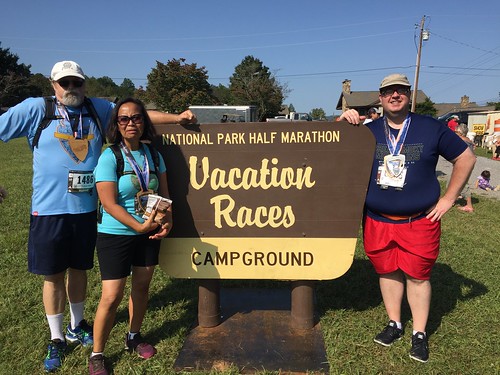
Then, the next morning, I walked again. Since my ankle actually was still sore in the morning, I changed my goal a little. While my original thought was that I wanted to beat last year's time, I decided that due to the injury I would just set a goal of finishing while favoring my ankle, and let my speed be my speed. Fortunately, the race rules have changed a little, and the sweeper at the end is a four hour pacer, rather than 3:30, like my first year, and I figured the extra half hour was enough of a cushion that I could walk at a normal pace, not jog on the downhills, and could baby the ankle a little while still finishing. Resigned to my slightly new goal, I shifted myself back from the 2:30-3:00 hour starting wave into the 3 hour plus starting wave, and that's where I met Gwen and Dennis:

Great Smoky Mountains Half Marathon 2017

They're a married couple from California who started doing half marathons for fun, and we walked together and talked for the entire race. We discussed our jobs (Gwen's retired), Tennessee (it was their first trip to our state, and they were pleasantly surprised by most of it; the exception being the Confederate flags they saw in a few places), food (they like the ribs here), classic horror movies (Dennis feels that Adrienne Barbeau was cast in so many because she was good at screaming, while Gwen and I agree that she was cast for something on her chest that wasn't quite her lungs), and pretty much anything else that popped into our heads while we made the slow trek from the high school to the finish line. At Mile 12, Gwen decided she wanted to jog the last part, so she went ahead and Dennis and I walked the rest of the way in together.

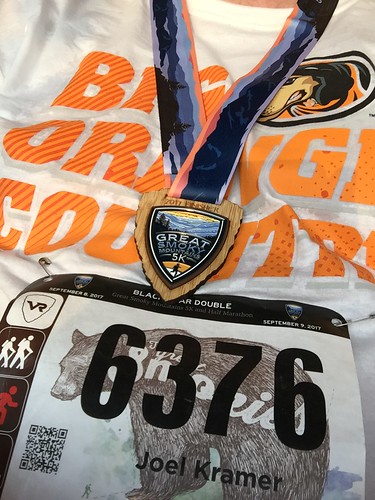
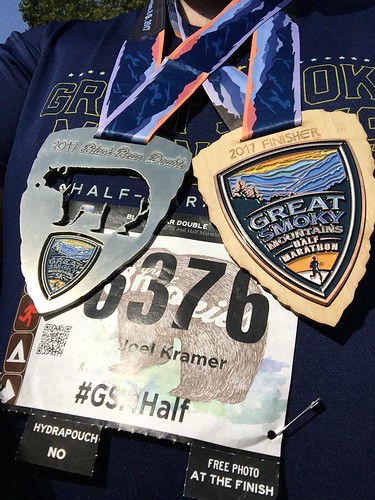
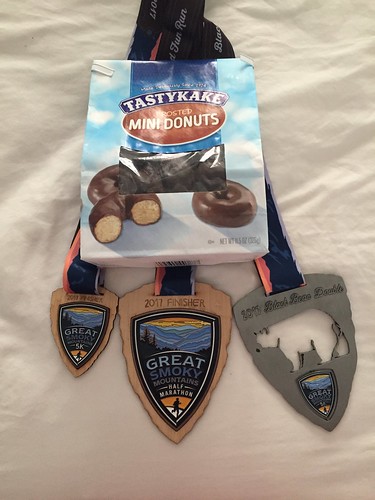
I got my finisher medal, and an extra medal for doing the Black Bear Double:

Great Smoky Mountains Half Marathon 2017

Great Smoky Mountains Half Marathon 2017

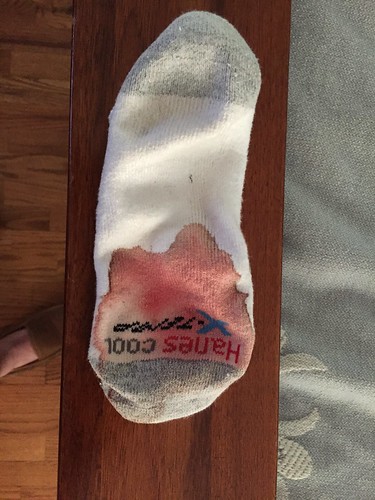
Overall, it was a very pleasant experience, except for my foot. Right around Mile 9 I thought, "Jesus, I think I have a blister." The same thing happened to me during the same part of the course last year, and sure enough, right around Mile 10 I felt intense pain in my foot, and then it slowly diminished through the rest of the race, meaning that the blister had probably exploded. When I finally got back to my hotel room, it turned out that I was right, but rather than show you a picture of my foot I'll just show you one of my sock:

Great Smoky Mountains Half Marathon 2017

It hurt a lot. Yesterday, after the race, I could barely walk on it. Overnight, the swelling has gone down quite a bit, and it's stopped leaking blood and fluid (whatever that is inside of blisters), but while I was thinking about it I realized that the problem is not, as I suspected last year, my shoes or how tightly I lace them. It's this specific course. I do eleven and twelve mile training walks without this happening. I've done another half marathon twice without this happening, but two out of three times that I've done this one on its terribly canted course surface and come away with a terrible weeping foot blister.

I haven't made a final decision yet, but I think I'm not going to do this race again.

Or I might just accept the blisters, and walk them off.